
Does a Worn Clutch Reduce a Car's Value? UK Guide 2026
A worn clutch can reduce resale value, but should you repair it before selling? Learn how UK buyers and dealers assess clutch wear, repair risk and pricing.
In this article
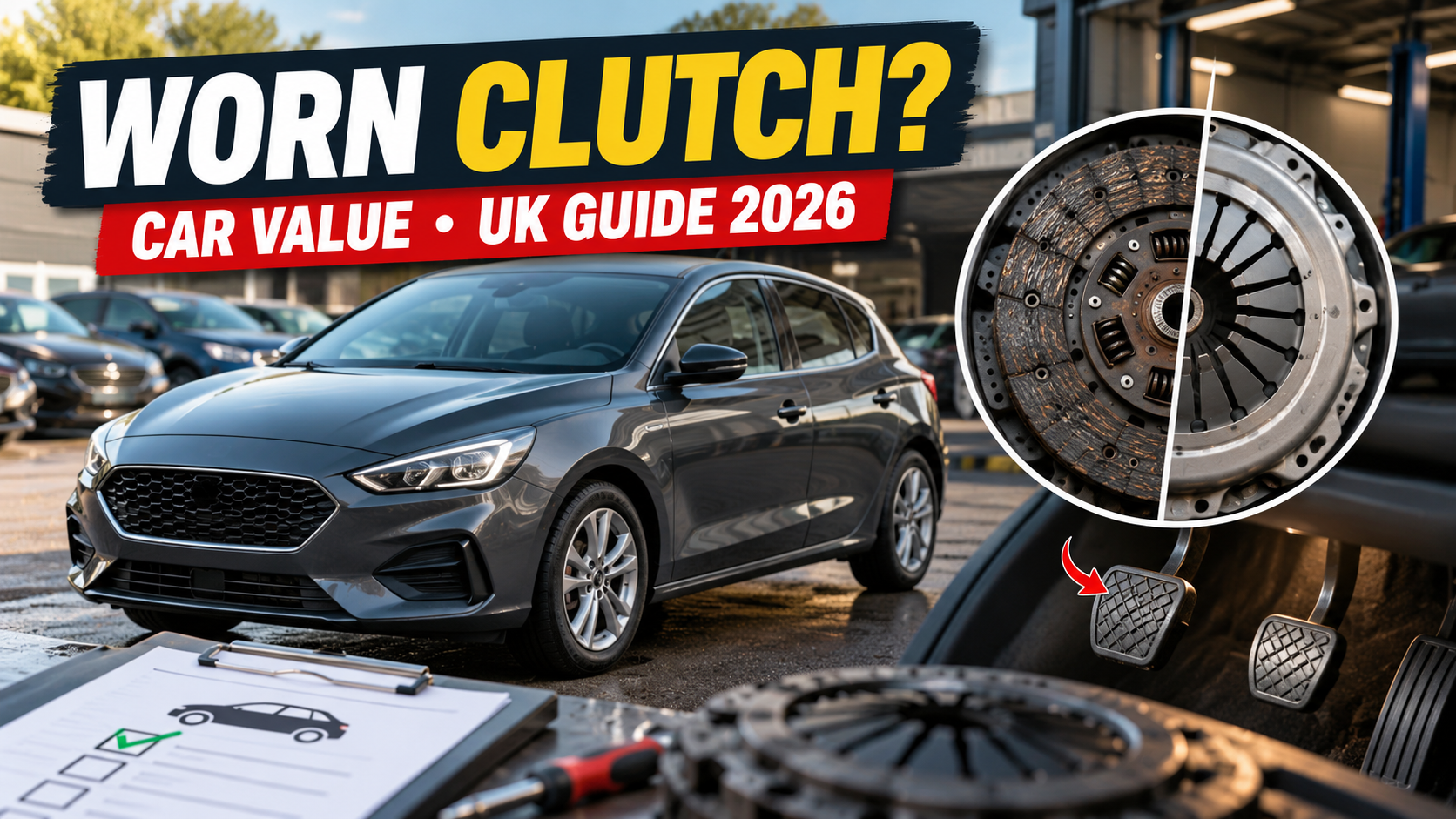
A worn clutch can reduce a used car's value, but the size of the reduction depends on the symptoms, the vehicle, the likely repair bill and how clearly the seller explains the problem. Buyers do not normally price a clutch fault as a simple cosmetic deduction. They price the risk that the car may soon need a labour-intensive repair, and that risk can affect both retail offers and motor-trade bids.
For UK sellers, the practical question is not just whether the clutch is worn. It is whether repairing it before sale is likely to recover more value than the repair costs, or whether a transparent sale at an adjusted price is the better route.
Does a worn clutch reduce resale value?
Usually, yes. A clutch is a wear component, and buyers expect some deterioration as mileage rises. But there is a major difference between normal age-related wear and a clutch that is already slipping, juddering, difficult to engage or close to failure.
A buyer assessing a car with obvious clutch symptoms may allow for:
- the clutch kit itself;
- labour to remove and refit the gearbox;
- a possible dual-mass flywheel on vehicles fitted with one;
- hydraulic components if they are implicated;
- diagnosis time;
- recovery risk if the car becomes undriveable;
- and a contingency for additional faults discovered during repair.
That is why a buyer's deduction can be greater than the price of the clutch parts alone.
If you are trying to establish a sensible starting figure, use the CarMazium valuation and selling journey and then adjust your expectations for the vehicle's actual mechanical condition rather than comparing it with fault-free examples.
Common signs of clutch wear
Clutch problems can develop gradually, so sellers sometimes become accustomed to symptoms that a fresh driver notices immediately.
Engine revs rise without matching acceleration
A slipping clutch can allow engine speed to increase without the expected increase in road speed, particularly under load, on hills or during harder acceleration.
This is one of the symptoms buyers are most likely to treat seriously because it can indicate that the clutch is no longer transmitting power properly.
The biting point feels unusually high
A high biting point can be associated with clutch wear, although pedal feel varies between models and a high bite alone is not a reliable diagnosis.
Do not advertise a car as definitely needing a clutch solely because the pedal feels different from another car. Diagnosis matters.
Judder when moving away
Judder can come from clutch contamination, worn components, mountings, flywheel issues or other causes. A buyer may therefore price uncertainty into the offer until the cause is established.
Difficulty selecting gears
Gear-selection problems can involve the clutch, hydraulics, linkage, gearbox or other components. If gears are difficult to engage, especially with the engine running, obtain a proper diagnosis rather than assuming the clutch disc is the only issue.
Noise when the clutch pedal is used
Noise that changes as the pedal is pressed or released can point to release-bearing, clutch, flywheel or transmission-related problems. Again, the symptom is useful evidence, but it is not a complete diagnosis.
A valid MOT does not mean the clutch is healthy
This distinction is important for UK sellers.
GOV.UK states that the MOT does not cover the general mechanical condition of the engine, clutch or gearbox. A car can therefore have a current MOT certificate and still have a badly worn or slipping clutch.
The current DVSA MOT manual for cars and passenger vehicles was updated on 1 June 2026. It includes checks for specified driving controls in relevant vehicle classes, but the normal MOT should not be treated as a mechanical health report for the clutch itself.
That means a seller should not tell a buyer that a clutch must be good simply because the vehicle recently passed an MOT.
If you want to understand the difference between an MOT result and wider condition evidence, see CarMazium's guide to selling a car without an MOT.
How much value can a worn clutch remove?
There is no reliable UK-wide fixed percentage.
The effect is vehicle-specific because clutch replacement costs vary significantly. A straightforward small hatchback may present a very different repair exposure from a larger diesel, performance model, four-wheel-drive vehicle or car with a dual-mass flywheel.
The buyer will also consider the car's underlying value. A substantial repair bill represents a much larger percentage of a low-value older car than of a newer, higher-value vehicle.
A useful way to think about the deduction is:
expected repair cost + risk allowance + inconvenience = likely buyer adjustment
That is not a formal valuation formula. It simply explains why offers can fall by more than the seller expects when the fault has not been diagnosed.
Should you replace the clutch before selling?
Sometimes. Not always.
Repair can make sense when the rest of the car is strong
Repair is easier to justify when:
- the vehicle has good service history;
- the body and interior are in good condition;
- the MOT history is reassuring;
- there are no major warning lights or other expensive faults;
- the car has enough market value to absorb the repair economically;
- and you can obtain a clear written quote from a reputable garage.
A completed repair with an invoice can remove a major uncertainty for the next buyer.
Selling as-is can make more sense on a lower-value car
If the vehicle is older, high-mileage or already needs other work, spending heavily on a clutch may not return the same amount in the selling price.
For example, repairing a clutch does not automatically turn a £2,000 car into a £3,000 car. The market still values the vehicle according to age, mileage, specification, history and overall condition.
If several faults are present, read the CarMazium guide to selling a non-runner or faulty car before deciding how much preparation is sensible.
Get a diagnosis before accepting the biggest possible deduction
A vague statement such as "clutch feels funny" gives buyers little certainty.
A garage inspection may establish whether the issue is likely to involve:
- clutch friction material;
- pressure plate;
- release bearing;
- clutch master or slave cylinder;
- cable or linkage where applicable;
- dual-mass flywheel;
- engine or gearbox mountings;
- or a gearbox-related fault.
You do not need to become a mechanic before selling. The value of diagnosis is that it narrows the uncertainty.
If a garage says the clutch is worn but still serviceable, retain the written assessment. If it recommends immediate replacement, retain that too. Accurate evidence is more useful than minimising or exaggerating the problem.
What about the dual-mass flywheel?
Many buyers become cautious when clutch work may also involve a dual-mass flywheel, often shortened to DMF.
Not every car has one, and a clutch replacement does not automatically mean the flywheel must be replaced. But on vehicles where a DMF is fitted, its condition can materially affect the total repair cost.
If a garage has inspected it, state what you actually know. Avoid promising that the flywheel is perfect unless you have evidence.
A quote that separates clutch, flywheel and labour costs can help a buyer understand the exposure more accurately.
How motor traders are likely to view a clutch fault
A motor trader normally has to think beyond the repair invoice.
Before retailing the car, a dealer may need to diagnose the fault, repair it, inspect the rest of the vehicle, prepare it for sale and allow for commercial risk. Time off the road also has a cost.
This helps explain why a trade bid for a car with an uncertain clutch fault can be lower than a private seller expects.
On CarMazium, sellers can use a free 24-hour dealer auction, where only verified motor traders can bid. The seller can set a reserve, and the vehicle purchase price is paid directly by the winning dealer to the seller. Current CarMazium terms show the seller auction listing fee as £0.
A clutch fault should be described accurately in the listing so bidders can factor it into their maximum bid rather than discovering it at collection.
See how CarMazium's auction and retail routes differ before choosing your route.
Could retail selling achieve more?
Potentially, but a higher advertised price is not the same as a higher completed sale.
CarMazium retail listings currently start at £1, while the auction seller listing fee is £0. Retail gives the seller control of the asking price and allows direct buyer offers.
A retail buyer may pay more than a trade buyer for the right car, but a noticeable clutch fault can create more questions, test-drive concerns and negotiation.
If you sell retail, make the condition clear before the buyer travels.
Current CarMazium pricing should always be checked on the CarMazium pricing page because platform features and future fees can change.
How to describe a worn clutch honestly
Good disclosure is specific.
Instead of writing:
Clutch may need attention.
write something closer to:
Clutch has started to slip under heavier acceleration in higher gears. Vehicle remains driveable, but no clutch replacement has been carried out. Garage inspection dated September 2026 recommends clutch replacement. Quote available.
Or, if the diagnosis is less certain:
High clutch biting point and occasional judder when moving away. No confirmed diagnosis. Selling with this condition disclosed and priced accordingly.
The exact wording must match the real vehicle. Do not copy a diagnosis that does not apply.
What evidence should you include?
Useful evidence can include:
- a recent garage diagnostic report;
- a written clutch-replacement quote;
- invoices for previous clutch or flywheel work;
- service records;
- current MOT information;
- photos of the vehicle's overall condition;
- and a clear description of when the symptom occurs.
If the clutch was recently replaced, an invoice showing the date, mileage, parts and garage can be valuable. A verbal claim such as "the previous owner did it" is much weaker.
Do not hide the fault on a test drive
If you know the clutch slips, judders or is difficult to operate, tell the prospective buyer before the test drive.
A buyer should not discover a material driving issue while accelerating into traffic.
For private viewings, also make sure the driver is appropriately insured and use sensible test-drive precautions. CarMazium's UK guide to safe private viewings and test drives covers the practical steps.
Does a worn clutch make the car unsafe to sell?
A worn clutch does not automatically make every vehicle unsafe, but the severity matters.
A mildly worn clutch and a vehicle that cannot reliably transmit drive are very different situations. If the car is difficult to control, cannot move safely, or is likely to lose drive, do not treat a normal road test or collection drive as routine.
Ask a competent garage for advice and use vehicle transport or recovery where appropriate.
Remember that the MOT is not a substitute for this judgement. GOV.UK specifically explains that the MOT does not assess the general mechanical condition of the clutch.
Should you lower the asking price before advertising?
If the clutch fault is confirmed, pricing a fault-free comparable car and waiting for the buyer to discover the problem usually creates friction.
A better approach is to compare the car with similar examples and then make a realistic adjustment for the known fault and repair risk.
That does not mean accepting the first very low offer.
Evidence helps you negotiate. If you have a written repair quote, the conversation can be based on a known likely cost rather than an unlimited worst-case assumption.
What if the clutch was replaced recently?
Recent clutch work can support buyer confidence, especially when it addresses a known weak point on a higher-mileage vehicle.
Keep the invoice.
The strongest evidence normally identifies:
- the registration or VIN;
- date and mileage;
- parts fitted;
- whether the flywheel was inspected or replaced where relevant;
- garage details;
- and the amount paid.
A new clutch does not add its full invoice cost to the car's market value. It mainly removes a potential deduction and gives the buyer evidence that a significant maintenance item has been addressed.
Clutch wear on high-mileage cars
Mileage changes buyer expectations, but it does not make every clutch fault irrelevant.
On a high-mileage car, buyers may accept that major wear components will eventually need replacement. What they still need to know is whether that work is already due.
If your car has covered substantial mileage, combine the mechanical disclosure with evidence about servicing and general care. The CarMazium high-mileage selling guide explains how condition and evidence can matter alongside the odometer reading.
Seller checklist before listing a car with clutch wear
Before publishing the advert:
- Confirm the symptoms. Note exactly what happens and under what conditions.
- Get a diagnosis if practical. A written garage assessment can reduce uncertainty.
- Obtain a repair quote. This helps you compare repairing versus selling as-is.
- Check the rest of the car. Avoid spending heavily on one repair without considering other faults.
- Gather invoices and service history. Evidence is more persuasive than verbal claims.
- Set a realistic price or reserve. Account for the fault rather than pricing against perfect cars.
- Disclose the condition clearly. Put material information in the listing.
- Plan safe collection. If the vehicle is not reliably driveable, arrange transport.
Frequently asked questions
Can a car pass an MOT with a worn clutch?
Yes, it can. GOV.UK states that the MOT does not cover the general mechanical condition of the clutch, engine or gearbox. A current MOT is therefore not proof that the clutch is healthy.
Does clutch slipping always mean the clutch needs replacing?
No. Slipping is an important symptom, but diagnosis is needed because the exact cause and required repair can vary.
Will a new clutch increase my car's value?
It can improve saleability and remove a likely buyer deduction, especially if you have an invoice. It does not normally increase the car's market value pound-for-pound by the cost of the repair.
Should I sell a car with a worn clutch to a dealer?
A dealer auction can be a practical route because trade buyers can price repair work into their bids. Retail may also work if the condition is disclosed accurately. The better route depends on the car, urgency and price expectations.
Should I replace the flywheel at the same time?
Not automatically. Some cars do not use a dual-mass flywheel, and where one is fitted its condition should be assessed. Follow competent garage or manufacturer guidance for the specific vehicle.
Can I advertise the car as having a good clutch because it has an MOT?
No. An MOT is not a clutch health check. Describe what you actually know about the clutch rather than using the MOT certificate as proof of mechanical condition.
Sell with the condition priced in, not hidden
A worn clutch does not make a car worthless. It creates a repair cost and, when the diagnosis is uncertain, a risk cost.
The strongest selling position is to reduce that uncertainty: identify the symptoms, obtain evidence where sensible, decide whether repair is economically worthwhile and disclose the condition clearly.
If you want motor traders to compete for the vehicle, you can start a CarMazium seller journey and choose the free dealer-auction route. If you prefer to advertise directly to retail buyers, CarMazium retail listings currently start from £1.
Whichever route you use, price the actual car in front of you—not the fault-free version you wish it were.
Sell your car your way
Ready to turn your research into a real sale?
List in the CarMazium dealer auction for £0, or advertise retail from £1. Qualifying successful auction sales can receive a £100 seller incentive.
Keep reading
Related automotive guides
Do Alloy Wheel Damage and Kerbing Affect Car Value? UK Guide 2026
Kerbed or damaged alloy wheels can affect buyer confidence and resale value. Learn when refurbishment is worth it, when damage becomes a safety issue and how UK sellers should price it.
Do Worn Brakes Affect a Car's Resale Value? UK Guide 2026
Selling a car with worn brakes? Learn how brake pads, discs, MOT history and warning lights can affect buyer confidence, offers and resale value.
Does a Cracked Windscreen Reduce a Car's Value? UK Guide 2026
UK guide to cracked windscreens, MOT rules, repair decisions and resale value.
From the marketplace