
Do Worn Brakes Affect a Car's Resale Value? UK Guide 2026
Selling a car with worn brakes? Learn how brake pads, discs, MOT history and warning lights can affect buyer confidence, offers and resale value.
In this article
Worn brakes can affect a car's resale value, but there is no reliable single percentage that applies to every vehicle.
A buyer is usually thinking about three things at once: safety, the likely repair bill, and what the brake condition says about the way the car has been maintained. A small advisory on an otherwise well-kept car may have a limited effect. Grinding brakes, a recent MOT failure, an ABS fault or obviously worn discs can have a much bigger effect because the buyer has to price in repair work and risk.
For UK sellers in 2026, the important point is that brake condition is not just cosmetic. It can appear in the vehicle's MOT history, can affect whether the car passes its next MOT, and can influence how confidently a private buyer or motor trader values the vehicle.
This guide explains what UK sellers should check, when repairing the brakes before sale may make sense, when selling as-is may be more practical, and how to describe brake wear clearly when listing a car.
Do worn brakes reduce a car's value?
They can.
A buyer may reduce an offer when the car has:
- worn brake pads,
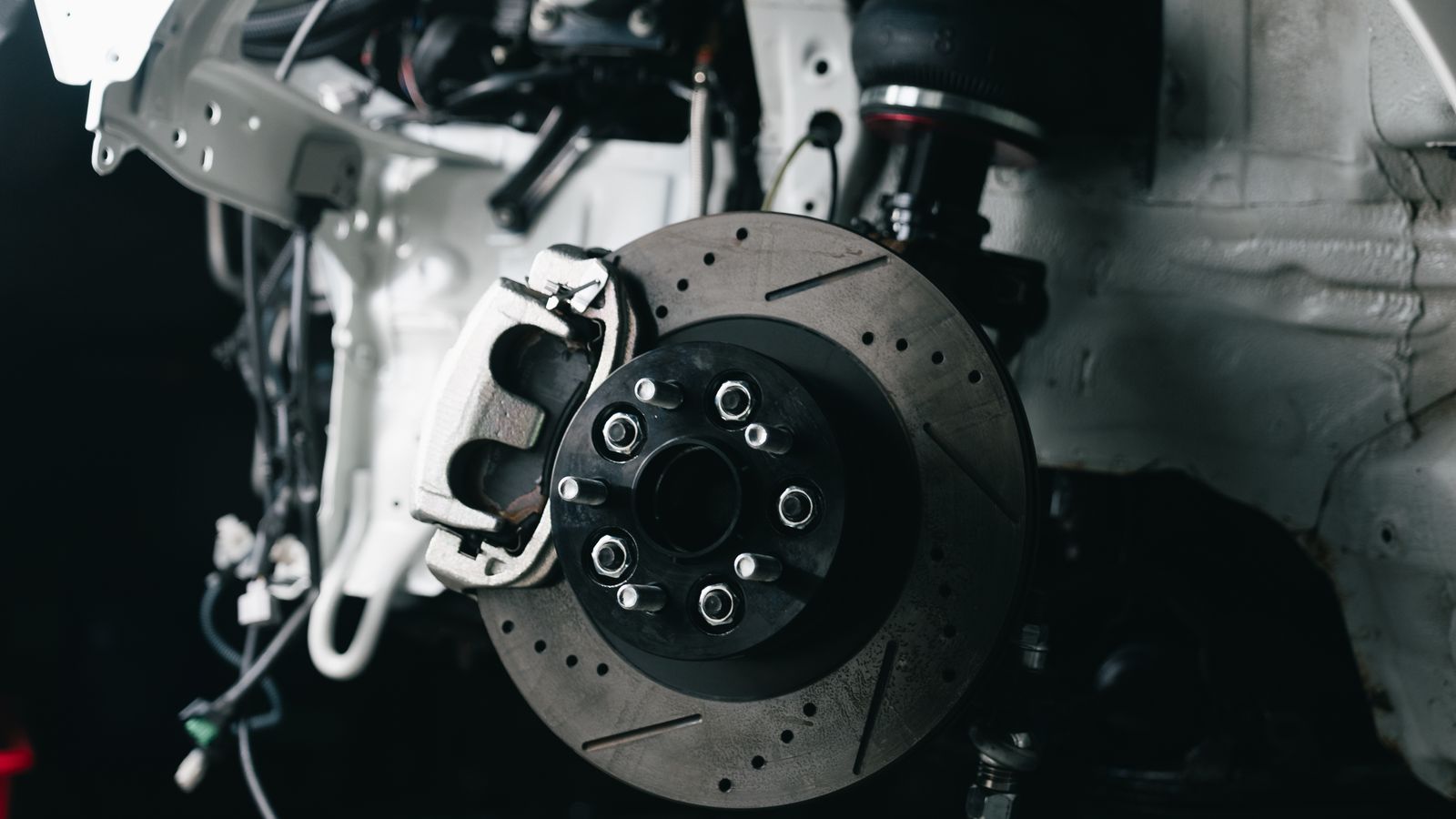
- heavily worn or scored discs,
- brake judder,
- grinding or scraping noises,
- a soft or abnormal brake pedal,
- an ABS or braking-system fault,
- leaking or badly corroded brake components,
- or recent MOT failures or advisories connected with the braking system.
The size of the reduction depends on the vehicle and the defect.
For example, replacing front pads on a mainstream hatchback is a different proposition from replacing large performance brakes on a premium SUV. A dealer will also think about workshop time, parts availability, the chance of finding additional faults after stripping the brakes down, and the margin needed to prepare the car for resale.
That is why a sensible valuation should consider the actual condition rather than applying a fixed "worn brakes = minus X%" rule.
What does the MOT test say about worn brake pads and discs?
The current DVSA MOT inspection manual for brakes is the key reference for cars tested in England, Scotland and Wales.
Under the current guidance:
- a brake lining or pad worn down to its wear indicator is classed as a Major defect;
- a brake lining or pad worn below 1.5 mm is classed as a Dangerous defect;
- a brake lining or pad contaminated with oil or grease is a Major defect;
- a missing or incorrectly mounted brake lining or pad is Dangerous;
- a brake disc or drum that is significantly and obviously worn is a Major defect;
- a disc or drum that is insecure, fractured or otherwise likely to fail is Dangerous.
The manual also covers brake pipes, hoses, callipers, master cylinders, brake fluid, ABS and brake-performance testing. Some faults in those areas can also be categorised as Major or Dangerous.
The MOT manual was updated on 1 June 2026. Sellers should therefore avoid relying on old forum posts or outdated MOT advice when checking what may be recorded at the next test.
A car can still have braking components that are worn but not yet severe enough to fail an MOT. That distinction matters: "passed the MOT" does not automatically mean "the brakes are new" or "no brake work will be needed soon."
Why MOT history matters to a buyer
A vehicle's MOT history is easy for a prospective buyer to check using the official GOV.UK MOT history service.
For tests carried out in England, Scotland and Wales, the history can show past passes and failures, recorded mileage, failed components and minor problems.
So if the car has repeated brake advisories, a recent brake-related failure or an unresolved pattern of wear, a buyer may spot it before viewing the car.
That can affect value in two ways.
First, the buyer may budget for repairs immediately.
Second, repeated advisories that appear to have been ignored can affect confidence in the wider maintenance of the vehicle.
This is why brake-related MOT history should be viewed together with the general service and repair record, not in isolation. For a broader explanation, see CarMazium's guide to how MOT history can affect a car's value.
The brake problems most likely to affect an offer
1. Brake pads close to replacement
Pads that are simply approaching the end of their normal service life may lead to a modest adjustment, especially if the rest of the braking system is healthy.
The buyer will usually think about the cost of replacement and whether the discs are likely to need changing at the same time.
A wear warning light can also prompt questions. The MOT manual notes that an illuminated brake wear indicator alone is not itself a reason for MOT failure, but it still tells a buyer that maintenance may be due.
2. Heavily worn, scored or lipped brake discs
Discs can be more significant because the work may involve both discs and pads on an axle.
Visible scoring, heavy lips, cracking, severe corrosion or vibration under braking can make a buyer assume that the repair is more than routine pad replacement.
The official MOT standard says a disc or drum must be significantly worn before it is rejected, so visual wear and MOT failure are not exactly the same thing. A buyer can still reduce an offer for wear that is likely to need attention soon.
3. Grinding or scraping noises
Grinding is more concerning than a light squeal.
It can suggest that friction material is badly worn or that metal components are contacting each other. It may also mean that a cheap maintenance job has turned into a more expensive repair.
If a car is making a serious grinding noise, do not simply increase the radio volume and hope a buyer misses it. Have the braking system inspected before continuing to drive the vehicle.
4. Brake judder or vibration
A steering wheel or pedal that vibrates under braking may be associated with disc condition, but there are other possible causes too.
From a buyer's perspective, the uncertainty matters. If the seller cannot explain the cause, the buyer may allow a larger repair contingency in the offer.
5. ABS or brake-system warning lights
A warning light changes the conversation because the issue may not be simple mechanical wear.
The current MOT manual treats an ABS warning device showing a system malfunction as a Major defect. Missing or damaged wheel-speed sensors and certain other ABS faults can also be Major defects.
CarMazium already has a separate guide to dashboard warning lights and car value, which is useful if the car has a brake or ABS warning showing.
6. Corroded pipes, damaged hoses or leaks
These defects deserve particular attention because some can be classed as Major or Dangerous under the MOT rules.
For example, a hydraulic brake pipe connection that is leaking can be Dangerous, as can a brake hose that is damaged and likely to fail.
A seller should not treat this type of defect as a normal cosmetic imperfection.
How much should worn brakes reduce the asking price?
There is no honest universal figure.
The right adjustment depends on:
- the make and model;
- the age and current value of the car;
- whether pads, discs, callipers or hydraulic components are involved;
- whether one axle or multiple corners need work;
- whether the fault has caused an MOT advisory, Major defect or Dangerous defect;
- whether warning lights are present;
- the quality of the service history;
- and the cost of putting the car into a condition a buyer is willing to accept.
A £400 repair on a £3,000 car represents a much larger proportion of the vehicle's value than the same repair on a £30,000 car.
There is also a difference between repair cost and offer reduction. A dealer may reduce an offer by more than the retail cost of the parts because the dealer also carries labour, diagnosis, preparation time, warranty exposure and the risk that additional work is discovered.
The most useful approach is therefore:
- identify the actual brake fault;
- obtain a realistic repair estimate where appropriate;
- compare that cost with the vehicle's expected selling price;
- decide whether the likely increase in buyer confidence justifies doing the work before sale.
Should you replace worn brakes before selling?
Sometimes yes, but not automatically.
Repairing the brakes before sale can make sense when:
- the defect is straightforward and correctly diagnosed;
- the cost is reasonable compared with the vehicle's value;
- the repair removes an obvious buyer objection;
- the car is being marketed at a strong retail price;
- or the work is required to make the vehicle safe and roadworthy.
Selling without doing the work may be more practical when:
- the car is low-value and the repair is disproportionately expensive;
- the vehicle has several mechanical faults and is being sold as a project or trade proposition;
- a verified trade buyer is comfortable pricing the repair themselves;
- or the seller would not recover the repair cost through a higher sale price.
Safety comes first. If the braking defect makes the car unsafe, do not continue driving it simply because it is for sale. Arrange an appropriate inspection, repair or transport solution.
Will new brakes add their full cost to the car's value?
Usually not.
Maintenance is often expected rather than treated as an optional extra. A buyer may pay more confidently for a car that has just had suitable brake work, but that does not mean a £600 brake job automatically makes the car worth £600 more.
The benefit can instead be:
- fewer objections during viewing;
- better confidence on a test drive;
- a cleaner MOT story;
- less negotiation pressure;
- and a greater chance of completing the sale without a last-minute repair argument.
Keep the invoice. A documented repair from a reputable garage is more useful to a buyer than simply saying, "the brakes were done recently."
How to sell a car with worn brakes honestly
If you decide to sell the car without repairing normal wear, describe the issue precisely.
Good disclosure is specific.
Instead of:
Brakes need looking at.
Use factual wording such as:
Front brake pads were advised as worn at the latest service. No warning light is currently showing. Seller has not replaced them and the asking price reflects this.
Or, where supported by an inspection:
Garage inspection dated 15 September 2026 recommends front discs and pads. Quote/invoice available to view.
Do not claim a diagnosis you do not have.
If the noise, warning or braking behaviour has not been professionally diagnosed, say so.
Useful listing information can include:
- the date of the most recent MOT;
- relevant MOT advisories or failures;
- warning lights;
- known brake noises or vibration;
- recent brake invoices;
- whether discs or pads have already been replaced;
- and any garage inspection or quotation.
That gives the buyer enough information to price the vehicle realistically.
Take clear photos and keep maintenance records
Brake components can be difficult to photograph with the wheels fitted, so you do not need to dismantle the car just to create an advert.
But you should keep:
- repair invoices;
- service reports;
- MOT certificates or accessible MOT history;
- diagnostic reports where relevant;
- and any recent garage quotation.
If a wheel is already off during service or inspection, a clear photo can help document what was found.
Accurate vehicle information can reduce wasted enquiries because the buyer can decide whether the car suits them before travelling.
Worn brakes and selling through CarMazium
CarMazium gives UK sellers two main routes.
Free dealer auction
Eligible sellers can list a car for auction with a £0 seller auction listing fee. Only verified motor traders can bid in the auction.
The winning dealer pays the £125 CarMazium auction buyer fee, then arranges inspection and collection with the seller. The vehicle purchase price is paid directly by the buyer to the seller; CarMazium does not hold the vehicle purchase money.
A qualifying successful auction sale can also receive the advertised £100 seller reward after the required handover is completed and approved under the current terms.
A car with brake wear can still be suitable for the trade-auction route if it is described accurately. Professional buyers can factor known preparation work into their bids.
Retail listing
Sellers who want to advertise directly can use CarMazium's retail marketplace, with the Basic retail listing currently starting at £1 one-off.
Retail can suit a car that has been prepared for a consumer buyer and where the seller wants to set an asking price and receive direct enquiries or offers.
Current package details are available on the CarMazium pricing page.
Whichever route you choose, disclose known brake faults accurately. A better listing is not the one that hides the most problems; it is the one that gives the buyer enough reliable information to value the car properly.
A practical pre-sale brake checklist
Before listing the car, work through these questions:
- Does the brake pedal feel normal?
- Is there grinding, scraping, squealing or knocking?
- Does the steering wheel or pedal vibrate under braking?
- Is an ABS, brake or wear warning illuminated?
- Did the last MOT mention brakes?
- Has a garage advised discs, pads, pipes, hoses or callipers?
- Do you have invoices for recent brake work?
- Is there a current repair quotation?
- Is the vehicle safe to drive?
If you are unsure about the safety of the braking system, use a qualified garage rather than trying to judge a safety-critical defect from an advert, photo or internet description.
Do worn brakes affect a dealer's bid more than a private buyer's offer?
Not necessarily, but the way the adjustment is calculated can differ.
A motor trader may have access to trade labour rates, parts suppliers and an in-house workshop, so the direct cost of repair may be lower than for a private buyer.
On the other hand, the trader also needs to prepare the vehicle to an appropriate resale standard and allow for commercial risk.
A private buyer may react more strongly to a warning light, grinding noise or poor MOT history because they do not want to organise repairs immediately after purchase.
This is one reason competitive bidding can be useful: different verified dealers may assess the same preparation work differently.
What if the car recently passed its MOT?
A recent pass helps, but it is not a guarantee that the brakes have no wear.
The MOT is a minimum roadworthiness inspection at a point in time. Components can be worn without meeting the threshold for rejection, and wear can progress after the test.
Read the advisories as well as the pass result.
If an advisory mentions brake wear, include that context when you price and describe the car.
What if the brake fault is dangerous?
Do not treat a potentially dangerous braking defect as a normal sales inconvenience.
The DVSA manual classifies several brake faults as Dangerous, including pads worn below 1.5 mm, certain hydraulic leaks, some hoses likely to fail, and discs or drums that are insecure, fractured or otherwise likely to fail.
If you suspect a dangerous fault, get professional advice and avoid driving the vehicle until it is safe to do so.
Final takeaway
Worn brakes can reduce a car's resale value because they create a known or suspected repair cost and can reduce buyer confidence.
The effect is usually greatest when the problem is severe, appears in the MOT history, produces warning lights or poor braking behaviour, or suggests that maintenance has been neglected.
Do not guess at a fixed percentage.
Find out what is actually wrong, compare the repair cost with the car's value, keep the evidence, and decide whether repairing before sale is commercially sensible.
If you sell the car with known brake wear, disclose it clearly.
On CarMazium, you can then choose between a free verified-dealer auction or a retail listing starting from £1, depending on the type of buyer and selling process you prefer.
Sell your car your way
Ready to turn your research into a real sale?
List in the CarMazium dealer auction for £0, or advertise retail from £1. Qualifying successful auction sales can receive a £100 seller incentive.
Keep reading
Related automotive guides
Does a Cracked Windscreen Reduce a Car's Value? UK Guide 2026
UK guide to cracked windscreens, MOT rules, repair decisions and resale value.
Does Having Only One Car Key Affect Resale Value? UK Guide 2026
Selling a used car with only one key? Learn how a missing spare key can affect buyer confidence, dealer bids and resale value, plus when replacing it before sale may make sense.
Do Dashboard Warning Lights Affect a Car's Value? UK Guide 2026
Can dashboard warning lights reduce a car's value? Learn what engine, ABS, airbag, ESC and TPMS lights can mean for UK buyers, MOTs and resale negotiations.
From the marketplace