
Does Having Only One Car Key Affect Resale Value? UK Guide 2026
Selling a used car with only one key? Learn how a missing spare key can affect buyer confidence, dealer bids and resale value, plus when replacing it before sale may make sense.
In this article
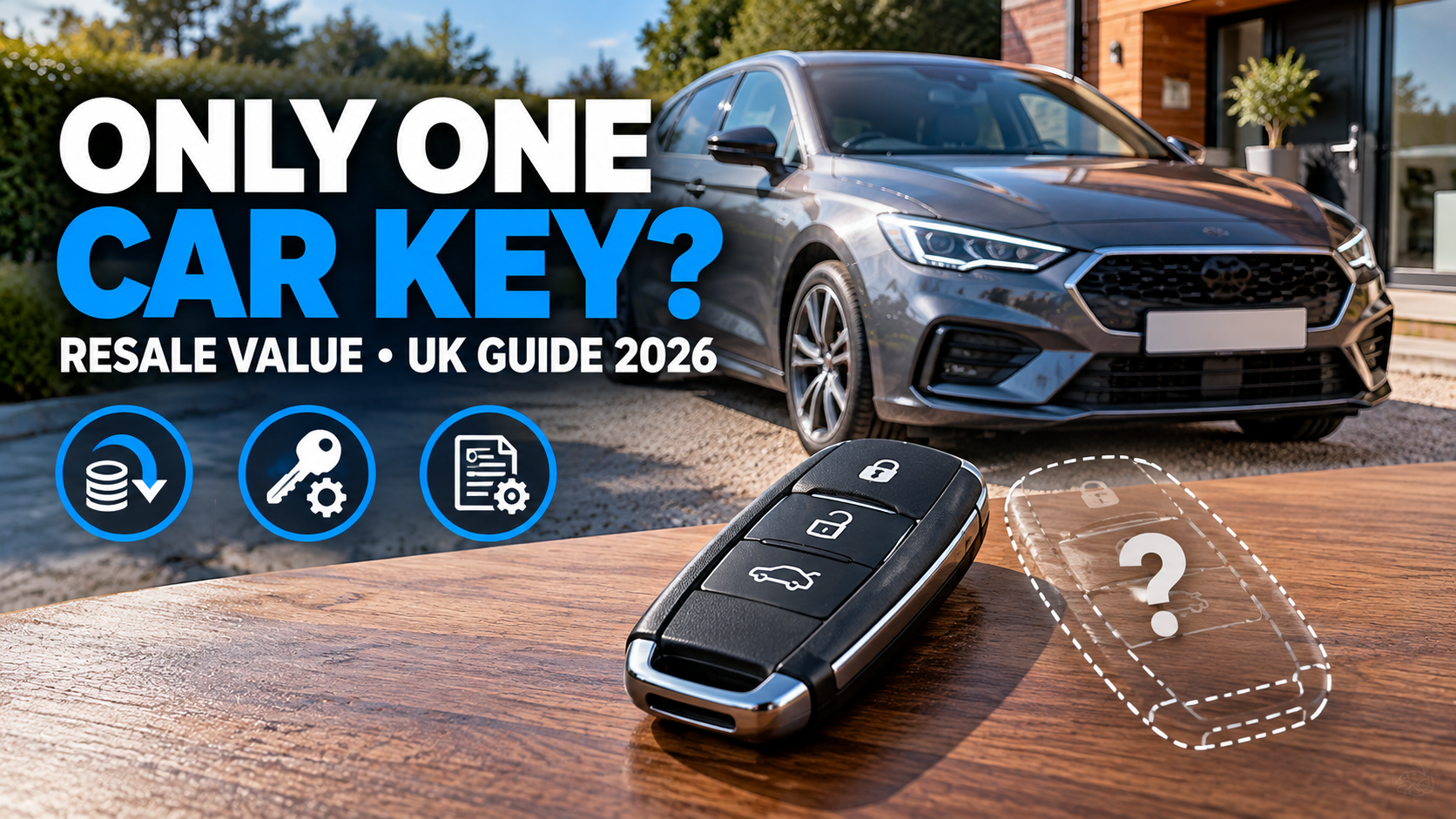
A missing spare key is easy to overlook when preparing a used car for sale, but buyers notice it quickly. On a modern vehicle, a key is no longer just a cut piece of metal: it may contain a transponder, remote locking electronics, immobiliser coding, keyless-entry functions or a proximity system. That means a second key can have real financial and practical value.
Having only one key does not automatically make a car difficult to sell, and there is no universal amount that should be deducted from its value. But it can affect buyer confidence and the offer a motor trader is willing to make because the next owner may need to pay for a replacement and programming.
This guide explains how UK sellers should handle a one-key car, when replacing the missing key may be worthwhile, and how to present the vehicle honestly without unnecessarily reducing its value.
Does One Key Reduce a Car's Value?
Potentially, yes, but usually as one factor among many.
A buyer or dealer is assessing the whole vehicle: age, mileage, condition, service history, MOT record, specification, ownership history, market demand and preparation costs. A missing spare key adds another cost or inconvenience to that calculation.
The effect is not fixed. It can be relatively small on an older low-value car with a simple key, but more significant on a newer vehicle with an expensive smart or proximity key.
The most important point is that a one-key car is not automatically worth a particular amount less. The sensible deduction is related to the actual replacement cost, inconvenience and buyer risk for that specific vehicle.
Why Modern Car Keys Can Be Expensive
Modern keys commonly combine several functions:
- mechanical access,
- remote central locking,
- immobiliser authentication,
- push-button starting,
- keyless entry,
- alarm control,
- and sometimes vehicle-specific memory settings.
That means replacing a key may involve more than cutting a blade. A new key or fob may need to be programmed to the vehicle.
Current RAC guidance says a replacement or spare car key can cost around £250–£400 or more, depending on the make, model and age, with keyless-entry and stop/start programming potentially increasing the price. The RAC also notes that programming or coding can add further cost. This is a useful illustration of why a buyer may care about a missing spare, but sellers should obtain a vehicle-specific quotation rather than assume a generic figure applies.
The AA also offers key-replacement services and key cover for modern car keys and fobs, reinforcing the fact that replacement can involve specialist work rather than simply copying a household-style key.
Why Dealers Care About the Number of Keys
A motor trader buying stock needs to think about the next customer as well as the current seller.
If the car arrives with one key, the dealer may choose to:
- sell it with one key and disclose that fact,
- order a replacement before retail sale,
- negotiate the price to reflect the missing key,
- or treat the missing spare as one of several preparation costs.
A dealer may also consider how buyers compare similar cars. If two otherwise comparable vehicles are available and one has two working keys, full history and stronger documentation, that car may be easier to retail.
This is why providing every key you have can help an auction buyer assess the vehicle more confidently.
One Key Does Not Mean One Fixed Deduction
Avoid simplistic claims such as "one key knocks £500 off every car".
The real impact depends on the vehicle.
Older cars
An older vehicle may use a relatively straightforward remote or transponder key. Replacement could be cheaper than on a newer premium or keyless model.
Newer cars
A newer vehicle may have a proximity key, keyless start or manufacturer-specific programming requirements. Replacement can be more expensive.
Premium and specialist vehicles
Some keys can be particularly costly or require specialist coding. Availability and security procedures may also affect the process.
Low-value vehicles
On a low-value car, spending several hundred pounds on a second key purely for resale may not produce the same amount back in the selling price.
The commercial question is therefore: will the replacement cost improve the likely sale result by at least as much as it costs?
Should You Replace the Spare Key Before Selling?
Sometimes, but not automatically.
Replacing it before sale may make sense if:
- the replacement cost is reasonable,
- the car is relatively valuable,
- two keys are normally expected for that type of vehicle,
- a dealer or buyer has specifically identified the missing key as a price objection,
- or the replacement improves the completeness of an otherwise very well-presented car.
It may not make sense if:
- the vehicle is low value,
- replacement is unusually expensive,
- you need to sell quickly,
- the car has larger mechanical or cosmetic issues that matter more,
- or the likely improvement in sale price is lower than the cost of the new key.
Before ordering anything, obtain a quotation for the exact registration or vehicle. Compare manufacturer/dealer pricing with reputable automotive locksmith options where appropriate.
Find the Spare Before Paying for a Replacement
This sounds obvious, but it is worth checking carefully before ordering a new key.
Look through:
- vehicle document folders,
- service-history wallets,
- old key drawers,
- safes,
- coat pockets and bags,
- family members' key rings,
- previous home-storage locations,
- and any items supplied when you bought the car.
If the car was bought from a dealer, review the original invoice or handover paperwork to see whether the number of keys was recorded.
Finding the original spare is better than paying to replace it shortly before sale.
Test Every Key Before Advertising the Car
Two keys are only useful if both work.
Check that each key can:
- unlock the vehicle,
- lock it,
- start the engine or authorise push-button start,
- open the boot where applicable,
- and operate any keyless functions it is supposed to support.
A weak fob battery can make a working key appear faulty. If the battery is replaceable and clearly weak, changing it before the viewing is inexpensive preparation.
If one key has damaged buttons, intermittent operation or a cracked case, disclose that rather than counting it as a perfect second key.
What Should You Put in the Advert?
Be clear and brief.
Useful wording includes:
- "One working key supplied."
- "Two working keys."
- "Main key works; spare fob requires attention."
- "One key present; replacement spare has not been ordered."
There is no benefit in hiding the issue. A buyer will discover the number of keys at handover, and a dealer may have already included two keys in their expectation of the vehicle.
Accurate information helps the buyer bid or negotiate using the real condition of the car.
How to Show Keys in a CarMazium Listing
When listing a car on CarMazium, describe the number and condition of keys accurately alongside the other vehicle details.
For an auction, verified motor traders are assessing preparation cost and resale potential. Giving them accurate information before they bid reduces surprises later.
For a retail listing, a private buyer can understand from the outset whether they will receive one or two keys.
If you are unsure whether replacing the spare is worthwhile, you can first see how the market responds to the vehicle rather than automatically spending money before listing.
CarMazium's seller auction is free to list, while retail listing options currently start from £1. Always check the live pricing page for the current package details before choosing your route.
Does a Missing Key Matter More on Keyless Cars?
It can.
Keyless and proximity systems can make replacement more complex because the fob must communicate correctly with the vehicle's security system. RAC guidance specifically notes that keyless-entry and stop/start programming can make replacement more expensive.
For these vehicles, it is sensible to obtain an actual replacement quotation before deciding how much the missing spare should influence your asking price.
Do not guess that a key will cost £100 or £1,000. The exact vehicle matters.
What About Security if a Key Is Lost?
A lost key creates a different question from a spare that was simply never supplied.
If you know a key has been lost or stolen, ask a qualified dealer or automotive locksmith what security steps are appropriate for that vehicle. Depending on the system, it may be possible or advisable to remove the missing key from the vehicle's authorised-key memory while programming the replacement.
RAC guidance on lost keys notes that modern replacement work can involve reprogramming vehicle electronics, locks, alarms or immobiliser-related functions.
Do not promise a buyer that a lost key has been disabled unless you have actually had that work completed and can substantiate it.
One Key vs Service History: Which Matters More?
There is no universal ranking, but service history often tells a buyer much more about the mechanical life of the vehicle.
A missing key is usually a defined replacement problem. Missing maintenance history can create uncertainty about servicing, timing-belt work, gearbox maintenance and other expensive items.
If your budget before sale is limited, prioritise preparation based on likely value and buyer confidence rather than trying to make every detail perfect.
Read CarMazium's guide to how service history affects car value for a deeper explanation.
One Key vs Cosmetic Damage
The same cost-benefit logic applies to scratches, dents and wheel damage.
Imagine a seller has £300 available before sale. The best use of that money depends on the car. On one vehicle, replacing the spare key may improve the proposition. On another, correcting an obvious cosmetic issue or completing overdue maintenance may matter more.
CarMazium's guide to repairing scratches and dents before selling explains how to think about preparation commercially rather than emotionally.
Does the V5C Prove How Many Keys a Car Should Have?
No. The V5C is the vehicle registration certificate and does not function as a record of how many keys are supplied with the car.
Keep the V5C secure and follow DVLA requirements when ownership changes. Do not treat the key count as part of the registration document.
If you are preparing paperwork for sale, see what documents you need to sell a car in the UK.
What if the Buyer Uses the Missing Key to Negotiate?
Expect it to be part of the conversation.
A sensible response is to know the facts:
- how many working keys are present,
- what type of key the vehicle uses,
- whether you obtained a replacement quotation,
- and whether your asking price already reflects the missing spare.
If you have a written quote for a replacement, that can make the negotiation more objective.
For example, rather than arguing over an arbitrary £500 reduction, both sides can discuss a realistic vehicle-specific replacement cost.
How Traders May Calculate the Cost
A trader's deduction does not necessarily equal the retail locksmith invoice you found online.
They may consider:
- their own supplier cost,
- administration time,
- programming availability,
- whether the vehicle can be retailed acceptably with one key,
- the expected retail customer's reaction,
- and the total preparation budget for the car.
This is one reason auction bids can differ between dealers. Each business has different costs, stock needs and appetite for a particular vehicle.
Can a Second Key Help Buyer Trust?
Yes, because completeness matters.
A car presented with:
- two working keys,
- V5C,
- service records,
- MOT history,
- invoices,
- handbook,
- and clear condition information
can feel better cared for than an equivalent vehicle with missing items.
That does not mean the second key transforms the underlying value. It simply removes one objection and one future expense from the buyer's decision.
How Much Should You Reduce the Asking Price for One Key?
There is no standard percentage or fixed deduction.
A better process is:
- Establish the realistic value of the car in its current condition.
- Obtain a genuine quote for the correct replacement key if the cost matters.
- Decide whether you will replace it yourself.
- If not, consider the replacement cost when setting the asking price or evaluating offers.
- Keep the deduction proportionate to the vehicle and market.
Avoid reducing the car by hundreds more than necessary simply because you assume every buyer will insist on two keys.
Frequently Asked Questions
Can I sell a car with only one key?
Yes. A used car can be sold with one working key. State the number of keys accurately so the buyer knows what is included.
Will a dealer buy a car with one key?
Yes. Dealers regularly assess cars with missing items or preparation needs. The missing spare may simply be reflected in the bid or preparation calculation.
How much does a replacement car key cost in the UK?
There is no single price. Current RAC guidance says replacement or spare keys can cost around £250–£400 or more, with the exact cost depending on make, model, age and programming requirements. Obtain a quote for the actual vehicle.
Should I replace the spare key before selling?
Only if the likely benefit justifies the cost. On a high-value or newer vehicle it may improve buyer confidence; on a low-value car the money may be better left to the next owner.
Does a keyless car cost more to replace a key for?
It can. Keyless-entry and push-start systems may require more complex programming, which can increase replacement cost.
Should I disclose a lost key?
Yes. If a key is known to be lost, tell the buyer and consider professional advice on whether it should be removed from the vehicle's authorised-key memory.
The Bottom Line
Having only one car key can affect resale value, but it should not be treated as a fixed-value penalty.
The effect depends on the vehicle, the technology in the key, replacement cost and the expectations of the buyer. For some cars, replacing the spare before sale makes commercial sense. For others, honest disclosure and a realistic price are the better choice.
Before selling, find and test every key, obtain a replacement quote if necessary, and state clearly what will be handed over with the vehicle.
If you want the market to determine what your car is worth, start selling with CarMazium. You can choose a free dealer auction or a retail listing route based on how you want to sell.
Sell your car your way
Ready to turn your research into a real sale?
List in the CarMazium dealer auction for £0, or advertise retail from £1. Qualifying successful auction sales can receive a £100 seller incentive.
Keep reading
Related automotive guides

How to Sell a High-Mileage Car in the UK: Pricing & Buyer Trust Guide 2026
Selling a high-mileage car does not mean accepting a poor price. Learn how UK sellers can price fairly, prove maintenance, explain mileage and build buyer confidence.

Do Dashboard Warning Lights Affect a Car's Value? UK Guide 2026
Can dashboard warning lights reduce a car's value? Learn what engine, ABS, airbag, ESC and TPMS lights can mean for UK buyers, MOTs and resale negotiations.
Do Worn Tyres Affect a Car's Value? UK Guide 2026
Do worn tyres reduce a car's value? Learn the UK tyre rules, what buyers and dealers notice, and when replacing tyres before selling may be worthwhile.
From the marketplace