
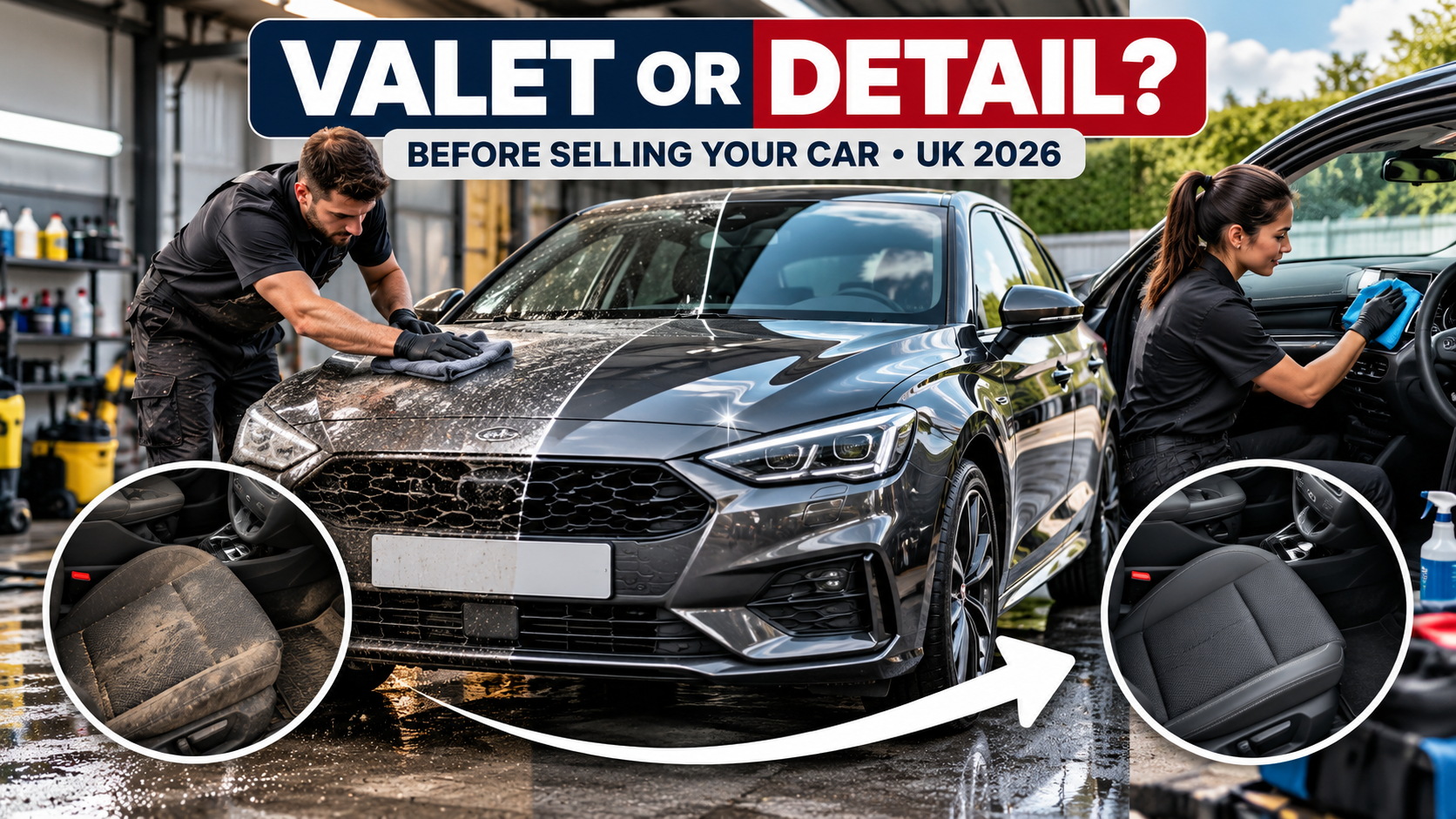
Should You Valet or Detail a Car Before Selling It? UK Guide 2026
Should you valet or detail a car before selling? Learn which cleaning jobs can improve buyer confidence, when professional detailing may pay, and what UK sellers should skip.
In this article
A clean car is easier to photograph, more pleasant to inspect and can give buyers more confidence that it has been looked after. But there is a big difference between spending £20–£50 on sensible cleaning and paying hundreds for paint correction, ceramic coatings or a full professional detail just before sale. The right preparation depends on the car, its condition, its likely selling price and how you plan to sell it.
This guide explains when to valet or detail a car before selling, which jobs are most likely to improve presentation, and where sellers can waste money chasing a finish that the market may not reward.
The short answer: should you valet or detail a car before selling?
For most used cars, yes to a thorough clean or valet; maybe to a full detail.
A proper exterior wash, clean interior, clear glass, tidy boot and removal of obvious rubbish can make a meaningful difference to first impressions without costing heavily. A professional detail can make sense for a high-value, enthusiast or unusually well-preserved vehicle where presentation materially affects buyer expectations. It is less likely to make financial sense on an older everyday car with mechanical faults, obvious body damage or a modest market value.
Cleaning can improve presentation. It does not change a vehicle's mileage, history, mechanical condition or underlying paint damage, and it does not guarantee a higher selling price.
Valeting vs detailing: what is the difference?
The terms are sometimes used loosely, so check exactly what a provider includes.
What a typical valet may include
A basic or full valet usually focuses on making the car clean and presentable. Depending on the package, that can include an exterior wash, wheel cleaning, vacuuming, dashboard and trim cleaning, glass cleaning, mats and a basic interior refresh.
For a normal used-car advert, this is often enough. The aim is not to create a concours finish. It is to remove distractions so buyers can judge the actual car.
What detailing usually adds
Detailing generally goes further. Services can include decontamination, machine polishing, paint correction, deeper interior cleaning, leather treatment and protective products. Some detailers also offer ceramic coatings or specialist restoration.
That extra work can dramatically improve appearance, but it costs more and may take much longer. Before booking, ask whether the likely improvement is proportionate to the value and condition of the car you are selling.
Why cleanliness matters when selling a used car
Online buyers initially judge photographs, description, price and history. Dirt can hide the quality of the paint, make an interior look neglected and create uncertainty about how the vehicle has been maintained.
RAC's current private-selling guidance recommends cleaning a car inside and out before advertising it, including clearing rubbish, vacuuming and washing the exterior. The principle is simple: a buyer should be able to inspect the vehicle rather than inspect the mess.
A clean car can also make your own condition assessment more accurate. Once mud and grime are removed, you can see scratches, stone chips, wheel damage and stains that should be photographed or disclosed.
What cleaning is worth doing before photographs?
Wash the exterior properly
Remove loose dirt safely rather than rubbing it into the paint. Clean the body, wheels, number plates, lights and glass. Pay attention to door shuts and obvious grime around handles.
You do not need to make an older car look new. The objective is an honest, clear presentation.
Vacuum the cabin and boot
Remove personal belongings, receipts, food packaging and unnecessary clutter. Vacuum seats, carpets, footwells and the boot. Move the front seats to reach visible debris underneath.
Do not remove equipment that belongs with the car. Keep the locking-wheel-nut key, tyre inflator, parcel shelf, charging cables and other supplied items available and list them accurately.
Clean the glass
Dirty or smeared windows can make photographs look poor and can affect visibility on a test drive. Clean inside and outside surfaces, mirrors and the windscreen.
Deal with obvious stains and odours
A stained seat or strong smell can become the buyer's first concern. Use suitable products and avoid soaking electrical components or delicate trim. For persistent smoke, pet or damp odours, a professional interior specialist may be more appropriate than masking the smell with fragrance.
If the source is a leak or other defect, address or disclose the underlying problem rather than simply deodorising the cabin.
Should you pay for a professional valet?
A professional valet can be worthwhile if you do not have the equipment, time or confidence to achieve a clean finish yourself. It can also help with heavily soiled upholstery, pet hair or a vehicle that has been used for work or family transport.
Ask for the exact package and price before booking. Compare the cost with the car's likely value and your own ability to do the basic work.
A £60 hypothetical valet on a £10,000 well-kept car may be an easy presentation decision. Spending £500 on cosmetic preparation for a £1,500 car with unresolved mechanical faults is a different calculation. These figures are examples only, not current market prices or guaranteed returns.
When might a full detail make sense?
High-value or enthusiast vehicles
Buyers of specialist, prestige or collector vehicles can pay close attention to paint condition, interior preservation and evidence of careful ownership. A skilled detail may make the car easier to present to that audience.
Even then, preserve evidence of the actual condition. Do not use polishing or photography to hide defects that a buyer reasonably needs to know about.
Cars with good paint hidden under contamination
A detail can reveal gloss and clarity where the underlying paint is fundamentally sound. Ask the detailer to assess the finish before authorising correction work.
Cars where presentation is central to the asking price
If you are asking near the top of the comparable market because the car is exceptionally well kept, presentation needs to support that claim. Good photographs, service evidence and a genuinely clean vehicle should all tell the same story.
When detailing is probably poor value
The car has major mechanical problems
A gleaming exterior does not compensate for a slipping clutch, warning lights, overheating or other significant faults. Diagnose important mechanical issues first and decide whether to repair or sell transparently as-is.
The body needs actual repair
Machine polishing cannot remove every scratch, dent, corrosion area or damaged panel. If a defect needs paintwork or body repair, get a quotation rather than assuming detailing will fix it.
The vehicle is low value
On an inexpensive car, buyers may prioritise roadworthiness, MOT history, tyres, maintenance and reliability over a near-perfect finish. Basic cleanliness still matters, but expensive cosmetic work can exceed any realistic improvement in the selling price.
You are selling to the motor trade
A professional trader may already have access to its own valeting and preparation facilities. A clean car can still help inspection and bidding, but the trader may not pay pound-for-pound for retail-level detailing that it could perform itself.
Can valeting increase your car's value?
It can support the price you are asking by improving presentation and reducing buyer objections, but there is no reliable fixed percentage uplift.
Market value still depends on factors such as age, mileage, model, specification, service history, MOT history, condition and demand. A valet changes presentation; it does not change those fundamentals.
Think in terms of protecting value rather than creating value from nothing. If a dirty cabin makes a sound £8,000 car look neglected, cleaning may help buyers judge it fairly. That does not mean a £100 valet automatically turns it into an £8,100 car.
Should you polish scratches before selling?
First identify what you are looking at. Light surface marks may improve with appropriate polishing, while deeper scratches through the paint may need professional repair. Aggressive machine polishing in inexperienced hands can damage the clear coat.
For a normal used car, minor age-related marks are expected. Photograph significant damage clearly and price the car with its actual condition in mind.
CarMazium already has a separate guide on whether to repair scratches and dents before selling, which covers the repair-versus-disclosure decision in more detail.
Should you refurbish kerbed alloy wheels?
Clean the wheels first. Brake dust and road grime can make them look worse than they are. Once clean, inspect for kerbing, corrosion, cracks or distortion.
Cosmetic refurbishment can improve presentation, but structural damage is a different issue. Do not describe a damaged wheel as merely cosmetic unless that assessment is justified.
For a deeper look at the valuation question, see CarMazium's guide to alloy-wheel damage and kerbing.
Interior cleaning: where buyers notice neglect fastest
Seats and carpets
Vacuum first, then use products suitable for the material. Test cleaners on an inconspicuous area. If the upholstery is heavily stained, a professional wet extraction or specialist clean may produce a better result.
Dashboard and controls
Remove dust and fingerprints without leaving a greasy finish. Clean screens using products appropriate to their coatings. Do not spray liquid directly into switches or electronics.
Steering wheel and high-touch areas
These areas can make a cabin feel much cleaner when properly treated. Avoid slippery dressings on steering wheels, pedals or controls.
Boot and storage spaces
Buyers often open the boot, lift the floor and inspect storage compartments. Remove rubbish, vacuum the area and check that supplied tools or inflation equipment are present where applicable.
Smoke, pet hair and strong odours
Smoke and pet odours can be difficult to remove completely because they can penetrate fabrics, headlining and ventilation systems. Be cautious about promises from quick treatments.
If you pay for professional odour removal, ask what process is being used and whether the underlying source has been addressed. Do not claim a car is smoke-free merely because the smell has temporarily been masked.
For pet hair, use suitable brushes or extraction tools without damaging the upholstery. Persistent evidence may still be visible to a careful buyer, so describe the vehicle honestly.
What not to do before selling
Do not hide warning lights or faults
Cleaning the dashboard is fine; clearing fault codes to make warning lights disappear for a viewing is not an honest preparation strategy. Diagnose known problems and disclose unresolved faults accurately.
Do not dress tyres excessively
A subtle clean finish is enough. Avoid products or application methods that could make tread surfaces slippery.
Do not pressure-wash sensitive areas carelessly
Modern engine bays contain electrical connectors, sensors and modules. If you are unsure how to clean an engine bay safely, leave it to a competent professional. A buyer generally needs an honest, inspectable engine bay more than an artificially glossy one.
Do not remove evidence of leaks just to conceal them
Cleaning old residue can help identify whether a leak is active, but hiding a known leak immediately before inspection is misleading. Explain known issues and provide repair evidence where available.
Take the photographs immediately after cleaning
Good preparation has the most value when your advert shows it clearly. Choose daylight, a tidy background and enough space around the vehicle. Photograph every side, wheels, interior, dashboard, boot, engine bay where appropriate, service documents and any important defects.
Avoid heavy filters that change the vehicle's colour or conceal damage. Buyers should recognise the same car when they arrive.
CarMazium's car photography guide explains how to build a useful image set for a listing.
Prepare for the viewing, not just the advert
Keep the car reasonably clean after taking photographs. If it gets dirty before a viewing, a quick wash or wipe-down may be worthwhile.
Have the keys, V5C where applicable, service history, invoices and MOT information ready. A spotless car with disorganised or missing documentation can still create doubt.
The AA notes that buyers use vehicle inspections to assess areas including engine, brakes, tyres, steering, suspension, bodywork, interior and electrics. Cleaning should make those checks easier, not obstruct them.
Valeting before a CarMazium auction
CarMazium currently lets eligible sellers list a vehicle in auction for £0, with verified motor traders bidding during the auction. The vehicle purchase price is paid directly to the seller, and qualifying completed auction sales can receive the £100 seller reward after approved handover.
A sensible clean can help traders assess photographs and condition. However, professional buyers also price preparation costs and defects into their bids. Do not spend heavily on cosmetic detailing solely because you expect every pound to return in the auction result.
Disclose scratches, wheel damage, stains, warning lights and known faults clearly. Better information can help bidders assess the car with less uncertainty.
Valeting before a CarMazium retail listing
CarMazium's current Basic retail package is £1 one-off, with Standard and Premium packages offering additional features. Retail buyers pay no CarMazium buyer fee, and vehicle payment goes directly from buyer to seller.
Retail presentation can matter more because you are competing with other advertised cars for enquiries. A clean vehicle, accurate description and strong photographs can make the listing easier to evaluate.
Check CarMazium's current pricing before listing because packages and optional features can change.
A practical pre-sale cleaning plan
Step 1: assess the car before spending
Walk around the vehicle in daylight and inspect the cabin. Separate dirt from damage. Write down mechanical faults, cosmetic defects, stains, odours and missing items.
Step 2: do the low-cost jobs first
Remove rubbish and personal possessions, vacuum thoroughly, clean the glass, wash the exterior and wheels, and wipe the interior surfaces appropriately.
Step 3: reassess the condition
Once clean, decide whether specialist stain removal, paint correction or wheel refurbishment is actually justified. You may discover that a basic clean has already achieved the presentation you need.
Step 4: compare cost with likely benefit
Get a written price for any professional work. Compare it with realistic sale values and offers rather than assuming cosmetic spend is recoverable.
Step 5: photograph honestly
Take clear images while the vehicle is clean. Include defects rather than framing them out deliberately.
Step 6: keep evidence
If you paid for specialist detailing, paint correction or interior treatment, keep the invoice. It can support your description, although it is not proof of the car's mechanical condition.
Frequently asked questions
Is it worth valeting a car before selling?
Usually, basic cleaning or a sensible valet is worthwhile because it improves presentation and makes inspection easier. Whether a paid professional valet is financially worthwhile depends on the car's condition, value and your own ability to clean it.
Will detailing increase my selling price?
Possibly, but there is no guaranteed uplift. Detailing may help a well-kept or high-value vehicle present closer to its potential market value. Buyers still consider mileage, history, mechanical condition and demand.
Should I clean the engine bay?
Only if you can do so safely. Avoid careless pressure washing around electrical components. Do not clean an engine bay specifically to conceal known leaks or defects.
Should I remove all scratches before selling?
Not automatically. Light cosmetic marks may be inexpensive to improve, while deeper damage can require professional repair. Compare repair cost with the likely benefit and disclose significant remaining damage.
Is a valet enough for a private sale?
For many everyday used cars, a thorough valet is enough. Focus on cleanliness, honest condition photographs and organised documentation rather than trying to make an older car appear factory-new.
Should I detail a car before selling to a dealer?
Usually only if the cost is modest or the car particularly benefits from presentation. Traders commonly have their own preparation processes and will value the vehicle based on condition, demand and likely retail costs.
Final verdict: clean first, detail selectively
Almost every used car benefits from being clean before it is advertised. Start with the basics: wash the exterior, clean the wheels and glass, vacuum the cabin and boot, remove rubbish and deal sensibly with stains or odours.
Move to professional detailing only when the vehicle and likely selling price justify the expense. The goal is not to disguise age or defects. It is to present the car clearly enough that buyers can see what they are considering.
When your car is ready, start a CarMazium listing, choose the auction or retail route that suits you, and describe the vehicle's condition accurately.
Sell your car your way
Ready to turn your research into a real sale?
List in the CarMazium dealer auction for £0, or advertise retail from £1. Qualifying successful auction sales can receive a £100 seller incentive.
Keep reading
Related automotive guides
Should You Service a Car Before Selling It? UK Guide 2026
Should you service your car before selling? Learn when a fresh service can support buyer confidence and value, when it may not pay, and what evidence UK buyers want.
Does a New Battery Increase a Used Car's Value? UK Guide 2026
A new battery can improve reliability and buyer confidence, but does it raise resale value? Learn when replacement makes sense before selling a car in the UK.
Does Timing-Belt or Timing-Chain History Affect Car Value? UK Guide 2026
Timing-belt and timing-chain history can influence buyer confidence and offers. Learn what proof matters, when to repair and how to sell accurately in the UK.
From the marketplace