
How to Sell a SORN Car in the UK: Complete Guide 2026
Selling a SORN car in the UK? Learn what SORN means for the sale, road use, MOT trips, transport, DVLA notification, the new keeper and how to price and hand over the car safely.
In this article
A SORN car can still be sold in the UK. The important distinction is that selling the vehicle does not give anyone permission to use it on a public road.
SORN stands for Statutory Off Road Notification. It tells DVLA that a vehicle is being kept off the public road rather than taxed for normal road use. A SORN vehicle might be perfectly healthy and simply stored in a garage, or it might be a project, seasonal car, non-runner or vehicle waiting for repairs.
For a seller, the practical questions are straightforward: where can the car be kept, can a buyer test-drive it, how should it be collected, what happens to the existing SORN after the sale, and what does the new keeper need to do?
This guide explains the process without treating a SORN as a mechanical fault in itself.
What Does SORN Mean?
A Statutory Off Road Notification is a declaration to DVLA that the vehicle is being kept off the road.
According to GOV.UK SORN guidance, a vehicle is considered off the road when it is not kept or used on a public road — for example, when it is in a garage, on a driveway or on private land.
A keeper may make a SORN when the vehicle is not taxed, is not insured for road use, is being stored, or is being taken apart before disposal.
The key point for sellers is this:
SORN is a licensing status, not a statement about the vehicle's value or mechanical condition.
A SORN car can be pristine, damaged, restored, awaiting an MOT, or completely non-running.
Can You Sell a SORN Car?
Yes.
There is no requirement to tax a vehicle merely to transfer it to a new keeper.
When the vehicle is sold, the seller must follow the normal DVLA change-of-keeper process. GOV.UK's vehicle-selling guidance says the seller should give the green new-keeper slip to a UK buyer and tell DVLA the buyer's full name and address.
The fact that the vehicle was SORN does not prevent the sale.
What it does affect is how the car can be viewed, tested and collected.
Does the SORN Transfer to the Buyer?
No.
This is one of the most important points in the whole transaction.
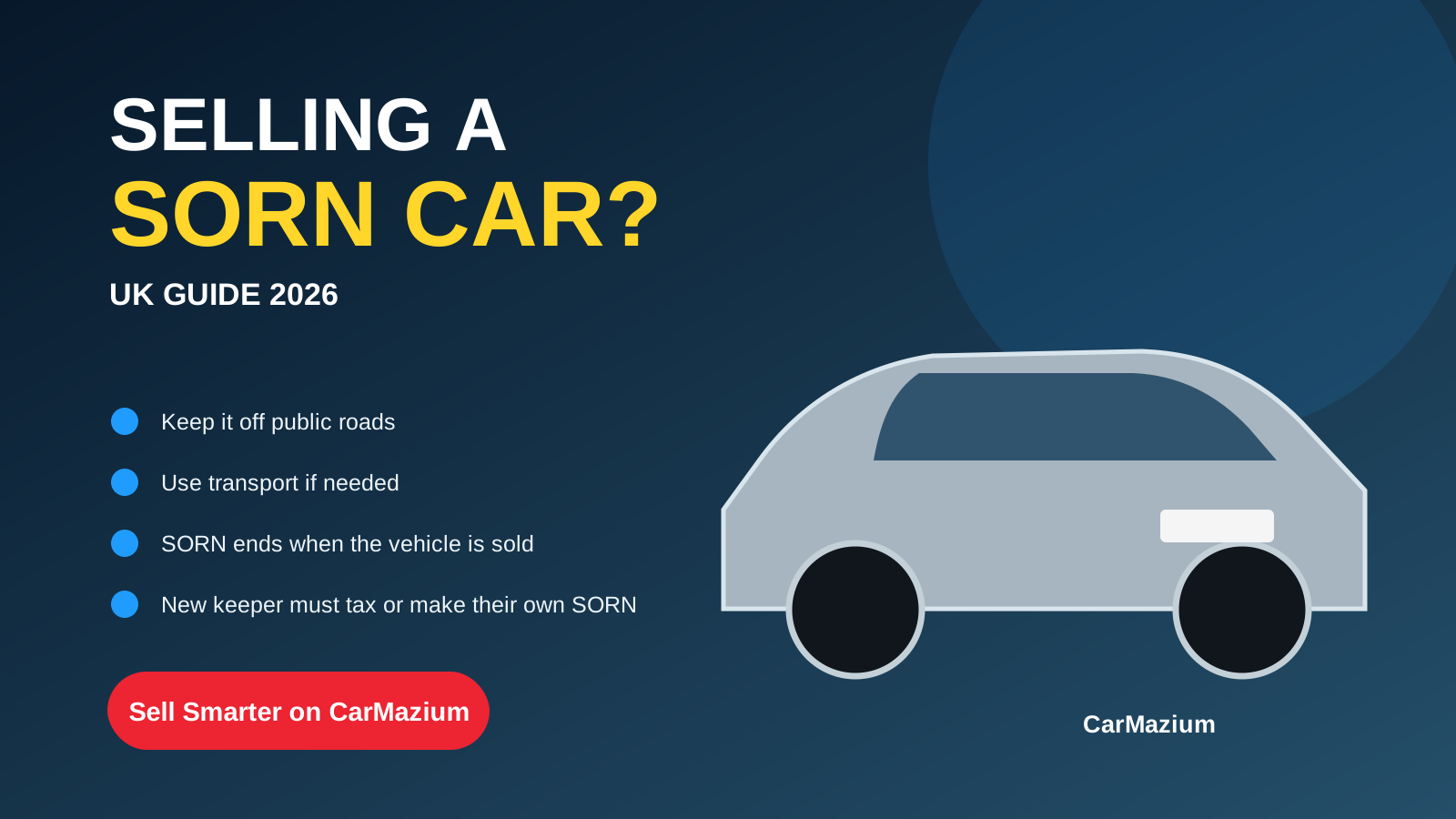
GOV.UK states that a SORN is automatically cancelled when the vehicle is sold. Vehicle tax and SORN do not transfer between keepers.
That means the buyer cannot rely on your existing SORN after the keeper change.
If the new keeper wants to use the vehicle on the public road, they need to tax it and meet the other legal requirements before doing so.
If they want to continue keeping it off-road, they need to make their own SORN.
This should be explained before collection so neither party assumes the old declaration follows the vehicle.
Where Must a SORN Car Be Kept Before the Sale?
A SORN vehicle must stay off the public road.
Suitable places can include:
- a private driveway,
- a garage,
- private land where you have permission,
- or suitable business premises.
A SORN does not allow you to leave an untaxed vehicle parked on the public road simply because it is not being driven.
If you are preparing the vehicle for sale, photograph it and arrange viewings on private property rather than moving it onto the road for convenience.
Can You Test-Drive a SORN Car?
For an ordinary buyer test drive on public roads, a SORN vehicle cannot simply be taken out because somebody is interested in buying it.
GOV.UK says a SORN vehicle may only be driven on a public road to go to or from a pre-booked MOT or other testing appointment. Using it on the road for another reason can lead to prosecution and a fine of up to £2,500.
So a normal ten-minute buyer test drive is not a SORN exception.
That does not mean the buyer cannot inspect the vehicle thoroughly.
On suitable private land, you can demonstrate things such as:
- cold start,
- idle quality,
- warning lights,
- clutch engagement,
- gearbox selection,
- steering operation,
- electrical equipment,
- air conditioning,
- and visible condition.
If the buyer requires a road test, the vehicle needs to be legally prepared for normal road use rather than relying on its SORN status.
What About Driving to a Pre-Booked MOT?
A SORN vehicle can be driven to or from a pre-booked MOT or other qualifying test appointment under the GOV.UK exception.
But that exception should not be misunderstood.
It does not make an unsafe vehicle roadworthy. It does not create insurance cover. And it does not turn a general viewing or collection journey into an MOT journey.
If the car has serious defects, arrange transport rather than trying to use the MOT exception as a workaround.
For a vehicle that also has no valid MOT, see our separate guide: Can You Sell a Car Without an MOT?.
Is a SORN Car Automatically Uninsured?
SORN and insurance are separate issues.
One reason people declare SORN is that a vehicle is no longer insured for road use, but some owners keep insurance on stored vehicles for theft, fire or accidental damage protection.
Do not assume a policy exists merely because the vehicle is valuable, and do not assume the buyer is covered to drive it.
Before any lawful road journey, the driver should make sure the vehicle and driver meet all applicable insurance and licensing requirements.
Does a SORN Car Need an MOT to Be Sold?
No. Ownership can change even if the vehicle does not have a current MOT.
However, MOT status can materially affect value and collection arrangements.
A buyer is likely to distinguish between:
- a SORN car with a long valid MOT that has simply been stored,
- a car whose MOT expired during storage,
- a vehicle that failed its last MOT,
- and a non-runner requiring substantial repairs.
Check the MOT history before setting your asking price and explain the position accurately.
Why Was the Car Declared SORN?
This is one of the first questions a sensible buyer may ask.
A useful advert should explain the reason briefly and factually.
Examples include:
Seasonal storage:
"SORN since November while stored in a dry garage."
Project vehicle:
"SORN during restoration; bodywork completed but mechanical recommissioning still required."
Owner stopped driving:
"SORN after purchase of another vehicle; starts regularly and has been kept on a private driveway."
Mechanical fault:
"SORN after gearbox fault developed. Vehicle currently requires recovery."
The reason matters because SORN itself does not tell the buyer what condition the car is in.
Does SORN Reduce a Car's Value?
Not automatically.
A SORN declaration on its own is not equivalent to an insurance write-off, MOT failure or mechanical defect.
The value effect comes from the circumstances behind it.
A well-maintained sports car stored off-road each winter may suffer little or no value penalty because of SORN.
A family hatchback that has been stationary outdoors for three years with no MOT, flat tyres and an unknown mechanical condition is different.
Buyers price the risk and preparation required, not merely the word SORN.
What Can Reduce the Value of a Long-Stored SORN Car?
Long periods without use can create condition concerns.
A buyer may look for:
- discharged or failed battery,
- seized or corroded brakes,
- tyre flat spots,
- low tyre pressures,
- old fuel,
- perished rubber components,
- corrosion,
- damp or mould inside the cabin,
- seized air-conditioning components,
- rodent damage,
- fluid leaks,
- and missed servicing.
This does not mean every stored car will have these problems.
It means the seller should inspect the vehicle properly before describing it as ready for use.
Start With an Honest Condition Assessment
Before listing, answer four questions.
1. Does It Start?
Try a cold start if appropriate and safe.
If the battery needs a booster every time, disclose it.
2. Does It Move on Private Land?
Check whether the clutch, gearbox, brakes and steering operate sufficiently to position or load the vehicle.
3. What Is the MOT Position?
Record the expiry date and review the public MOT history.
4. What Maintenance Has Been Done During Storage?
A folder showing annual servicing, battery maintenance, tyre replacement or recommissioning work can substantially improve buyer confidence.
How to Price a SORN Car
Do not automatically deduct an arbitrary percentage because the vehicle is SORN.
Instead, begin with the realistic value of an equivalent road-ready vehicle and adjust for the actual differences.
Possible deductions include:
- MOT uncertainty,
- recommissioning work,
- overdue servicing,
- tyres,
- battery,
- mechanical faults,
- recovery cost,
- cosmetic deterioration,
- and the buyer's risk.
Possible positives include:
- low mileage,
- dry indoor storage,
- strong service history,
- desirable specification,
- recent maintenance,
- two keys,
- clean bodywork,
- and evidence that the car has been properly preserved.
CarMazium's guide to pricing a used car explains the difference between retail asking price and trade value.
Trade Sale vs Retail Sale
A SORN vehicle can suit either route depending on condition.
Dealer Auction
A trade audience can be useful when the vehicle:
- needs recommissioning,
- has no MOT,
- requires transport,
- has a known mechanical issue,
- or is difficult to price for a private buyer.
Motor traders are used to assessing repair and preparation costs.
CarMazium's auction route currently allows sellers to list for £0, while verified motor traders bid for the vehicle.
Retail Listing
Retail can work well when the SORN is simply the result of storage and the vehicle remains desirable to an enthusiast or end buyer.
CarMazium retail listings currently start from £1.
Whichever route you choose, disclose the SORN and collection position clearly.
What to Put in the Advert
A strong SORN advert should answer the buyer's practical questions before they have to ask.
Include:
- registration and mileage,
- SORN status,
- reason for SORN,
- how long it has been off-road,
- MOT status,
- whether it starts,
- whether it drives on private land,
- known faults,
- service history,
- number of keys,
- tyre condition,
- storage conditions,
- and collection requirements.
Example:
2018 petrol hatchback, 54,000 miles. SORN since January 2026 after owner purchased another vehicle. Stored on private driveway and started regularly. MOT expired June 2026. Starts, selects all gears and moves on private land. Full service history and two keys. Buyer should arrange suitable transport unless they independently make the vehicle legal for road use.
That is far more useful than simply writing:
"SORN, sold as seen."
Photograph the Car Properly
Storage is not an excuse for poor presentation.
If possible, clean the car and take clear photographs of:
- front,
- rear,
- both sides,
- wheels and tyres,
- interior,
- dashboard,
- mileage,
- engine bay,
- boot,
- service documents,
- and any defects.
If the car cannot be moved, work with the space available rather than hiding one side of it.
Our car photography guide covers the most useful angles for an online advert.
Check the V5C Before the Sale
Make sure you have the V5C and that the vehicle details are correct.
GOV.UK advises sellers to protect the V5C document reference number and not publish photographs or copies of the log book.
A genuine buyer can inspect the V5C to make sure the details match the vehicle, but sensitive reference information should not be exposed in an advert.
If the V5C is missing, see Can You Sell a Car Without a V5C?.
How Should the Buyer Collect a SORN Car?
There are two broad possibilities.
The Buyer Makes It Legal for Normal Road Use
The new keeper can tax the vehicle using the appropriate new-keeper details and must satisfy the other legal requirements before driving it on public roads.
The old keeper's SORN does not transfer.
The Vehicle Is Transported
For many SORN sales, especially projects and non-runners, transport is the cleaner solution.
A transporter or recovery vehicle avoids the need to treat the collection itself as a normal road journey for the SORN car.
Through TradeXchange Delivery & Recovery, users can request suitable vehicle movement quotes.
When arranging collection, tell the provider:
- whether the vehicle starts,
- whether it rolls,
- whether it steers,
- whether the brakes are free,
- whether keys are present,
- collection and delivery postcodes,
- and whether winching may be required.
What Happens to Your SORN When You Sell?
It ends automatically.
GOV.UK states that a SORN is automatically cancelled if you sell, permanently export or scrap the vehicle, or when the vehicle is taxed again.
You therefore do not "transfer" your SORN to the buyer and you do not need to maintain it after DVLA records the sale.
The important action is to tell DVLA that the vehicle has been sold.
What Must the New Keeper Do?
The new keeper chooses what happens next.
If they intend to use the vehicle on the public road, they need to tax it and meet the other legal requirements.
If they intend to keep it off-road, they must make a new SORN themselves because yours cannot transfer.
GOV.UK says someone who buys or receives a vehicle and wants to keep it off-road needs their own SORN.
Make this clear during handover, especially if the buyer plans to leave the car in storage.
What If You Sell to a Motor Trader?
There is a specific SORN exception for qualifying motor traders and vehicle testers.
GOV.UK says a motor trader does not need to make a SORN where all the stated conditions apply, including that the vehicle is only temporarily in their possession, is kept at their business premises, and DVLA has been notified that it was sold or transferred to them.
The seller should still complete the correct notification to DVLA.
Do not assume that selling to a trader means the keeper-change paperwork can be ignored.
Complete the DVLA Notification Promptly
For a UK sale, give the green new-keeper slip to the buyer and notify DVLA of the transfer.
The online DVLA service provides confirmation and creates a clearer record of when your responsibility ended.
Keep that confirmation.
It can be important if parking notices, enforcement correspondence or other issues later arise involving the vehicle.
Use a Written Receipt
A receipt is useful even where the DVLA transfer is completed online.
Record:
- seller name,
- buyer name,
- registration,
- VIN where appropriate,
- mileage,
- price,
- date and time,
- SORN status,
- MOT status,
- known faults,
- and agreed collection method.
For example:
Vehicle sold while SORN and kept off-road. Buyer informed that seller's SORN does not transfer. Vehicle to be collected by transporter. Known faults disclosed separately on this receipt.
The receipt should reflect what actually happened.
Confirm Payment Before Releasing the Car
SORN status does not change normal payment precautions.
If the buyer pays by bank transfer, verify the funds through your own banking service before releasing the keys, documents or vehicle.
Do not rely on a screenshot or message saying payment has been sent.
For CarMazium vehicle sales, the buyer pays the seller directly; CarMazium does not hold the vehicle purchase price.
Common Mistake: Assuming SORN Transfers
It does not.
Once the car changes keeper, the new keeper needs to tax it or make their own SORN depending on what they intend to do.
Common Mistake: Allowing a Normal Road Test
SORN does not create a general test-drive exemption.
If the vehicle has not been made legal for normal road use, keep demonstrations on suitable private land and arrange transport where needed.
Common Mistake: Treating SORN as a Fault
Some adverts make a SORN vehicle sound automatically defective.
That can unnecessarily reduce confidence.
Explain why it is SORN and describe the actual condition instead.
Common Mistake: Hiding Long-Term Storage Problems
If the vehicle has stood for years, disclose what you know.
A new battery does not prove the brakes, tyres, fluids and other systems are ready for immediate road use.
Frequently Asked Questions
Can I sell my car while it is SORN?
Yes. A SORN does not prevent a vehicle being sold. You still need to notify DVLA of the keeper change.
Does SORN transfer to the new owner?
No. GOV.UK says SORN does not transfer and is automatically cancelled when the vehicle is sold.
Can a buyer test-drive a SORN car on the road?
Not as an ordinary buyer test drive simply because the vehicle is for sale. GOV.UK's road-use exception for a SORN vehicle is limited to travel to or from a pre-booked MOT or other testing appointment.
Can the buyer drive a SORN car home?
Not under your existing SORN. The new keeper must independently make the vehicle legal for road use before normal public-road driving, or arrange transport.
Does a SORN car need insurance while stored?
A SORN is used where a vehicle is kept off public roads and allows it to be kept without normal road tax. Owners may still choose storage-related insurance. Road use requires compliance with applicable insurance rules.
Does SORN lower the car's value?
Not by itself. Buyers are more likely to adjust their offer for the reason it was SORN, storage duration, MOT status, condition, recommissioning work and collection cost.
What happens to SORN after I sell the vehicle?
It is automatically cancelled when the vehicle is sold. The new keeper must tax the vehicle for road use or make their own SORN if keeping it off-road.
Can I sell a SORN car to a dealer?
Yes. GOV.UK also has a specific SORN exception for qualifying motor traders where the stated conditions are met.
The Bottom Line
Selling a SORN car is not complicated when the status is handled correctly.
Keep the vehicle off public roads while it remains SORN. Explain why it was taken off-road. Describe its actual condition rather than treating SORN as a mechanical defect. Price any recommissioning risk honestly. Use transport if the vehicle is not independently made legal and safe for normal road use.
At the point of sale, notify DVLA promptly. Your SORN ends when the vehicle is sold; it does not follow the car to the new keeper.
The buyer must then decide whether to tax the vehicle for road use or make a fresh SORN in their own name.
If you are ready to test the market, sell your car through CarMazium. For a vehicle that needs moving rather than driving, compare suitable options through TradeXchange Delivery & Recovery.
Sell your car your way
Ready to turn your research into a real sale?
List in the CarMazium dealer auction for £0, or advertise retail from £1. Qualifying successful auction sales can receive a £100 seller incentive.
Keep reading
Related automotive guides
Can You Sell a Car Without a V5C? UK Guide 2026
Lost your V5C log book before selling your car? Learn what DVLA requires, why replacing it first is usually safer, what happens if you sell without it, and how the buyer registers and taxes the vehicle.
Does Having Only One Car Key Affect Resale Value? UK Guide 2026
Selling a used car with only one key? Learn how a missing spare key can affect buyer confidence, dealer bids and resale value, plus when replacing it before sale may make sense.
How to Sell a High-Mileage Car in the UK: Pricing & Buyer Trust Guide 2026
Selling a high-mileage car does not mean accepting a poor price. Learn how UK sellers can price fairly, prove maintenance, explain mileage and build buyer confidence.
From the marketplace