

Selling a Car With a Replacement Engine in the UK: DVLA, Records & Value (2026)
Practical UK guidance for selling a car after an engine replacement: DVLA records, invoices, mileage, insurance, pricing and safe handover.
In this article
Can you sell a car with a replacement engine in the UK?
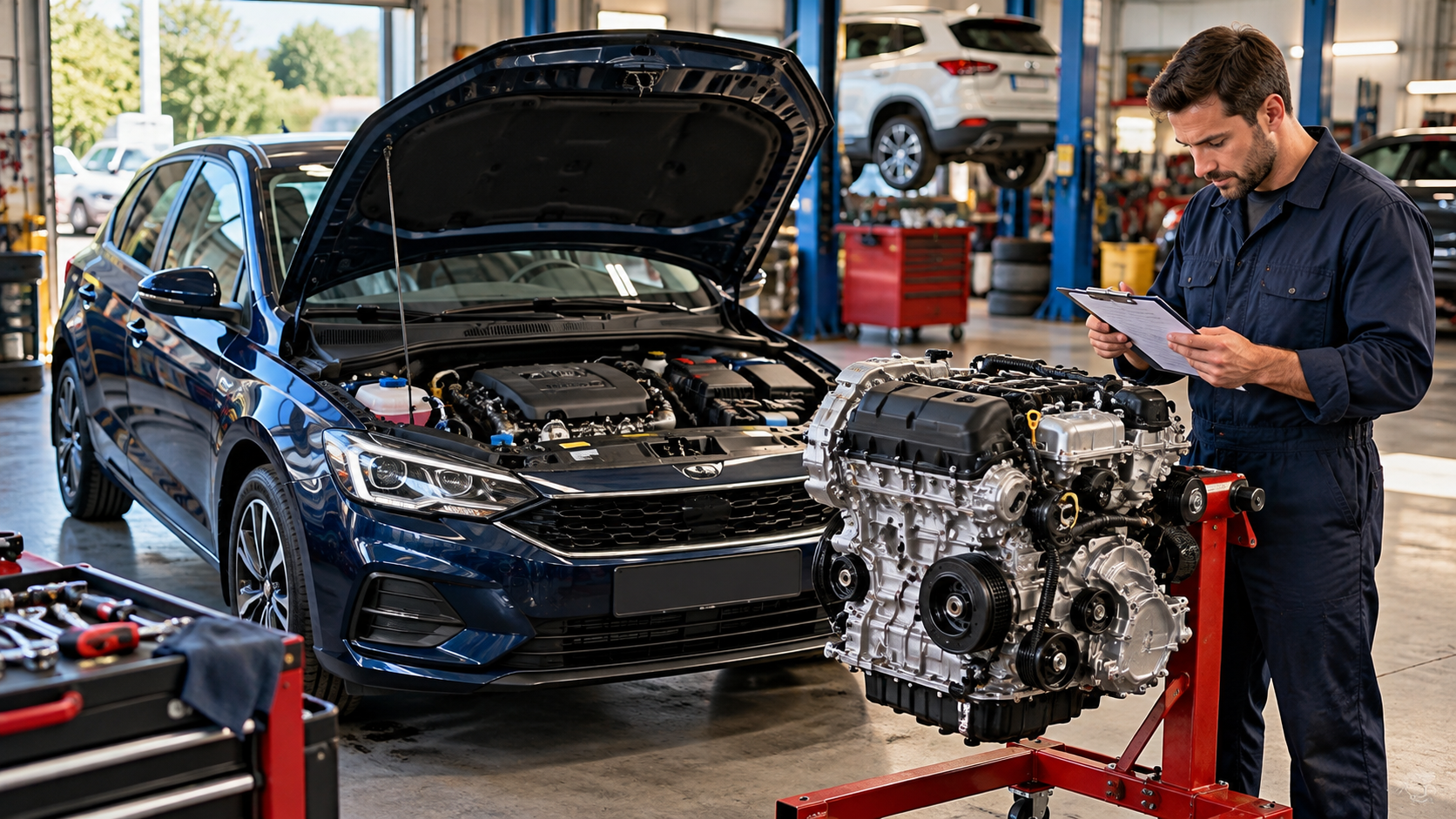
Yes. A replacement engine does not automatically make a car unsellable. Buyers will, however, want to know what was fitted, why the original engine was removed, whether the work was carried out competently, and whether the registered vehicle details are correct. Those questions affect trust and, often, the price achieved. A like-for-like replacement may be easier to explain than a conversion to a different capacity or fuel type, but neither should be concealed. Treat the engine change as an important part of the vehicle's history, not a minor repair to mention only after a deposit has been taken.
This guide explains how to prepare a replacement-engine car for sale in Britain, what to check with DVLA, which documents matter, how to research a realistic asking price and how to present the car clearly to private buyers and motor traders. It does not replace vehicle-specific mechanical, insurance or legal advice.
Why the engine was replaced matters
A replacement can follow overheating, oil starvation, timing failure, accident damage, manufacturing defects or a previous owner's performance project. Those circumstances are not equivalent. An engine changed because the old unit failed catastrophically may prompt questions about the cooling system, lubrication, turbocharger and other components that could have contributed to the failure. A planned conversion may prompt questions about brakes, transmission, emissions, insurance and approval.
Write down the reason for the work, the approximate date and mileage, the garage that performed it and the specification of the fitted engine. If you did not own the vehicle at the time, do not present assumptions as facts. A candid statement such as 'replacement fitted by previous keeper; invoice supplied; original failure reason unknown' is more credible than an unsupported claim that the vehicle is mechanically perfect.
Check the V5C and DVLA record before advertising
The V5C registration certificate should accurately reflect the vehicle details DVLA requires you to report. The official guidance says the engine, cylinder capacity and fuel type are among the changes that must be notified. If the engine number has changed, check the evidence requirements as well. A replacement that appears identical to the old engine may still involve a different engine number. The appropriate update depends on the actual details changed.
Read the current DVLA guidance on changing vehicle details before posting your advert. Where a change requires a V5C update, follow the prescribed procedure and retain copies of supporting evidence. Do not simply tell a buyer that the log book 'will be easy to fix later'. A mismatch between the fitted engine and the registration paperwork can delay a sale and undermine buyer confidence.
What proof does DVLA require for an engine change?
According to GOV.UK's evidence requirements, a change of engine number or cylinder capacity requires appropriate evidence or written confirmation. The listed options include a replacement-engine receipt showing engine number and capacity, written evidence from the manufacturer, an inspection report prepared for insurance purposes, or qualifying headed-paper confirmation from a garage if the change happened before you bought the vehicle.
A fuel-type change can require additional evidence. Check the precise guidance for your circumstances rather than assuming a workshop invoice alone will always be sufficient. Where documents are missing, contact the relevant garage or supplier and ask whether it can provide a dated record. Never alter a receipt, invent an engine number or guess at a capacity simply to make the documents appear consistent.
How to update the log book
GOV.UK explains that you generally complete the relevant vehicle-details section of the V5C and send it to DVLA with the required supporting evidence. The section differs between new and older log books. The postal address can also differ depending on which details changed, so use the official instructions rather than an address copied from an old forum post.
DVLA may contact you about an inspection or a change affecting vehicle tax. Allow time for the updated V5C to arrive before arranging a sale where practical. Keep evidence that you submitted the change, and tell prospective buyers truthfully if an application is still pending. The V5C records the registered keeper; it is not proof that the keeper owns the car outright.
Keep the engine's identity and provenance clear
Record the replacement engine's number, code, capacity and fuel type as accurately as possible. Check the donor or supplier documentation and compare it with the installed unit. A professional inspection may help when markings are difficult to locate. An engine number is not the same as the vehicle identification number (VIN), and the two should not be confused.
For a used replacement engine, ask whether the supplier can substantiate where it came from and what checks were performed. For a reconditioned engine, distinguish a genuine documented rebuild from a second-hand engine that was merely cleaned and fitted. For a new engine, retain the purchase invoice and any warranty terms. Avoid saying 'brand-new engine' if the paperwork shows a used or remanufactured unit.
Build a buyer-ready evidence pack
Gather the original repair diagnosis if available, engine purchase invoice, fitting labour invoice, parts receipts, warranty documentation, relevant DVLA correspondence, MOT records and subsequent service history. A strong invoice should identify the vehicle, workshop, date, nature of the work and replacement unit where possible. Receipts for related work—such as timing components, coolant system repairs, seals, filters and fluids—can also help buyers understand what was done.
Organise the paperwork chronologically. Highlight which records are original and which are copies, and do not share bank details or unnecessary personal information in public photographs. For a wider handover checklist, read what documents you need to sell a car in the UK. A complete pack will not eliminate every buyer concern, but it makes meaningful due diligence much easier.
Does an engine replacement reset the car's mileage?
No. Replacing an engine does not turn a high-mileage vehicle into a low-mileage one. The vehicle's odometer normally records distance travelled by the vehicle, including its body, transmission, suspension and other components. The fitted engine may have covered a different distance, but that figure is separate and should be described only if it can be supported.
For example, a car showing 112,000 miles with a documented used engine fitted 15,000 vehicle miles ago is still a 112,000-mile car. Do not advertise it as a '15,000-mile car'. If the replacement engine's prior mileage is unknown, say 'engine mileage unknown' rather than inventing a number. You can review the official MOT history to check the vehicle's recorded odometer progression.
Mechanical checks worth doing before the sale
A replacement engine can run well while associated systems still have problems. Consider a competent independent inspection that includes visible leaks, fluid condition, cooling-system performance, unusual noises, exhaust smoke, diagnostic fault codes and a suitable road test. Ask whether the engine management software, emissions equipment and ancillary components are appropriate for the fitted unit. Not every check will apply to every vehicle.
If the car was recently repaired, provide the mileage driven since fitting and any documented follow-up checks. Do not imply a fresh MOT guarantees that the engine or installation is fault-free; an MOT is not a comprehensive mechanical warranty. If a known issue remains, describe it plainly. Safety-critical faults should be addressed before a test drive, or the car should be sold for lawful collection rather than road use.
Insurance, modifications and compatibility
A like-for-like replacement may be treated differently by insurers from an engine conversion that changes power, displacement or fuel type. Do not assume your current policy automatically covers every modification. Contact the insurer and disclose the actual engine change and any related tuning or alterations. A buyer should also obtain an insurance quotation based on the correct specification.
For substantial conversions, professional advice may be needed on vehicle approval, emissions, construction and registration requirements. A larger or more powerful engine can affect brakes, cooling, transmission and handling. The selling point should be documented engineering quality, not an unsupported performance claim. Our guide to selling a modified car covers broader issues where a replacement engine is part of a more extensive project.
How much does a replacement engine affect resale value?
There is no universal percentage discount or premium. A properly documented, compatible engine replacement that resolves a known failure may reassure some buyers. Others may still prefer an untouched example, especially if they intend to resell it later. The impact depends on the model, engine reputation, age, overall condition, remaining warranty, repair quality and whether the engine history can be independently checked.
A recent expensive invoice is not the same as an equivalent increase in market value. Buyers assess the whole car, not the seller's total spending. Equally, a professionally repaired vehicle is not automatically worth only scrap value. Compare similar cars with matching specification, mileage and condition, then adjust for the particular history and evidence. Our UK used-car pricing guide explains asking prices versus trade values.
A practical pricing method
Start with three groups of comparable advertisements: similar cars with original engines, documented engine-replacement examples where available, and vehicles needing major engine work. Note the differences in age, specification, mileage, MOT status and location. Asking prices can be optimistic, so do not treat every listing as a completed sale. Specialist forums and recent transactions may help, but their evidence quality varies.
Then assess your own car honestly. A complete, credible engine invoice and a smooth independent inspection may support a stronger asking price than a car with a mysterious engine swap and no records. Decide whether you want a faster trade sale or time to find a specialist retail buyer. Leave a reasonable negotiating margin, but avoid a price so high that enquiries stop. Price is a market test, not a guarantee.
How to write the advert
Disclose the engine replacement near the top of the listing, not buried at the end. State whether the engine is new, reconditioned or used; the reason for replacement if known; the date and vehicle mileage at fitting; the documented specification; and whether DVLA records have been updated. Mention invoices, warranty documents and post-installation maintenance without claiming more than they establish.
A useful sentence might be: 'Replacement 1.6-litre petrol engine fitted by independent garage in March 2025 at 94,000 vehicle miles; fitting and parts invoices available; vehicle now shows 107,000 miles.' Use this only as an illustrative template, not as facts about a real car. If the paperwork is incomplete, say so. The right buyer can evaluate disclosed uncertainty; undisclosed surprises are more likely to cause disputes.
Photographs and inspection transparency
Show the exterior, interior, odometer, engine bay, tyres and any visible damage in clear daylight photographs. Include an engine-bay image after cleaning, but do not use a heavy cosmetic dressing that could hide leaks or make the engine look newer than it is. Photograph relevant invoice headings with personal and financial details concealed. If the engine code or number can be safely photographed, keep that evidence for serious enquiries rather than publishing sensitive identifiers indiscriminately.
Expect a knowledgeable buyer to request a cold start, diagnostic scan, inspection and test drive. Arrange viewings safely and check driving entitlement and insurance. A refusal to allow reasonable inspection can make even a good repair look suspicious. If a warranty applies, confirm whether it is transferable before mentioning it as a benefit.
Auction or retail: which selling route fits?
A retail advert gives you time to explain a specialist engine replacement to buyers who understand the model. An auction may help establish what eligible motor traders will offer, especially when the vehicle has unusual history. Different buyers price mechanical risk differently. A trader may need room for further checks, preparation and resale costs; a knowledgeable enthusiast may value the documentation more highly.
On CarMazium's sell page, sellers can explore free auction listing or the £1 one-time retail listing option. Auction buyers pay a £125 platform fee when applicable; retail buyers do not pay a CarMazium buyer fee. The separate £100 seller incentive is conditional on a qualifying completed auction sale and approved handover, not an automatic payment for every listing. Verify current platform terms before making a decision.
CarMazium listing checklist for an engine-changed car
Enter the correct registration, model, variant and mileage, then choose the appropriate auction or retail route. Describe the replacement engine in the condition and history fields, and use the photographs to show the vehicle honestly. If the platform offers valuation guidance, remember that an automated estimate may not fully reflect an unusual engine history. A documented repair can require manual market judgement.
Do not suggest the engine is original if it is not. If DVLA paperwork is being updated, explain the current status. Provide accurate information about faults, service records, keys and MOT history. CarMazium's vehicle purchase funds are paid directly by the buyer to the seller; the platform collects its own applicable fees, not the vehicle sale price. Follow the relevant verification, inspection, payment confirmation and handover steps.
Safe payment and handover
Agree the sale price and material disclosures in writing. Do not release the car on the strength of a screenshot or an email purporting to show a transfer. Check that funds have actually cleared in your own bank account or verify with your bank. Keep keys, V5C and vehicle secure until payment is confirmed. If a buyer arranges collection, establish who is responsible for transport and insurance.
Give a dated receipt with the registration, VIN, agreed price, buyer and seller details, handover time and a concise statement about the disclosed engine replacement. Tell DVLA when the keeper changes using the official selling guidance. Vehicle tax does not transfer to the new keeper. If the vehicle cannot legally be driven, arrange suitable collection rather than encouraging the buyer to drive it away.
Common mistakes that delay a sale
The most damaging mistakes are failing to notify DVLA of relevant changes, describing a used engine as new, confusing engine mileage with vehicle mileage, concealing the reason for replacement, and treating an invoice as proof that every part of the car is sound. Another error is advertising a major conversion without checking insurance and legal requirements. Buyers may also be concerned if the engine number on the paperwork cannot be reconciled with the fitted unit.
Avoid using phrases such as 'no expense spared', 'like new' or 'guaranteed reliable' unless you can justify them. Clear records, fair pricing and an independent inspection are more persuasive than superlatives. If the documentation cannot be recovered, acknowledge the gap and price the vehicle with that uncertainty in mind.
Frequently asked questions
Can I sell a car after changing its engine?
Yes, subject to accurate disclosure and compliance with the applicable vehicle registration, insurance and roadworthiness requirements. An engine replacement is not automatically a prohibition on sale.
Do I have to tell DVLA about a replacement engine?
DVLA requires updates for changes to engine details, including the engine and relevant number, capacity or fuel-type information. Check the official V5C instructions and evidence requirements for your specific case.
Does a new engine mean the car has zero miles?
No. The vehicle's odometer does not reset because an engine was replaced. State the vehicle mileage and separately describe any documented mileage for the replacement engine.
Will an engine swap reduce my car's value?
It depends. Quality of installation, engine compatibility, documentation, remaining warranty and buyer demand matter. There is no reliable blanket discount.
What if I have no invoice for the engine?
Try to obtain records from the fitting garage or supplier. Be transparent about what cannot be verified and check with DVLA what evidence is required for your circumstances.
Can I sell it at auction?
A vehicle with a replacement engine may be suitable for an auction if it meets the platform's eligibility requirements and its condition and history are disclosed accurately. Explore the options on CarMazium.
Final checklist and official sources
Before advertising, confirm the replacement engine's specification and number; check whether the V5C needs updating; collect invoices and provenance evidence; review MOT history; disclose any insurance-relevant modifications; check roadworthiness; research comparable prices; and prepare a clear, accurate advert. At handover, verify cleared payment, provide a receipt and notify DVLA.
For primary guidance consult GOV.UK: change vehicle details, DVLA evidence requirements, MOT history and selling a vehicle. This article is general UK information as at October 2026; check the live official guidance for any subsequent changes.
Relevant CarMazium guides and next steps
Continue with the guides and tools most relevant to this article.
Sell your car your way
Ready to turn your research into a real sale?
List in the CarMazium dealer auction for £0, or advertise retail from £1. Qualifying successful auction sales can receive a £100 seller incentive.
Keep reading
Related automotive guides
Selling a Car With a Faulty Turbocharger in the UK: MOT, Repairs & Value (2026)
Selling a car with a faulty turbocharger? Learn UK MOT rules, diagnosis, repair-versus-sale decisions, honest pricing and safe handover.
Selling a Car With an Overheating Engine in the UK: MOT, Repairs & Value (2026)
Selling a car with an overheating engine? Understand UK MOT rules, coolant faults, repair decisions, honest pricing and safe collection before you sell.
Selling a Car With an Exhaust Leak in the UK: MOT, Repairs & Value (2026)
Selling a car with an exhaust leak? Understand UK MOT rules, fumes and safety risks, repair decisions, honest pricing and secure collection before you sell.
From the marketplace