

How DPF Problems Affect Diesel Car Value and Saleability: UK Guide 2026
DPF warning or blocked filter? Learn how diesel particulate filter problems affect UK used-car value, MOT prospects, repair decisions and selling options.
In this article
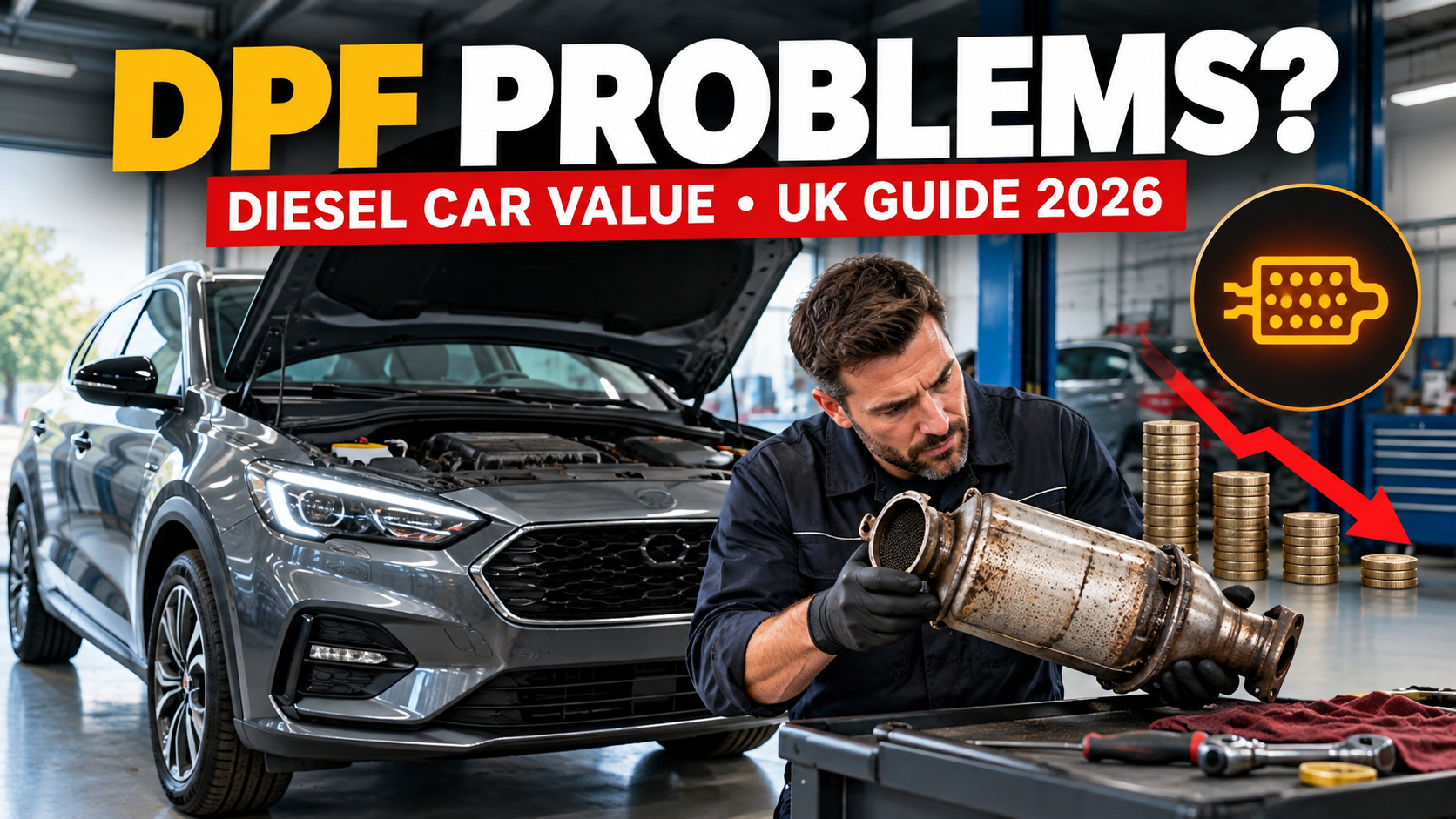
Diesel particulate filter problems can make an otherwise desirable used diesel harder to sell. A warning light, repeated failed regenerations or a suspected blocked DPF introduces repair uncertainty for the next owner, and uncertainty normally affects what a private buyer or motor trader is prepared to pay.
The important point is not to assume every DPF warning means the filter needs replacing. A DPF is part of a wider emissions system, and the correct response is diagnosis: establish why the warning appeared, whether regeneration is possible, whether another fault is preventing regeneration and whether the car remains safe and legal to use.
This UK guide explains what DPF problems mean for resale value, MOT status, buyer confidence and the decision to repair or sell with the fault disclosed.
What is a DPF and why does it matter when selling?
A diesel particulate filter traps particulate matter in diesel exhaust gases. Over time, trapped soot must be burned off through regeneration. GOV.UK guidance explains that unsuccessful regeneration can cause soot to build up, affect performance and ultimately lead to expensive repairs.
That makes the DPF relevant to resale for two reasons. First, a buyer may face immediate diagnostic or repair costs. Second, a DPF problem can affect emissions compliance and MOT prospects.
A healthy diesel with no warning lights, sensible service history and evidence of appropriate maintenance is easier for a buyer to assess than an equivalent car displaying an emissions warning with no diagnosis.
How DPF problems can reduce a diesel car's value
There is no credible fixed percentage that applies to every vehicle. The adjustment depends on the car's normal market value, the exact fault, diagnosis quality, repair cost and remaining uncertainty.
Consider the difference between these situations:
- a temporary warning that has been professionally diagnosed and successfully resolved;
- a filter that needs a controlled regeneration;
- a sensor or pressure-system fault that prevents normal regeneration;
- a heavily loaded or damaged filter requiring specialist work;
- an emissions problem with an unknown cause;
- a DPF that appears to have been removed or tampered with.
These are not equivalent risks. A buyer who receives a written diagnosis and itemised quotation can price the problem more accurately. Without evidence, a trader may have to budget for a worst-case outcome, workshop time and the possibility that the DPF symptom is secondary to another engine or emissions fault.
A useful valuation approach
Start with the realistic market value of a comparable car with the same age, mileage, engine, trim, transmission, history and general condition, but without the DPF issue.
Then establish the likely cost of diagnosis and repair. Finally, allow for unresolved risk, downtime and transport if the car should not be driven.
Do not simply subtract the cheapest internet price for a replacement filter. The underlying cause matters. Replacing or cleaning a DPF without correcting the condition that caused abnormal loading may not solve the problem.
For a broader explanation of condition and market pricing, see How to Price a Used Car for Sale in the UK.
What causes a DPF warning?
A DPF warning can appear when soot loading reaches a threshold or the vehicle detects a problem affecting the emissions system. Driving pattern can be relevant because regeneration needs suitable operating conditions, but short journeys are not the only possible explanation.
Potential causes can include interrupted regeneration, sensor faults, exhaust or engine-management problems and faults that prevent the engine reaching the conditions required for regeneration. The correct diagnosis varies by vehicle.
Do not promise a buyer that a motorway run will fix the problem unless the vehicle manufacturer's instructions and a competent diagnosis support that course of action. If the warning indicates a more serious condition, continuing to drive may worsen the fault.
Soot and ash are not the same thing
Regeneration burns accumulated soot; it does not make a DPF permanently maintenance-free. Non-combustible residue can remain over a long service life. That distinction is one reason a diagnostic assessment should consider the filter's measured condition rather than treating every restriction as identical.
DPF regeneration explained
GOV.UK describes regeneration as the process of burning trapped soot at high temperature. Depending on the vehicle, regeneration can occur passively during suitable driving or be actively managed by the engine-control system.
Some workshops can carry out a controlled or forced regeneration where appropriate. That is not a universal repair. If a sensor, engine or emissions fault is preventing correct regeneration, the root cause must be addressed.
Before paying for cleaning or replacement, ask the garage what measurements support its diagnosis. Useful evidence may include diagnostic trouble codes, pressure readings, calculated soot loading and any identified upstream fault. The precise data available depends on the vehicle.
Can a car with a DPF problem pass an MOT?
Do not assume that it can.
GOV.UK states that the MOT exhaust-system inspection includes checking for the presence of a DPF where one was fitted as standard. A missing DPF can cause an MOT failure.
The current DVSA MOT inspection manual also treats visible smoke from a vehicle fitted with a DPF as a major defect. Diesel emissions are tested against applicable limits, and evidence of emissions-control problems can affect the result.
An existing MOT certificate is therefore not proof that a DPF problem appearing later is harmless. An MOT records the vehicle's test result at that time; it does not guarantee future emissions-system health.
You can read the official GOV.UK DPF guidance and the DVSA MOT inspection manual for the current test framework.
Do not remove or tamper with the DPF
Removing a DPF is not a sensible shortcut for preparing a road car for sale. GOV.UK guidance explains that removal can make the vehicle illegal for road use where it no longer meets the emissions standards it was designed to meet, and the MOT includes a DPF presence check.
For a seller, tampering also creates a serious confidence problem. A prospective buyer may face MOT failure, rectification expense and questions about what other modifications have been made.
If you suspect a previous owner altered the emissions system, obtain professional advice before advertising the car as compliant.
Symptoms sellers should take seriously
A dashboard DPF or engine-management warning is the most obvious sign, but sellers may also notice reduced performance, repeated regeneration behaviour, increased fuel use, cooling fans operating after a journey or an emissions-related limp mode.
These observations do not prove the DPF itself has failed. They are reasons to obtain diagnosis.
If the car emits visible smoke, loses power severely or shows warnings instructing the driver to stop, follow the manufacturer's guidance and seek professional assistance. Do not arrange test drives simply to demonstrate a fault if the vehicle may be unsafe or illegal to use.
For related warning-light guidance, see Do Dashboard Warning Lights Affect a Car's Value?.
Should you repair a DPF problem before selling?
The decision should be economic and evidence-based.
Repairing before sale can make sense when the fault is clearly diagnosed, the cost is proportionate to the car's value and the completed work can be supported with an invoice. A resolved warning and documented repair remove a significant unknown for buyers.
Selling with the fault may make more sense when the vehicle is low value, the required work is disproportionate, or you prefer to let a trade buyer undertake specialist repair.
Compare the whole repair decision
Ask for an itemised estimate covering diagnosis, labour, parts, cleaning or replacement, VAT and any additional work needed to address the root cause.
Then compare the likely value of the repaired car with the likely as-is sale value. Include downtime and the possibility that further faults are discovered.
A £500 estimate does not automatically mean the car becomes worth £500 more after repair. Equally, leaving a relatively inexpensive confirmed fault unresolved can cause buyers to discount more heavily because they cannot be certain the estimate is complete.
Cleaning, regeneration or replacement: what should a seller claim?
Only describe work that has actually been carried out.
If a garage performed a regeneration, keep the invoice. If the filter was professionally cleaned, retain the documentation describing the process. If a DPF was replaced, keep the part and labour invoice and any warranty details.
Avoid vague phrases such as "DPF sorted" if the warning has merely been cleared. Clearing a diagnostic code is not the same as repairing the cause.
If the warning returns after previous work, disclose that history to a buyer and give the workshop the earlier documentation.
Service history and DPF buyer confidence
A complete service history does not guarantee that a DPF is healthy, but records help a buyer understand how the car has been maintained. Correct engine oil specification can be important on DPF-equipped diesels, so invoices showing appropriate servicing can be useful.
Keep receipts for emissions-system repairs, sensors, injectors, EGR-related work or DPF cleaning where relevant. Do not overwhelm the listing with technical claims; make the key records available for inspection.
CarMazium's guide to service history and car value explains how maintenance evidence can support buyer confidence.
How to advertise a diesel with a DPF fault
Accuracy is more useful than optimistic wording.
State what the dashboard shows, when the warning appeared, whether performance is affected and what a garage has diagnosed. If you have a written quotation, say so. If the cause has not been confirmed, use wording such as "DPF/emissions warning present; cause not yet diagnosed" rather than declaring that the car merely needs a regeneration.
Include clear photographs and the vehicle's genuine mileage, service history and MOT information. If it is not suitable for normal road use, make collection requirements clear.
The same principle applies to any faulty vehicle: buyers can price known information; hidden uncertainty tends to create disputes.
Private sale versus trade sale with a DPF problem
A private buyer may expect to use the vehicle immediately and may therefore be cautious about an unresolved emissions fault. A motor trader may have workshop access and experience with diesel diagnostics, but will normally factor preparation cost, risk and margin into the bid.
That does not mean one route always produces more money. The right route depends on the vehicle, diagnosis, urgency and market demand.
If you want to compare selling approaches, CarMazium Auction vs Retail explains the distinction.
Selling a DPF-problem car through CarMazium
CarMazium currently offers two seller routes.
The CarMazium auction is free for sellers to list and bidding is restricted to verified motor traders. The current auction buyer fee is paid by the winning trader, not by the seller. Eligible completed auction sales can qualify for the separate £100 seller incentive after the required handover process.
Retail listings currently start at £1. Retail buyers pay no CarMazium buyer fee. Vehicle purchase money is paid directly between buyer and seller; CarMazium does not hold the vehicle purchase price.
Always check current CarMazium pricing before listing because packages and optional features can change.
Which CarMazium route may suit a faulty diesel?
A dealer auction can be useful where the vehicle needs professional diagnosis or preparation because verified trade buyers can assess that work within their bids. Give them accurate fault information so they do not have to assume the worst.
Retail may suit a seller who wants to set an asking price and wait for an appropriate buyer. With an unresolved DPF problem, disclosure becomes particularly important. Do not price the car as though it is fault-free while burying a material warning in the description.
Preparing evidence before you list
Gather:
- V5C and identification details;
- current MOT information and relevant advisories;
- service invoices;
- diagnostic reports and fault codes with professional interpretation;
- DPF cleaning, regeneration or replacement invoices;
- quotations for outstanding work;
- clear dashboard photographs showing current warnings;
- photographs of the vehicle's overall condition;
- spare keys and other relevant documents.
If the car has an unresolved fault, ask whether the workshop considers it suitable to drive. Arrange recovery or transport if necessary.
What motor traders consider when bidding
A trader is not simply subtracting the price of a filter. The bid may reflect diagnostic uncertainty, labour, parts availability, transport, workshop capacity, preparation, other vehicle defects, stock turn and expected resale value.
Accurate information can therefore matter as much as cosmetic presentation. If a dealer can see a recent diagnostic report and a credible repair quotation, the unknown-risk allowance may be easier to control.
Conversely, a warning light with no history and claims such as "easy fix" can reduce confidence.
What buyers should check on a diesel with DPF history
Ask what symptom occurred, what diagnosis was made and what repair was completed. Review invoices rather than relying only on a dashboard with no warning currently illuminated.
Check the MOT history and inspect the vehicle normally. A previous DPF repair is not automatically a reason to reject a car; the quality of diagnosis, repair evidence and present condition matter.
If you are not confident assessing a diesel emissions system, consider an independent inspection before purchase.
Frequently asked questions
Does a DPF warning light reduce car value?
It can. An unresolved warning introduces repair cost and uncertainty. The size of any reduction depends on the diagnosis, vehicle value and likely work required rather than a fixed percentage.
Can I sell a car with a blocked DPF?
You can offer a faulty vehicle for sale, but describe the known condition accurately and do not encourage unsafe or unlawful road use. Obtain professional advice about whether the car should be driven or transported.
Will a long drive always clear a DPF?
No. Regeneration depends on the vehicle and the reason for the warning. A separate fault may prevent successful regeneration. Follow manufacturer guidance and obtain diagnosis rather than repeatedly driving a car with a worsening warning.
Is DPF removal legal?
GOV.UK guidance warns that removing a DPF can make a vehicle illegal for road use when it no longer complies with the emissions standards it was designed to meet. The MOT also checks for the presence of a DPF where one was fitted as standard.
Does an MOT pass prove the DPF is healthy?
No. It shows the vehicle met the relevant MOT requirements at the time of test. A later warning or developing fault still needs investigation.
Is DPF cleaning better than replacement?
Neither is universally better. The correct remedy depends on the filter's condition and the root cause. Obtain a diagnosis and ask what warranty applies to the proposed work.
Should I clear the warning light before advertising?
Do not clear warnings simply to conceal a known fault. If diagnostic work has legitimately resolved the cause, retain the invoice and explain the repair. Transparent evidence is more valuable than a temporarily blank dashboard.
Can dealers bid on a car with a DPF problem on CarMazium?
A vehicle with disclosed faults may be suitable for the dealer-auction route subject to CarMazium's listing requirements. Only verified motor traders can bid in the auction. Describe the fault and any transport needs accurately.
A practical seller checklist
Before listing, establish whether the car is safe and legal to use, obtain a diagnosis where practical, gather service and repair evidence, compare sound examples, obtain an itemised repair estimate and decide whether repairing creates enough additional value to justify the cost.
If selling as-is, make the DPF or emissions issue prominent, provide the evidence you have and price for the actual condition. Confirm cleared vehicle funds directly before handover and complete the appropriate ownership-transfer process.
The bottom line
DPF problems affect saleability mainly because they create uncertainty around emissions compliance, repair cost and future reliability. The strongest response is not to guess at a percentage or hide the warning; it is to reduce uncertainty.
Diagnose the fault, preserve the paperwork, understand the MOT implications, compare repair cost with realistic market value and disclose the condition clearly. A properly repaired car with evidence can be easier to sell, while an unrepaired vehicle can still find the right buyer when it is honestly described and sensibly priced.
When you are ready to test the market, start a CarMazium listing and choose between the free verified-dealer auction or a retail listing based on the vehicle's condition and your preferred selling route.
Sell your car your way
Ready to turn your research into a real sale?
List in the CarMazium dealer auction for £0, or advertise retail from £1. Qualifying successful auction sales can receive a £100 seller incentive.
Keep reading
Related automotive guides

Does Timing-Belt or Timing-Chain History Affect Car Value? UK Guide 2026
Timing-belt and timing-chain history can influence buyer confidence and offers. Learn what proof matters, when to repair and how to sell accurately in the UK.

AdBlue Warning Problems: What UK Used-Car Sellers Should Know
An AdBlue warning can affect diesel car value and buyer confidence. Learn when to diagnose, repair or disclose a fault before selling in the UK.

How Gearbox Problems Affect Used-Car Value in the UK: 2026 Guide
Understand how manual and automatic gearbox faults affect UK used-car value, when to repair, how to price accurately and how to sell with honest disclosure.
From the marketplace