
UK Used Car Market 2026: What Sellers Need to Know Before Selling
The UK used car market is changing. We analyse the latest 2026 data on prices, EV demand, older cars and buyer behaviour to explain what it means for anyone thinking of selling.
UK Used Car Market 2026: What Sellers Need to Know Before Selling
If you're considering selling your car in 2026, one of the first questions you might ask is simple:
Is now actually a good time to sell?
The answer is more interesting than a simple yes or no.
The UK used car market remains remarkably active, but the strongest demand is no longer evenly distributed across every age, fuel type and price range.
Electric cars are behaving differently from diesels. Older affordable cars are showing surprising strength. Some premium vehicles are taking longer to find buyers, while popular hatchbacks continue changing hands in huge numbers.
Understanding these differences can help sellers make better decisions about pricing, timing and how they take their car to market.
Here is what the latest 2026 data tells us.
The UK Used Car Market Has Passed Two Million Quarterly Sales Again
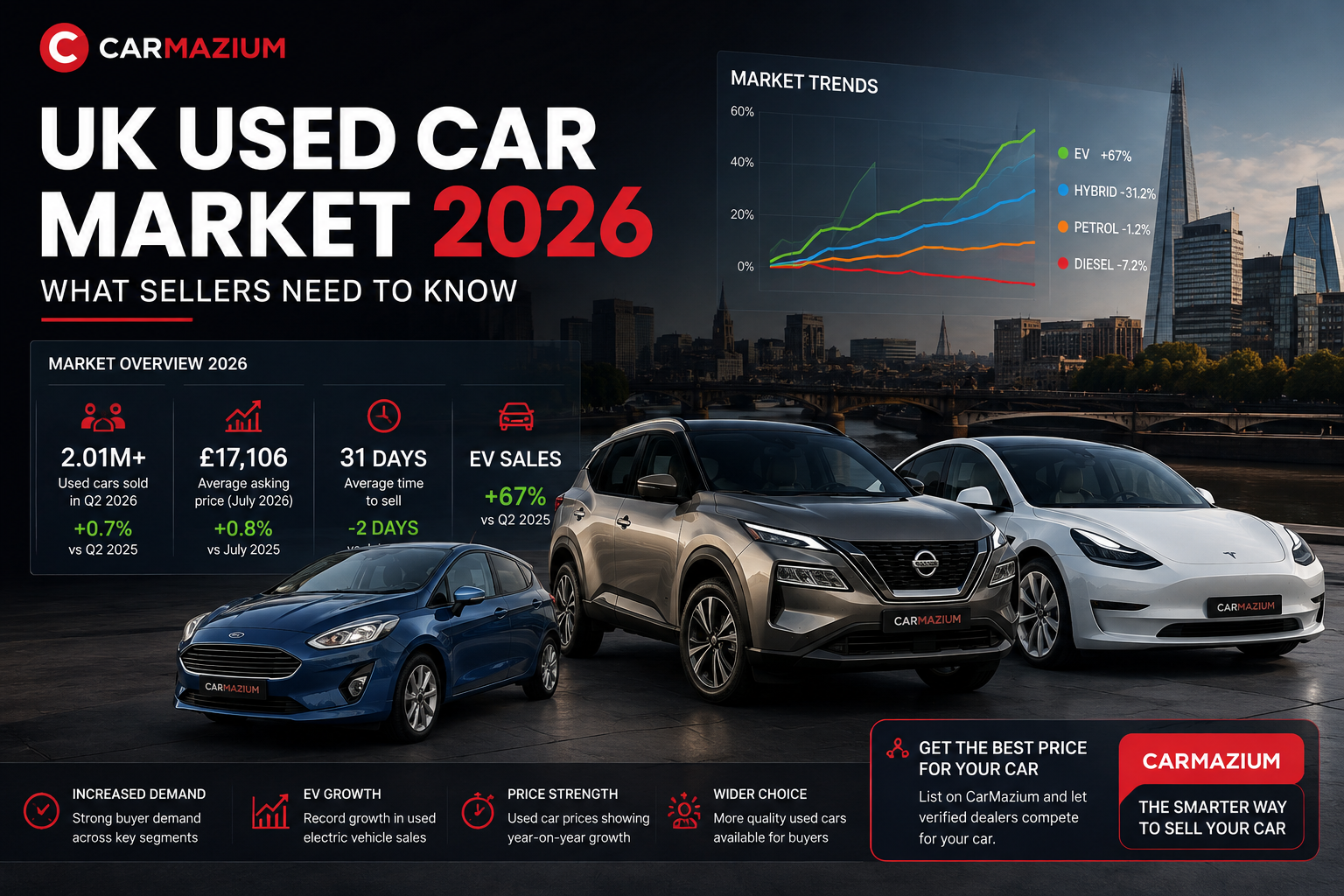
The latest figures from the Society of Motor Manufacturers and Traders (SMMT) show that 2,009,318 used cars changed hands during the second quarter of 2026.
That represents growth of 0.7% compared with Q2 2025 and is the first second quarter since 2021 in which transactions have exceeded two million.
Across the first half of 2026, approximately 4.03 million used vehicles changed hands, giving the market marginal year-to-date growth of 0.2%.
For sellers, those numbers matter.
They demonstrate that Britain still has an enormous appetite for second-hand vehicles. The market has not disappeared because of economic uncertainty, higher running costs or the growth of electric cars.
But simply knowing that millions of cars are selling doesn't tell us which cars buyers want.
That's where things become more interesting.
Used Car Prices Are Showing Renewed Strength
There was considerable discussion during previous years about used-car prices falling from their post-pandemic highs.
The picture in 2026 is different.
Autotrader reported an average used-car asking price of £17,106 in July 2026, with like-for-like prices 0.8% higher than a year earlier.
That was the third consecutive month of annual price growth.
Cars were also taking an average of around 31 days to sell during July.
However, sellers should understand an important distinction:
Retail asking price is not the same as your car's trade value
Seeing a similar car advertised online for £15,000 does not automatically mean a dealer will pay £15,000 for yours.
A retailer purchasing a vehicle may need to account for:
- preparation and servicing
- MOT work
- tyres and brakes
- cosmetic repairs
- transportation
- advertising
- warranty provision
- finance costs
- staff and premises
- the risk of the vehicle remaining unsold
- eventual retail margin
Online advertisements therefore provide useful market information, but they should not be treated as guaranteed valuations.
The real value of a vehicle is ultimately influenced by what buyers are prepared to pay for that particular car at that particular time.
Used Electric Cars Are Becoming One of 2026's Biggest Stories
Perhaps the most significant shift in this year's market is happening with electric vehicles.
For several years, used EVs attracted headlines about depreciation and falling values.
The latest data suggests the market is changing.
During Q2 2026, 110,761 used battery-electric cars changed hands, an increase of 67% compared with the same period in 2025.
Used EVs accounted for approximately 5.5% of all second-hand car transactions during the quarter, compared with 3.3% a year earlier.
Retail market data points in the same direction.
Autotrader reported that used EV prices increased 3.3% year-on-year in July, taking the average advertised price to approximately £24,946.
Used electric cars were also selling in an average of around 25 days, compared with approximately 30 days for petrol vehicles.
This doesn't mean every electric car has suddenly increased in value.
Model, battery condition, age, specification, mileage and available supply still matter enormously.
But it does challenge the idea that an electric car is automatically difficult to sell.
For owners who delayed selling an EV because of weak market conditions in previous years, obtaining a fresh valuation based on today's market may be worthwhile.
Hybrid Demand Is Growing Too
Electric vehicles aren't the only alternative-fuel cars attracting more second-hand buyers.
SMMT figures show 130,825 used hybrid vehicles changed hands during Q2 2026.
That's an increase of 31.2% year-on-year, giving hybrids approximately 6.5% of the used-car market during the quarter.
This is another reminder that fuel type can have an increasingly significant influence on vehicle demand.
A seller should therefore avoid relying solely on a generic depreciation calculation based on age and mileage.
The market for a five-year-old hybrid may behave very differently from the market for a five-year-old diesel.
Petrol and Diesel Still Dominate the Market
The growth of electric and hybrid vehicles should not be confused with the disappearance of petrol and diesel cars.
They remain by far the largest part of Britain's second-hand market.
During Q2 2026:
- 1,121,243 petrol cars changed hands
- 620,045 diesel cars changed hands
Together, traditionally fuelled vehicles represented 86.7% of used-car transactions.
Petrol transactions fell by 1.2%, while diesel transactions declined by 7.2%.
So diesel's share of the market is gradually changing, but hundreds of thousands of used diesel vehicles are still being bought and sold every quarter.
If you own a diesel car, the question therefore shouldn't simply be:
"Do people still buy diesels?"
A better question is:
"How much demand exists for my particular diesel?"
A motorway-friendly diesel SUV with good history, for example, can appeal to a very different buyer from an older urban diesel hatchback.
Older Cars Are Performing Better Than Many People Expect
One of the most interesting trends in 2026 involves older vehicles.
Autotrader's July data showed that cars aged 10 to 15 years recorded 7% year-on-year like-for-like price growth, making this the strongest age group for pricing growth in its data.
That may seem surprising.
Normally, we expect a simple relationship:
Older car = lower demand = lower value.
Real markets aren't always that simple.
Affordability matters.
When newer cars become expensive, buyers with smaller budgets may compete more strongly for dependable older vehicles.
That means a ten-year-old car with sensible mileage, good service history and desirable specification can still attract considerable interest.
Age alone doesn't determine value.
Britain's Favourite Used Cars Are Still Familiar Names
SMMT's Q2 figures also reveal which models are changing hands most frequently.
The five highest-volume used cars were:
- Ford Fiesta — 73,570 transactions
- Vauxhall Corsa — 59,247
- Volkswagen Golf — 55,786
- Ford Focus — 52,283
- Volkswagen Polo — 38,972
The MINI, Nissan Qashqai, BMW 3 Series, Vauxhall Astra and Audi A3 completed the top ten.
There's an important lesson here for sellers.
The most desirable vehicle isn't necessarily the most expensive one.
Affordable, familiar cars with a large potential buyer pool can generate very healthy demand.
Superminis alone accounted for 31.7% of used-car transactions during Q2, making them Britain's biggest used-car segment.
SUVs Continue to Gain Ground
Another notable change involves what the industry calls "dual-purpose" vehicles — a category heavily associated with SUVs and crossovers.
Transactions in this segment increased 7.4% during Q2 2026, giving it 17.7% of the market.
This reflects a wider change in British car-buying habits.
Vehicles such as the Nissan Qashqai demonstrate how mainstream the crossover has become; the Qashqai itself was among Britain's ten most-traded used cars during the quarter.
For owners of desirable SUVs, market demand may therefore be stronger than a basic age-based valuation model suggests.
Even Car Colour Can Influence Marketability
Colour might seem cosmetic, but the transaction numbers show remarkably clear buyer preferences.
During Q2 2026, more than 1.13 million used cars sold were black, grey or white.
Together these three colours represented 56.5% of the entire market.
That doesn't mean a red, green or yellow car can't command a good price.
Rare colours can actually be highly desirable on certain performance, luxury or enthusiast vehicles.
But on mainstream cars, neutral colours tend to appeal to a wider audience.
This is why accurate car valuation requires considerably more information than simply registration year and mileage.
The UK Doesn't Have One Used-Car Market
This is perhaps the most important insight for a seller in 2026.
There isn't really one UK used-car market.
There are many markets operating simultaneously.
A three-year-old EV is competing in a different market from a 12-year-old petrol hatchback.
A £40,000 premium SUV has a different pool of buyers from a £5,000 Toyota.
A diesel estate can appeal strongly to high-mileage drivers while receiving less interest from someone who mainly drives in a city.
Even vehicles of the same make and model can differ substantially because of:
- mileage
- gearbox
- engine
- trim level
- optional equipment
- colour
- service history
- number of owners
- MOT history
- cosmetic condition
- mechanical condition
- accident history
- location
- current dealer stock levels
That's why two apparently similar cars don't always achieve similar selling prices.
What Should You Do Before Selling Your Car in 2026?
The current market suggests several sensible steps.
Get a current valuation
Don't rely on a valuation you received several months ago.
Some areas of the market are moving quickly, particularly EVs and older affordable vehicles.
Be completely accurate about condition
A realistic description helps buyers price the vehicle properly.
Trying to hide damage, warning lights or mechanical problems can simply result in renegotiation later.
Gather your history
Have your V5C, service records, invoices, MOT information, spare keys and relevant documentation available.
A well-documented car is easier for a buyer to assess.
Understand the difference between asking price and buying price
Retail advertisements are useful research, but don't assume the advertised amount represents what your car should sell for immediately.
Compare the market
The strongest indication of today's value is genuine buying interest.
Instead of relying entirely on one valuation, exposing a vehicle to competing trade buyers can provide a clearer picture of what the market is willing to pay.
What Does All This Mean for Sellers?
The latest figures point to a market that is stable overall but changing underneath the surface.
Used cars continue changing hands in enormous numbers.
EV demand is rising rapidly.
Hybrid transactions are growing.
Older cars are demonstrating surprising pricing strength.
SUV demand remains healthy.
Petrol continues to dominate, and diesel still accounts for hundreds of thousands of transactions.
The important question is therefore no longer simply:
"Are used car prices going up or down?"
For an individual seller, the much more useful question is:
"What is happening to cars like mine?"
That's where real market exposure becomes important.
CarMazium gives sellers the opportunity to present their vehicle to competing motor traders rather than relying solely on a single buyer's opinion.
When several genuine buyers can assess the same vehicle, sellers get a much clearer indication of what the trade market is prepared to pay.
Frequently Asked Questions
Are used car prices increasing in the UK in 2026?
Recent retail data indicates modest year-on-year price growth overall. Autotrader reported like-for-like used-car prices 0.8% higher in July 2026 than a year earlier, although individual vehicles and market segments can behave very differently.
Is 2026 a good time to sell a used electric car?
The used-EV market has strengthened considerably. SMMT recorded a 67% year-on-year increase in used battery-electric transactions during Q2 2026, while Autotrader reported strong demand and faster average selling times for EVs.
Are diesel cars difficult to sell?
Not necessarily. More than 620,000 used diesel cars changed hands during Q2 2026 alone. However, diesel transactions are declining overall, so demand can vary substantially according to model, age, usage and location.
Does an older car still have value?
Absolutely. Condition, history, reliability, specification and demand can matter as much as age. In July 2026, Autotrader's 10–15-year-old vehicle category recorded particularly strong year-on-year pricing growth.
Which used cars are most popular in the UK?
The Ford Fiesta was Britain's most frequently traded used car during Q2 2026, followed by the Vauxhall Corsa, Volkswagen Golf, Ford Focus and Volkswagen Polo.
Final Thoughts
The UK used-car market in 2026 isn't simply rising or falling.
It is splitting into increasingly different segments, each influenced by affordability, fuel type, supply, age and buyer demand.
That's why sellers should be cautious about generic statements such as "EVs are impossible to sell", "diesels are dead" or "old cars aren't worth anything."
The latest market evidence tells a much more complicated story.
Know what you have, describe it accurately, understand its market and find out what genuine buyers are prepared to pay.
Sell your car your way
Ready to turn your research into a real sale?
List in the CarMazium dealer auction for £0, or advertise retail from £1. Qualifying successful auction sales can receive a £100 seller incentive.
Keep reading
Related automotive guides

WeBuyAnyCar Alternatives UK 2026: Compare Better Ways to Sell Your Car
Looking for an alternative to WeBuyAnyCar? Compare CarMazium, Carwow, Auto Trader, dealer auctions and private selling to find the right way to sell your car.
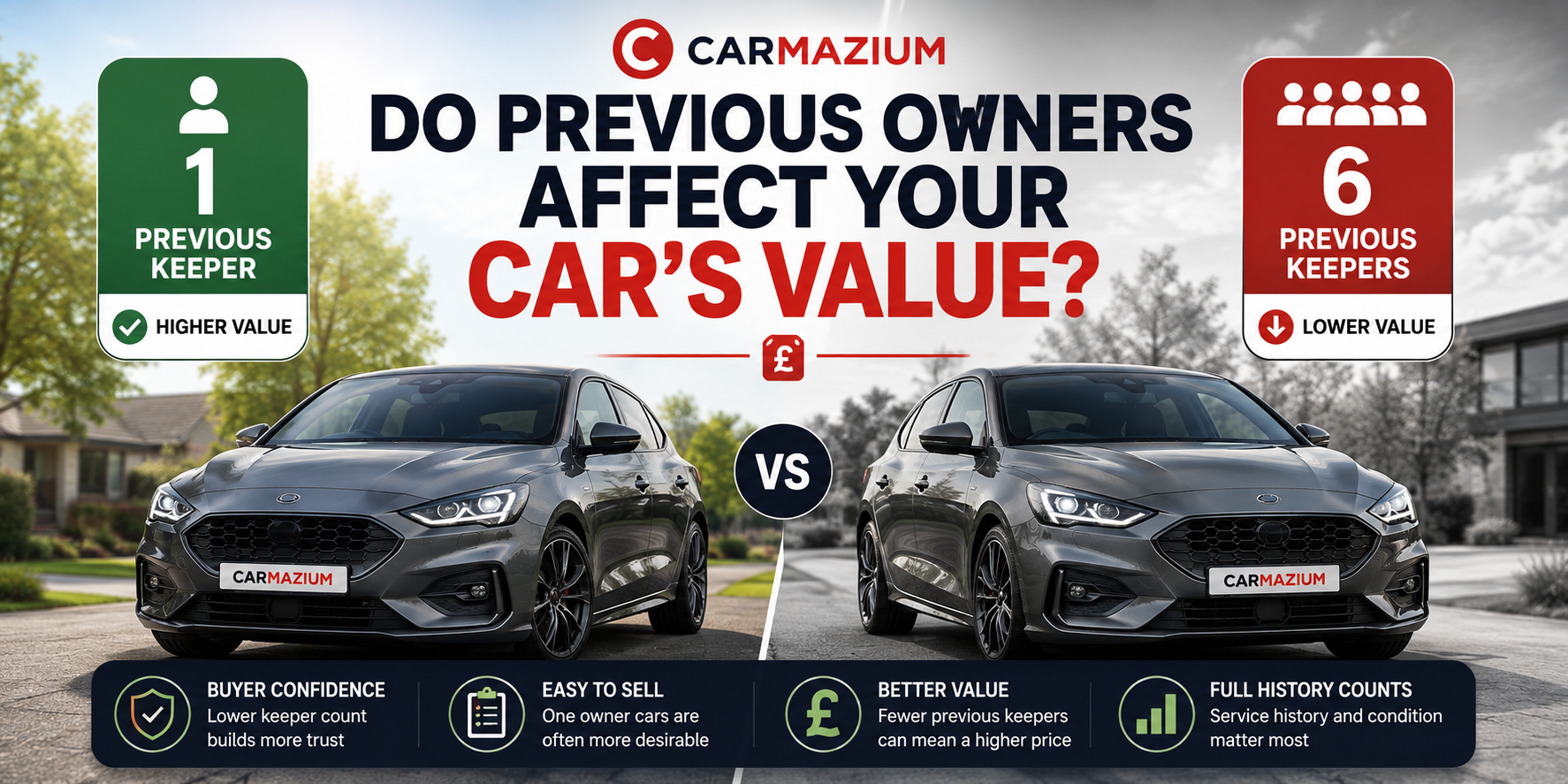
Do Previous Owners Affect a Car's Value? UK Guide 2026
Does a one-owner car really sell for more? Learn how previous keepers can affect used-car value, why ownership history matters and what sellers can do when a car has changed hands several times.
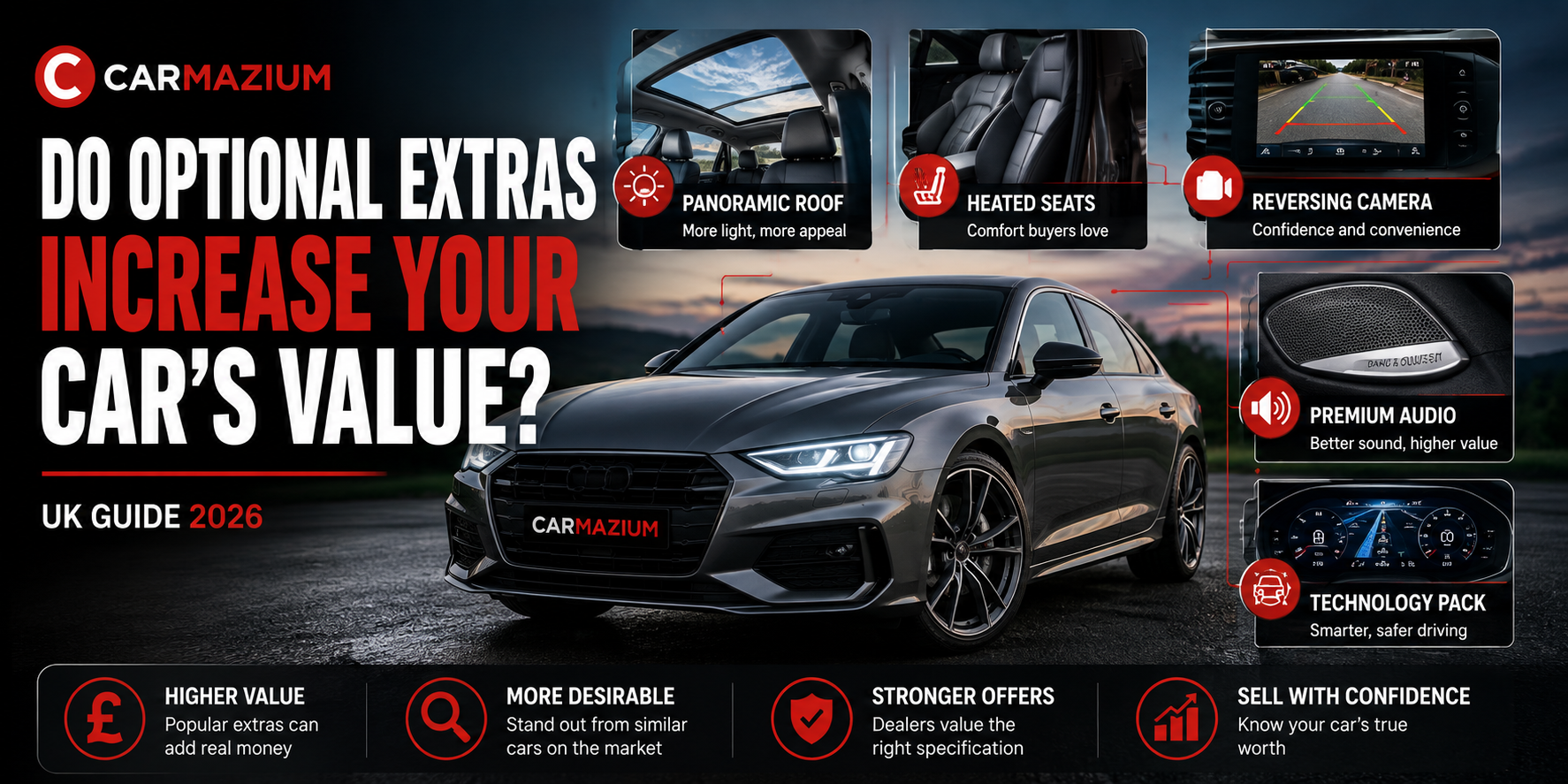
Do Optional Extras Increase Your Car's Value? UK Guide 2026
Panoramic roofs, heated seats, upgraded wheels and technology packs can make a used car more desirable. Find out which optional extras can add value and which may add very little when you sell.
From the marketplace