
Selling a Car With Rust or Corrosion in the UK: MOT, Safety & Value Guide 2026
Can you sell a rusty car in the UK? Learn how MOT corrosion advisories, structural safety, repair costs and honest disclosure affect resale value.
In this article
A rusty car is not necessarily worthless. Some corrosion is cosmetic and straightforward to repair; other corrosion can weaken safety-critical structure and make a vehicle unroadworthy. For UK sellers, the key questions are where the rust is, whether the car is safe, what the MOT record says, and how honestly the condition is described.
This 2026 guide explains how to assess corrosion, decide whether to repair it, price a vehicle realistically and choose a suitable selling route. It uses current Driver and Vehicle Standards Agency (DVSA) inspection guidance and UK vehicle-selling rules. It does not replace a qualified inspection of an individual car.
Can you sell a car with rust in the UK?
Yes. A car with minor surface rust can be sold, and a restoration project may interest specialist buyers. But a car with rust is not the same thing as an unroadworthy car. Serious corrosion around load-bearing areas can make a vehicle unsafe, and the law imposes restrictions on offering or supplying unroadworthy vehicles. Simply adding “sold as seen” or “spares or repair” to an advert does not automatically remove those obligations.
If you suspect a structural defect, have the car professionally assessed before advertising it as ready to drive. If it is unsafe, do not permit a road test or ordinary drive-away collection. Ask a qualified professional about repair, recovery or lawful disposal.
A valid MOT is useful evidence of a test result, but it does not certify the vehicle's condition forever. Rust can develop after the test. Likewise, a historic failure does not establish that a car is still unsafe if a proper repair was subsequently completed.
Surface rust versus structural corrosion
The DVSA structural-integrity and corrosion guidance, updated in June 2026, explains that corrosion severity depends on both its extent and the function of the affected area.
Cosmetic surface rust
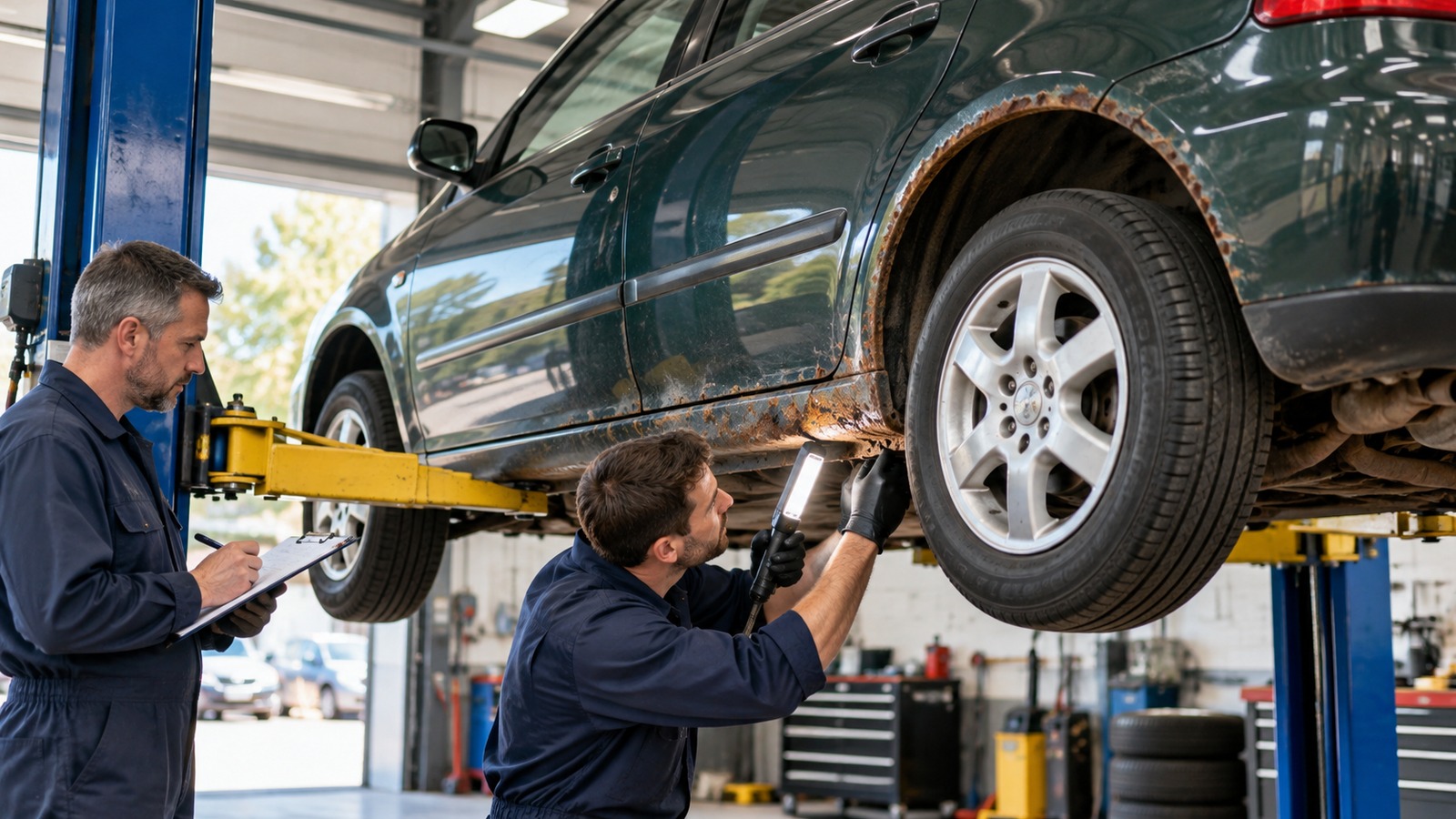
Light oxidation around a stone chip, bonnet edge or wheel arch may be cosmetic. It can still affect resale value because buyers may worry about deterioration beneath the paint. Bubbling paint or flaking metal deserves closer examination: what looks like a small blemish from outside may be more extensive behind a panel.
Corrosion in structural areas
Rust affecting load-bearing sills, suspension or steering mountings, seat-belt anchorages and supporting metalwork is more serious. The DVSA manual describes prescribed areas around testable components, including certain supporting structures within 30cm of their mounting points. A small weakened section in a critical location may matter more than a larger cosmetic patch.
Hidden underside corrosion
Subframes, crossmembers, floor sections and mounting points are difficult to assess during a driveway viewing. Do not describe the underside as “solid” merely because it is not visible. An inspection on suitable lifting equipment by a competent technician provides a better basis for any condition claim.
What does an MOT corrosion advisory mean?
An MOT advisory identifies an issue to monitor or address; it is not the same as a major or dangerous defect. Search the vehicle's registration using the free GOV.UK MOT history checker. Read the full wording of each entry, not only the pass or fail result.
Look for recurring locations
Repeated advisories about the same sill or suspension mounting may suggest an unresolved issue. However, MOT history alone cannot prove that a repair was or was not completed between tests. Ask for invoices and an inspection report, particularly where a previous failure was followed by a pass.
Understand major and dangerous defects
The DVSA body and structure inspection criteria distinguish defects that significantly reduce structural rigidity from dangerous conditions that may affect braking or steering. Do not describe either category as a minor cosmetic problem. A vehicle can also become unroadworthy after a valid MOT was issued.
When to request another inspection
Consider a specialist structural assessment where rust is extensive, hidden, previously welded or recorded repeatedly. An MOT is not a complete mechanical or bodywork survey. Ask the inspector to identify affected areas and explain what must be repaired before safe road use.
How much does rust reduce a car's value?
There is no reliable universal discount. A small patch of cosmetic corrosion on an older inexpensive car may have limited impact. Rust near a critical mounting point can deter buyers until a professional repair is documented. The effect depends on repair costs, vehicle age, model demand, overall condition and uncertainty about hidden damage.
Compare three figures: the asking prices of similar sound vehicles, the realistic cost of repairs and the likely market value in the vehicle's present disclosed condition. Avoid inventing an exact percentage reduction without inspection evidence.
A simple example
Suppose comparable sound cars are advertised at £5,000. A repairer estimates £600 for visible cosmetic work, but the underside needs further assessment. Subtracting £600 and advertising at £4,400 is not necessarily correct. The unknown underside condition could matter much more than the visible blemish. Obtain a proper inspection and distinguish confirmed costs from possible additional costs.
Retail versus trade valuation
Retail buyers generally value a ready-to-use car, trustworthy paperwork and good presentation. A motor trader buying a repair project must allow for transport, parts, labour, risk and resale margin. The two prices are not interchangeable. See CarMazium's guide to asking price versus trade value for the broader valuation distinction.
Should you repair rust before selling?
Put safety first. If corrosion affects roadworthiness, do not market the vehicle as ready for normal road use until the defect has been assessed and, where necessary, properly repaired. For cosmetic damage, compare a firm repair quotation with the likely improvement in selling price.
When a repair makes sense
A small, contained patch may be economical to repair professionally before photographs are taken. Keep the invoice and before-and-after photographs. For structural welding, use a repairer competent in the relevant vehicle construction, and seek independent verification when appropriate.
When repairs may cost too much
Major corrosion across several areas can exceed the car's remaining market value. In that situation, a specialist repair buyer or lawful dismantling route may be more appropriate. Do not assume that selling cheaply makes an unsafe drive-away collection acceptable.
Do not disguise corrosion
Fresh paint, filler or underseal can improve appearance without demonstrating sound underlying metal. Do not conceal known defects or claim repairs were completed when you have no evidence. Transparent inspection findings often build more confidence than an unusually clean-looking underside with no repair history.
Inspect the car before creating your listing
Start with a careful visual check in good daylight. Examine wheel arches, door bottoms, sills, boot edges and bubbling paint. Photograph visible damage from both wide and close angles. Review the latest MOT record and gather past repair invoices.
For the underside, use a professional facility. Never crawl beneath a car supported only by a jack. A technician can examine important structural areas safely and advise whether specialist corrosion assessment is required.
Build a rust condition checklist
Record the affected panel or component, inspection date, MOT wording, photographs, repair quotation and any completed work. Separate confirmed facts from assumptions. If an area has not been inspected, say so rather than marking it as free from corrosion.
Keep supporting evidence
Store MOT records, written quotations, receipts and any post-repair assessment together. A buyer can then see what was known at the time of sale and what remains unresolved. This also helps avoid disputes caused by vague verbal descriptions.
How to describe rust in a car advert
Specific, measured wording is better than “a little rust for age.” Identify the location and seriousness of known issues. For example: “Visible corrosion around the rear wheel-arch lip; close-up photos provided. Latest MOT includes an underside corrosion advisory. Independent inspection report dated [date] available.” Only use statements that accurately describe your own vehicle.
Do not call a car “rust-free” when you know it has corroded areas, or “fully repaired” when work remains. Conversely, do not exaggerate minor cosmetic oxidation into structural failure if no such finding exists.
Photograph the actual defects
Show each area in context, then add close-ups. Use daylight and avoid filters that conceal texture. Include clear descriptions of which side and panel is shown. A buyer should not need to travel to discover the most significant known defect.
Why “sold as seen” is not enough
That phrase does not excuse misleading descriptions or disregard roadworthiness obligations. Private sellers and professional traders have different consumer-law duties. Traders must also consider the Consumer Rights Act 2015 and applicable professional responsibilities. Trading Standards guidance on selling used vehicles explains key safety and description issues.
Relevant CarMazium guides and next steps
Continue with the guides and tools most relevant to this article.
Sell your car your way
Ready to turn your research into a real sale?
List in the CarMazium dealer auction for £0, or advertise retail from £1. Qualifying successful auction sales can receive a £100 seller incentive.
Keep reading
Related automotive guides
Selling a Car With an Exhaust Leak in the UK: MOT, Repairs & Value (2026)
Selling a car with an exhaust leak? Understand UK MOT rules, fumes and safety risks, repair decisions, honest pricing and secure collection before you sell.
Selling a Car With Steering Problems in the UK: MOT, Repairs & Value (2026)
Selling a car with steering problems? Understand UK MOT rules, warning signs, professional diagnosis, repair decisions, honest disclosure, valuation and safe collection.
Selling a Car With Faulty Air Conditioning in the UK: MOT, Repairs & Value Guide 2026
A practical UK guide to selling a car when the air conditioning does not cool: what the MOT checks, how to diagnose the fault, whether repairs pay, how to disclose it and how to choose auction or retail.
From the marketplace