
Do Optional Extras Increase Your Car's Value? UK Guide 2026
Panoramic roofs, heated seats, upgraded wheels and technology packs can make a used car more desirable. Find out which optional extras can add value and which may add very little when you sell.
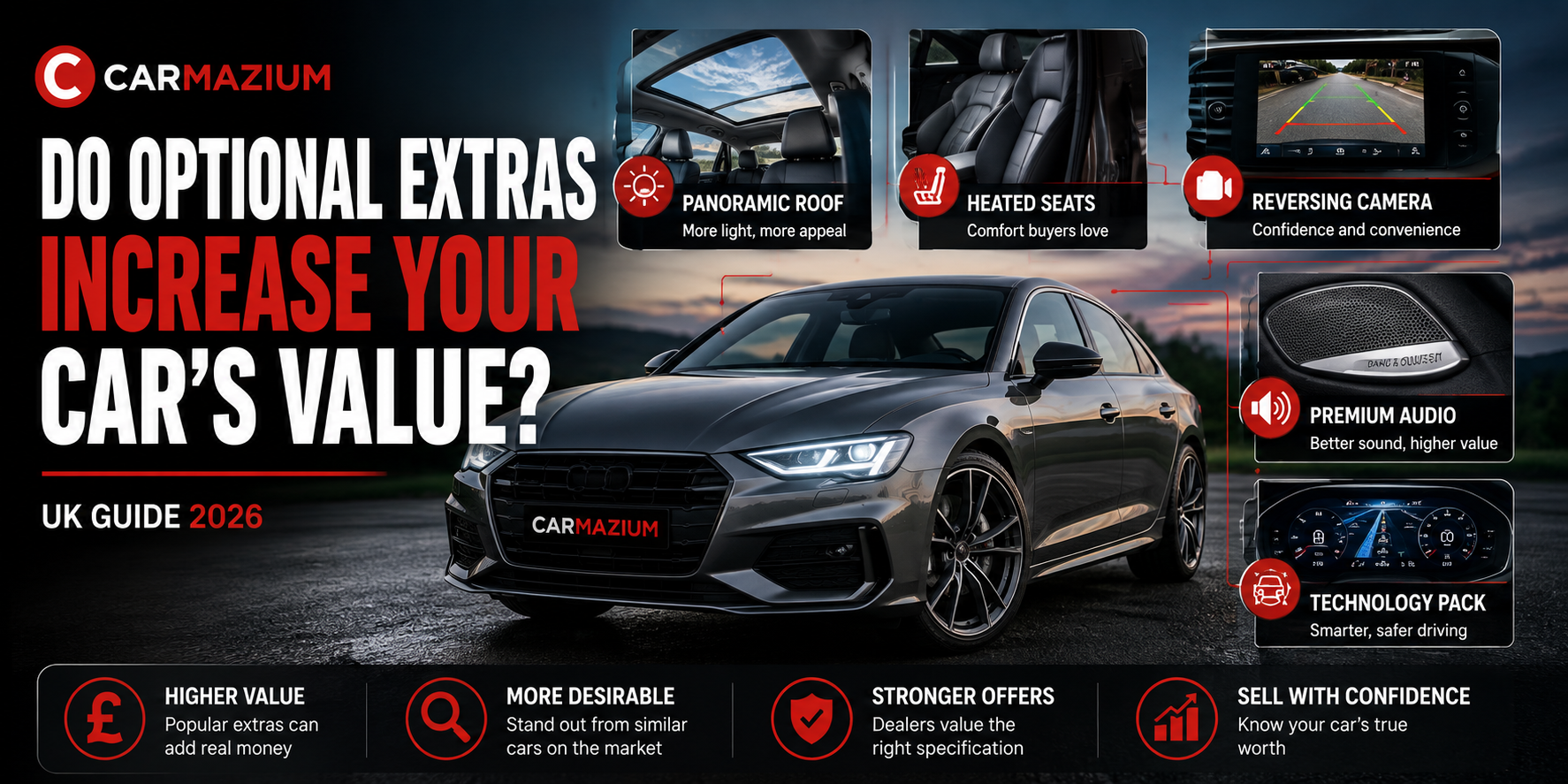
Do Optional Extras Increase Your Car's Value? UK Guide 2026
Two used cars can be the same model, the same age and have almost identical mileage — yet one can still be worth considerably more.
Why?
Sometimes the difference is hidden in the specification.
A panoramic roof. Heated seats. Upgraded alloy wheels. Premium audio. A reversing camera. Driver-assistance technology. Leather upholstery.
These features may have cost thousands when the car was new.
But the important question for someone selling a used car is different:
How much of that money is still reflected in the car's value today?
The answer is that some factory-fitted options can genuinely increase used-car value, but they do not all retain their original cost and their value varies significantly between vehicles.
This isn't merely theoretical. UK vehicle valuation specialist cap hpi's Option Values data specifically values factory-fitted equipment separately from a vehicle's base specification. cap hpi says options can remain worth hundreds or even thousands of pounds several years after the car was first registered.
The Same Car Isn't Always the Same Car
Imagine two five-year-old cars.
Both have:
45,000 miles.
The same engine.
The same gearbox.
The same colour.
Similar service histories.
But Car A has relatively basic equipment.
Car B has a factory panoramic roof, upgraded wheels, premium audio, heated seats and a technology package.
A buyer comparing the two isn't necessarily going to treat them as identical cars.
Neither will professional valuation systems.
Auto Trader says optional extras and features are among the data points that can be considered when determining current market pricing. Its retailer valuation system also tracks optional extras for cars.
That makes specification something sellers should understand rather than ignore.
Real Examples Show How Big the Difference Can Be
cap hpi provides some particularly useful examples.
In one example, a six-year-old Volkswagen Golf R with 25,000 miles was assessed with an electric panoramic sunroof and upgraded 19-inch wheels.
Its clean value without option values was listed at £21,100.
With the options included:
£22,000.
Difference:
£900.
Its retail valuation similarly increased from £23,250 to £24,150.
That's not an insignificant difference.
PHOTO 1 — Factory specification
Insert an image after this section showing a premium modern car interior with a panoramic roof, infotainment screen, heated-seat controls and upgraded trim.
The accompanying factual reference can link readers to:
Another Example: Almost £1,800
The effect isn't limited to expensive performance cars.
cap hpi gives another example involving a five-year-old Ford Fiesta 1.0T Titanium with 25,000 miles.
Its options included a style pack, 17-inch wheels, B&O premium audio and an opening panoramic roof.
Clean value without the options:
£11,100.
With them:
£12,895.
Difference:
£1,795.
Its stated retail valuation moved from £11,800 to £13,595.
This illustrates something sellers frequently miss:
The badge on the boot doesn't tell you the complete specification of a car.
Which Optional Extras Can Add Value?
There is no universal ranking that applies to every model.
A feature buyers expect on a luxury SUV may be relatively unimportant on an inexpensive city car.
But features that can make a used vehicle more desirable include things such as:
Panoramic or opening sunroof
Heated seats
Leather or upgraded upholstery
Reversing camera
Parking sensors
360-degree camera
Upgraded factory alloy wheels
Premium audio
Driver-assistance packages
Adaptive cruise control
Electric or memory seats
Upgraded headlights
Factory navigation/infotainment
Convenience packages
Auto Trader specifically identifies features such as sat-nav, leather seats and panoramic roofs as examples of extras that can increase value, while its current part-exchange guidance highlights reversing cameras and multimedia systems as potentially value-enhancing equipment.
But Don't Assume Every Extra Is Worth What You Paid
This is one of the biggest mistakes owners make.
Suppose a new car cost:
£30,000
and you added:
£6,000 of optional equipment.
Your total invoice was therefore:
£36,000.
That does not mean your used car will always be worth £6,000 more than the standard version.
Options depreciate too.
Some retain meaningful value.
Others become commonplace.
Technology becomes outdated.
Equipment that was once expensive can become standard on newer models.
Buyer preferences also change.
The correct question isn't:
“How much did this option cost new?”
It is:
“How much does the used market value this option now?”
Factory-Fitted Extras and Aftermarket Modifications Are Different
This distinction is extremely important.
A factory-fitted option is equipment specified when the vehicle was built.
An aftermarket modification is something added or changed later.
They should not automatically be valued the same way.
Auto Trader's vehicle-equipment data can identify whether optional equipment was factory fitted based on manufacturer-supplied information.
Factory equipment normally integrates with the vehicle exactly as the manufacturer intended.
Aftermarket modifications can be much more subjective.
A £2,000 modification does not necessarily make a car £2,000 more valuable.
In some circumstances, extensive modification can actually make a car harder to sell because it reduces the pool of interested buyers. RAC advises that excessive modification can detract from vehicle value.
PHOTO 2 — Factory vs aftermarket
A useful article graphic here would show:
FACTORY FITTED Panoramic roof / heated seats / camera / premium audio
versus
AFTERMARKET Body kit / modified suspension / non-standard wheels / exhaust
This would be particularly useful on mobile because readers can understand the distinction instantly.
Panoramic Roofs
A panoramic roof is probably one of the easiest high-specification features for buyers to notice.
It changes the interior experience immediately.
It also photographs well in an advert.
Both Auto Trader and cap hpi specifically use panoramic roofs in examples of equipment that can contribute to vehicle value.
However, condition matters.
A desirable panoramic roof with:
water leaks,
broken mechanisms,
damaged blinds,
or electrical faults
can quickly turn from an asset into a potential repair bill.
So simply having the feature isn't enough.
It needs to work correctly.
Reversing Cameras and Parking Technology
Parking technology is another good example.
A reversing camera may have been relatively unusual on mainstream vehicles years ago.
Today buyers increasingly expect parking assistance, particularly on larger cars.
Auto Trader explicitly lists rear-facing cameras as an example of optional equipment that can increase value.
A car with:
front and rear sensors,
reversing camera,
and 360-degree camera
can therefore stand apart from a visually similar lower-specification version.
PHOTO 3 — Technology
Insert a close-up photograph of a modern infotainment display showing a reversing-camera view.
Keep the registration and identifiable personal information out of the photograph.
Heated Seats
Heated seats are another feature buyers understand instantly.
They're easy to demonstrate.
They're useful in the UK climate.
And on certain premium models buyers may actively look for them.
But again, context matters.
If nearly every comparable car already has heated seats as standard, their presence won't necessarily create a large premium.
Their absence, however, could make a poorly specified example less attractive.
That's an important difference.
Sometimes specification protects desirability rather than directly adding a fixed amount of money.
Premium Audio
Premium branded sound systems can matter particularly on:
executive cars,
performance vehicles,
luxury SUVs,
and enthusiast models.
A buyer searching for a particular specification may specifically look for the upgraded audio system.
But don't assume that every buyer will pay the full historic option cost.
The feature helps differentiate the car.
The actual financial benefit is determined by the market.
Alloy Wheels
Wheels are more complicated.
Factory upgraded alloys can contribute to a desirable specification.
cap hpi's published examples specifically demonstrate vehicles whose upgraded factory wheels form part of value-enhancing option packages.
But wheels also need to be in good condition.
Expensive factory alloys covered in:
kerb damage,
corrosion,
poor repairs,
or mismatched tyres
may not deliver the same benefit.
And non-standard aftermarket wheels can have a completely different effect depending on the car and buyer.
Driver-Assistance Technology
Modern cars can have extensive driver-assistance packages.
Depending on model and specification, these can include:
adaptive cruise control,
blind-spot monitoring,
lane assistance,
parking assistance,
surround cameras,
traffic-sign recognition,
and other systems.
On a premium car, a desirable technology package can distinguish a high-specification vehicle from an otherwise similar basic example.
But sellers need to describe these systems accurately.
Don't advertise adaptive cruise control simply because the steering wheel has cruise-control buttons.
Verify what the vehicle actually has.
How Can You Find Your Car's Original Specification?
This is where sellers sometimes struggle.
You may have bought the vehicle second-hand.
You didn't choose the options.
You may not know which features were:
standard,
factory options,
dealer-installed accessories,
or aftermarket modifications.
VIN/specification databases can help.
cap hpi's specification service is designed to identify a vehicle's factory-fitted optional equipment and its potential resale value.
Manufacturer build information may also be available depending on the marque.
Original invoices can be extremely useful too.
PHOTO 4 — Specification check
Use an illustration of a generic vehicle specification report alongside a car.
Avoid showing a realistic V5C or personal VIN.
Reference:
Why Sellers Lose Money by Missing Specification
Imagine advertising a car simply as:
“Excellent condition, 50,000 miles, automatic.”
But it actually has:
Panoramic roof.
360 camera.
Heated memory seats.
Premium audio.
Adaptive cruise.
Upgraded factory wheels.
Those aren't minor details.
They're reasons somebody may choose your car instead of another one.
Auto Trader says retailers can miss margin when value-adding factory specification is omitted from advertisements; its enhanced VIN-specification material cites an average £361 of unrealised retailer margin from omitted value-adding specification.
That doesn't mean every private seller will automatically gain £361.
It does demonstrate why accurately identifying specification matters.
Photographs Should Prove the Specification
Don't merely write:
“High specification.”
Show it.
If your vehicle has a panoramic roof, photograph it.
If it has heated seats, photograph the controls.
If it has a reversing camera, photograph the screen.
If it has upgraded upholstery, show the interior clearly.
If it has a digital cockpit, photograph it switched on.
If it has premium factory wheels, include a clear wheel photograph.
This turns an abstract list of features into visible evidence.
PHOTO 5 — High-spec interior
This would be an excellent place for a wide interior photograph showing several desirable features simultaneously.
For example:
panoramic roof + leather seats + digital dashboard + large infotainment screen.
Don't Write “Fully Loaded” Unless You Know It Is
This phrase is overused in car advertising.
“FULLY LOADED.”
But what does that actually mean?
If another version of the same car was available with:
a panoramic roof,
premium audio,
memory seats,
head-up display,
360 camera,
and adaptive cruise,
while yours has none of them, describing it as fully loaded can undermine buyer confidence.
Be precise instead.
A proper equipment list is stronger than exaggerated language.
Optional Extras Can Also Affect Dealer Offers
Dealers aren't simply buying:
“a 2021 car with 40,000 miles.”
They're buying a particular vehicle they need to retail.
Specification can affect:
how desirable it is,
how easily it can be advertised,
how it compares with competing stock,
and potentially what it can retail for.
cap hpi's valuation products specifically analyse specification alongside other vehicle information to establish current used values.
That is why accurately declaring factory specification when selling to the trade can matter too.
Specification Matters More on Some Cars Than Others
The financial effect of optional equipment isn't uniform.
On an inexpensive older hatchback, buyers may primarily care about:
price,
condition,
MOT,
reliability,
and running costs.
On a relatively new luxury SUV, buyers may compare equipment in considerable detail.
Two apparently similar premium cars can have dramatically different original specifications.
This is why blanket statements such as:
“A panoramic roof adds £500.”
aren't reliable.
It depends on:
the model,
age,
market,
other specification,
condition,
and current demand.
Professional valuation data is preferable to a universal formula.
Should You Add Extras Before Selling?
Usually, be careful.
Installing expensive equipment immediately before selling doesn't mean you'll recover the installation cost.
Retrofitting:
new wheels,
an aftermarket stereo,
body styling,
lighting,
or other equipment
may cost more than it adds to the vehicle's value.
Instead, focus first on making sure the valuable equipment the car already has is:
working,
clean,
properly documented,
correctly advertised,
and clearly photographed.
What About Apple CarPlay and Android Auto?
Modern smartphone integration is increasingly useful to buyers.
If the vehicle already has factory smartphone integration, highlight it.
If you're considering retrofitting it purely to increase resale value, calculate the cost first.
A £500 retrofit does not guarantee a £500 increase in the selling price.
It may make the vehicle easier to sell without generating an equivalent monetary return.
What Should You Do Before Advertising?
Before listing the car:
Check the original specification.
Identify factory options.
Test every feature.
Gather invoices or build information where available.
Photograph important equipment.
Describe features accurately.
Don't exaggerate.
And make sure the valuation you're comparing against reflects the correct derivative and specification.
RAC also advises sellers to promote additional features when selling because equipment such as climate control and panoramic roofs can make a vehicle more attractive to buyers or dealers.
How CarMazium Helps
When selling a vehicle, the objective isn't simply to prove that an option once cost £2,000.
What matters is what buyers think the whole car is worth today.
A properly presented listing gives potential buyers a clearer picture of:
the vehicle,
its condition,
its history,
and its specification.
For a high-specification car, that detail can be particularly important because buyers can distinguish it from lower-specification alternatives rather than treating every version of the model as identical.
Frequently Asked Questions
Do optional extras increase a used car's value?
They can. UK valuation specialists such as cap hpi specifically calculate residual values for factory-fitted options, and published examples show that some equipment can remain worth hundreds or thousands of pounds several years later.
Does a panoramic roof increase car value?
It can contribute to a more desirable specification. Both cap hpi and Auto Trader identify panoramic roofs among extras that can influence used-car value. The actual premium depends on the particular vehicle and market.
Do heated seats increase resale value?
They can improve desirability, particularly on models where buyers actively seek them. There isn't a universal monetary amount that heated seats add to every vehicle.
Do upgraded alloy wheels increase value?
Factory-fitted upgraded wheels can contribute to value; cap hpi includes upgraded wheels in published examples demonstrating residual option value. Condition and buyer demand still matter.
Are aftermarket modifications worth more?
Not necessarily. Aftermarket modifications should not be confused with factory options. Some modifications may appeal to particular buyers while reducing the car's appeal to others. RAC notes that excessive modification can detract from value.
Should I list every optional extra when selling?
Important factory-fitted equipment should be identified accurately. Highlight the features that differentiate your car and provide photographs where possible.
How do I know what options my car has?
Original purchase documentation, manufacturer information and specialist VIN/specification databases can help identify factory-fitted equipment. cap hpi provides a specification-check service specifically for this purpose.
Final Thoughts
Optional extras aren't just gadgets that disappeared financially the moment the original owner drove away from the dealership.
Some can continue contributing meaningful value years later.
But the important word is some.
Don't assume every £1,000 originally spent on options means another £1,000 when you sell.
Instead:
Identify the exact specification.
Understand which features buyers value.
Make sure everything works.
Photograph the important equipment.
Advertise it accurately.
And most importantly, value the vehicle according to what the current used-car market is willing to pay.
Sell your car your way
Ready to turn your research into a real sale?
List in the CarMazium dealer auction for £0, or advertise retail from £1. Qualifying successful auction sales can receive a £100 seller incentive.
Keep reading
Related automotive guides
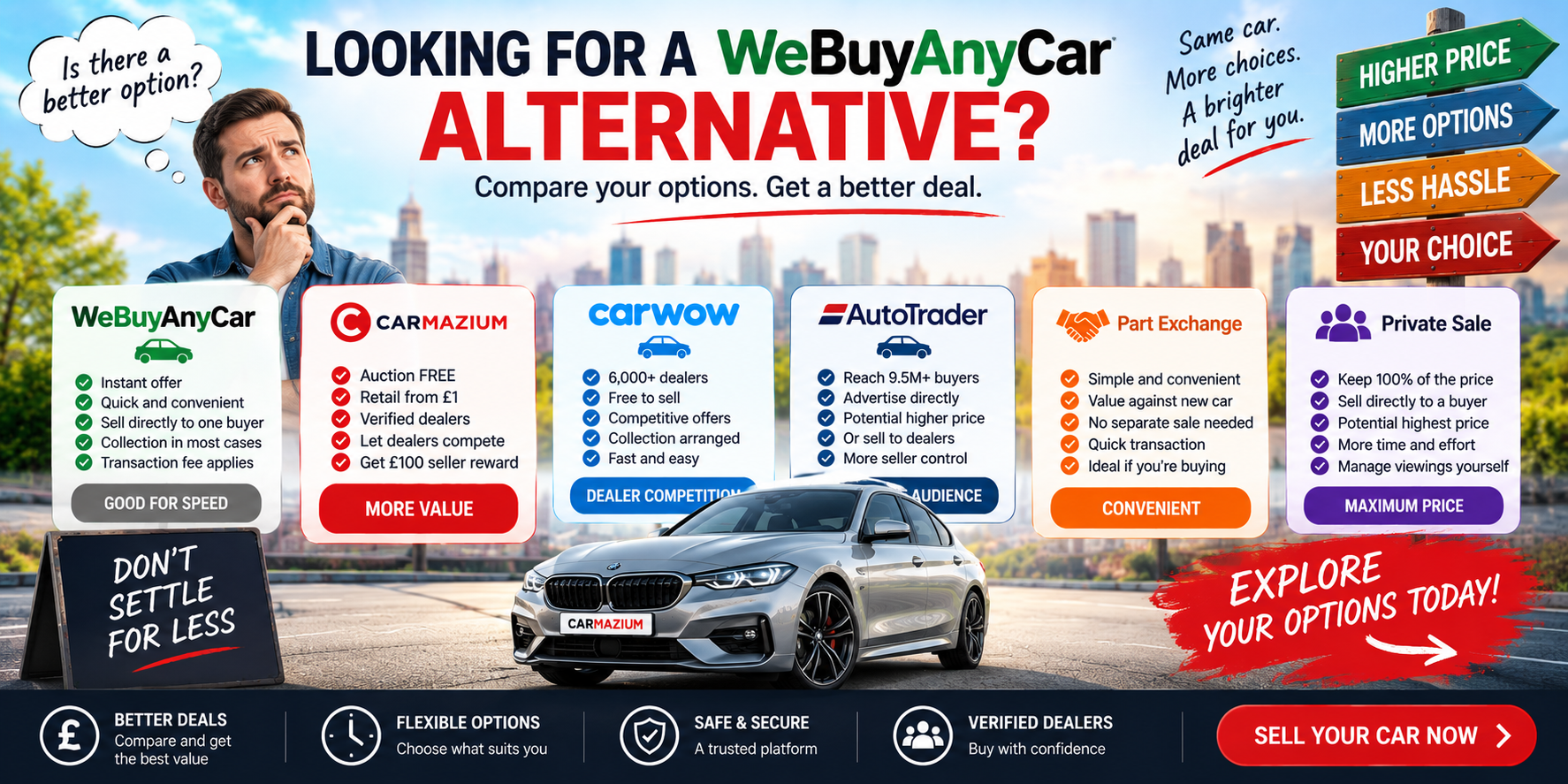
WeBuyAnyCar Alternatives UK 2026: Compare Better Ways to Sell Your Car
Looking for an alternative to WeBuyAnyCar? Compare CarMazium, Carwow, Auto Trader, dealer auctions and private selling to find the right way to sell your car.
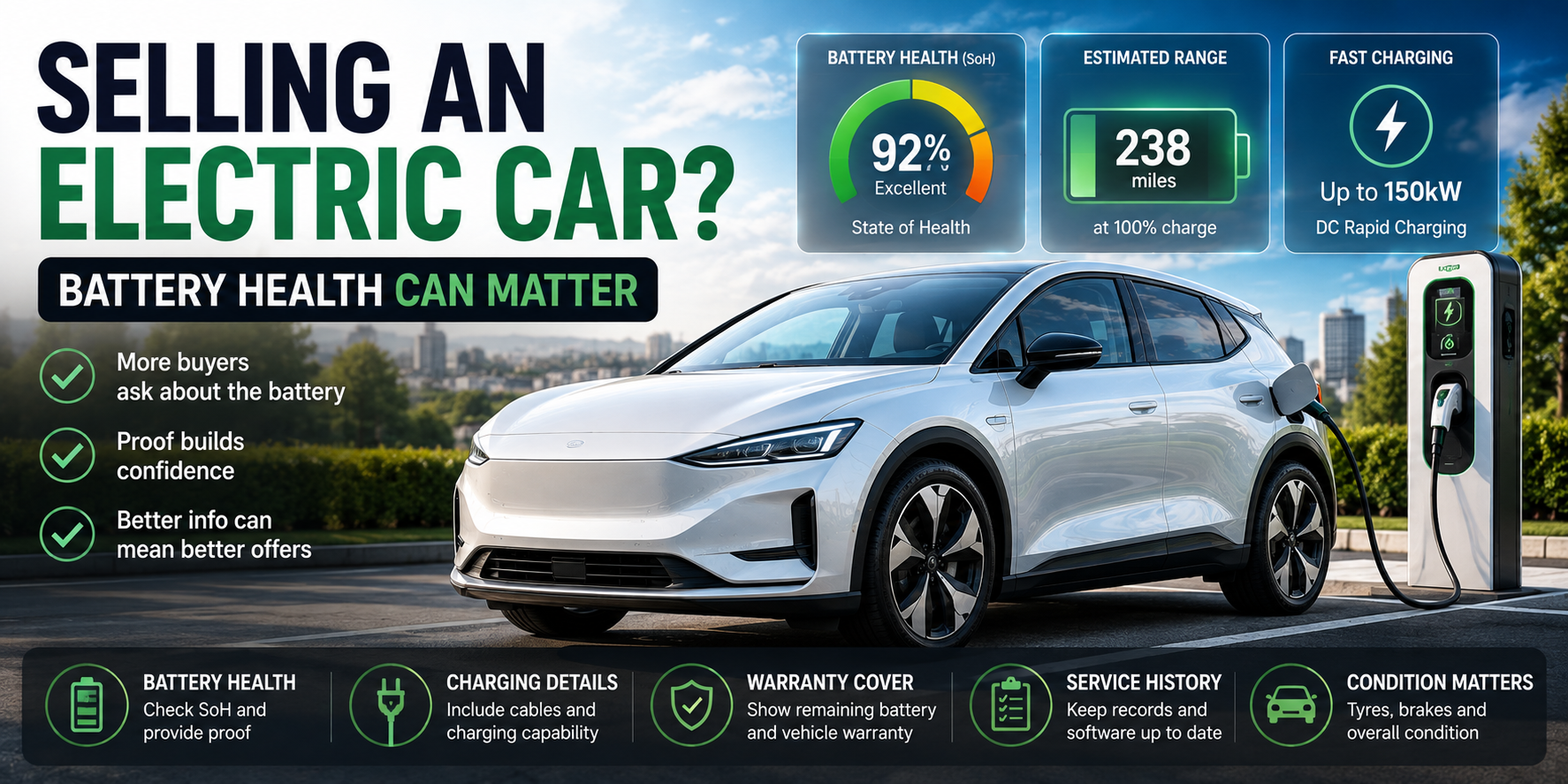
Selling an Electric Car in the UK: Battery Health, Range & Value Guide 2026
Selling an electric car? Learn how battery health, real-world range, charging speed, warranty, service history and charging cables can affect buyer confidence and your EV's value.
Do Previous Owners Affect a Car's Value? UK Guide 2026
Does a one-owner car really sell for more? Learn how previous keepers can affect used-car value, why ownership history matters and what sellers can do when a car has changed hands several times.
From the marketplace