
Best Time to Sell a Car in the UK: Does the Month Really Matter?
Is there really a best month to sell your car? Discover how seasons, registration changes, mileage, vehicle type and UK used-car demand can affect when you should sell.
Best Time to Sell a Car in the UK: Does the Month Really Matter?
You've decided to sell your car.
But should you list it today?
Wait until next month?
Hold out until spring?
Or sell before the mileage crosses another major threshold?
Most sellers focus almost entirely on how much their car is worth.
Fewer think about when they're selling it.
Timing isn't going to transform an ordinary £5,000 car into a £7,000 car overnight. But buyer demand isn't identical throughout the year, and certain types of vehicles can become more desirable during particular seasons.
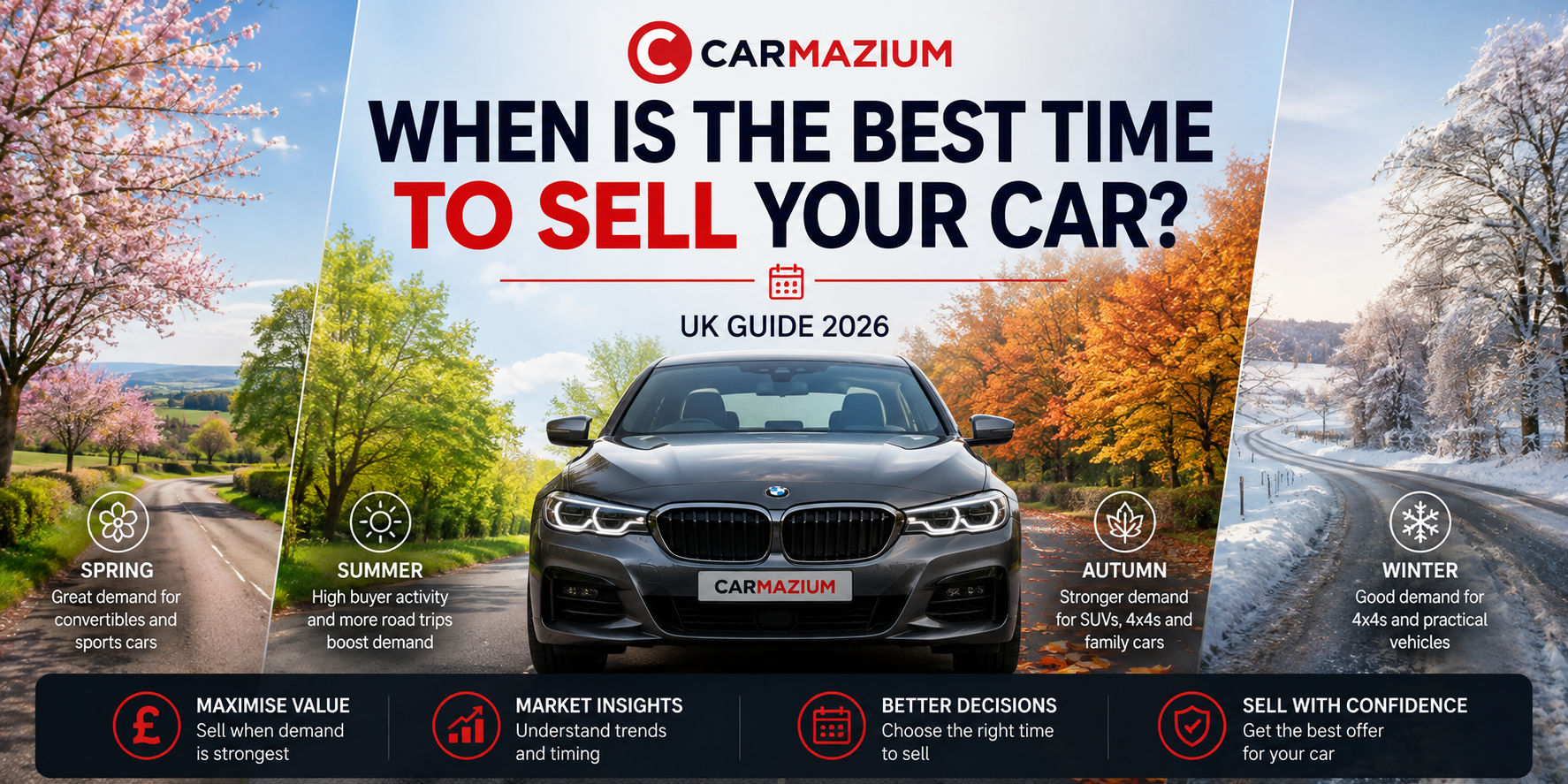
Auto Trader's current 2026 guidance specifically notes that timing can influence a sale, with convertibles tending to benefit from spring demand while SUVs can become more attractive in winter.
So there isn't one magical date when everyone should sell.
The better question is:
When is the strongest time to sell your particular car?
The UK Used-Car Market Is Still Extremely Active
Before worrying about individual months, it's worth looking at the size of the market.
The latest Society of Motor Manufacturers and Traders data shows 2,009,318 used cars changed hands during Q2 2026.
That's up 0.7% compared with Q2 2025 and represents the first second quarter since 2021 with more than two million transactions.
During the first half of 2026, the UK recorded 4,025,550 used-car transactions.
So buyers haven't disappeared.
The issue for a seller is finding the strongest demand for their particular vehicle.
PHOTO IDEA 1 — UK used-car market
Place a photograph here showing a busy modern used-car forecourt or several different types of cars.
For supporting market statistics, use the SMMT Used Car Sales Data.
There Is No Universal “Best Month”
You may see claims online such as:
“March is the best month to sell.”
or:
“Never sell in December.”
Reality is more complicated.
A convertible, family SUV, inexpensive hatchback and electric vehicle aren't necessarily attracting exactly the same buyers.
The best selling window depends on:
Vehicle type + condition + mileage + supply + buyer demand + your personal circumstances.
Seasonality is only one part of that equation.
Spring Can Be Excellent for Convertibles
This is one of the clearest examples of seasonal demand.
When temperatures rise and sunny weekends arrive, people start thinking about open-top driving.
And there's actual market evidence behind it.
During warm weather in May 2025, Auto Trader reported that searches for convertibles increased by more than 34%.
During the 1–5 May period, convertible searches averaged more than 330,000 per day, compared with around 285,000 during the preceding week.
That's a substantial behavioural change caused largely by the weather.
If you own a:
Mazda MX-5
MINI Convertible
BMW Z4
Mercedes roadster
Porsche Boxster
or another convertible, listing it as spring arrives may expose it to stronger buyer interest than advertising it in the middle of a wet December.
PHOTO IDEA 2 — Convertible
Place a strong lifestyle photograph here:
Convertible driving on a sunny British road in spring.
You can also reference Auto Trader's research on the seasonal rise in convertible searches:
Auto Trader convertible demand research
Summer Can Continue That Advantage
Convertibles, sports cars and some enthusiast vehicles can continue attracting attention through warmer months.
People are:
Taking holidays.
Going on road trips.
Attending car events.
Driving more recreationally.
A roof-down sports car simply looks more appealing when the sun is shining than when it's sitting under freezing rain.
But don't wait until summer is almost finished.
If your vehicle has strong seasonal appeal, you ideally want it advertised as demand begins rising, not when the season is ending.
Autumn and Winter Can Favour SUVs and 4x4s
Now reverse the situation.
It's October.
Temperatures are falling.
Roads are wet.
Drivers are thinking about winter.
Suddenly:
SUV
4x4
All-wheel drive
and
higher driving position
can feel more appealing.
Auto Trader's 2026 selling guidance says SUVs, off-roaders and 4x4s typically see increased demand during autumn and winter.
RAC similarly notes that SUV demand can rise approaching winter, while convertible prices tend to be strongest around spring and early summer.
PHOTO IDEA 3 — SUV in winter
Insert a photograph here showing:
A modern SUV on a wet or lightly snowy UK country road.
The visual contrast with the convertible photograph immediately communicates seasonality.
What About Ordinary Hatchbacks?
This is important because most people aren't selling sports cars or large 4x4s.
They're selling:
Ford Fiestas.
Vauxhall Corsas.
Volkswagen Golfs.
Ford Focuses.
Volkswagen Polos.
Nissan Qashqais.
And other mainstream cars.
These vehicles have much broader year-round demand.
In fact, the latest SMMT Q2 2026 data shows the five most frequently transacted used models were:
Ford Fiesta — 73,570
Vauxhall Corsa — 59,247
Volkswagen Golf — 55,786
Ford Focus — 52,283
Volkswagen Polo — 38,972
For mainstream vehicles like these, waiting several months purely because somebody told you there is a “perfect month” may not make sense.
Your car's:
mileage
condition
service history
and
market value
may matter considerably more.
January Can Bring Buyers Back
Christmas is traditionally a disruptive period for many retail markets.
People spend money elsewhere.
They're travelling.
Businesses close.
Attention shifts away from major purchases.
But buyer activity can return strongly after Christmas.
Auto Trader reported 86.3 million visits in January 2026, a month-on-month increase of 24.7% following the festive lull.
That's an excellent reminder that January shouldn't automatically be dismissed as a poor time to sell.
Buyers return.
People receive bonuses.
New-year plans begin.
Some decide it's finally time to replace their car.
PHOTO IDEA 4 — New year car shopping
Use a simple image showing:
A buyer viewing cars on a phone/tablet with “January” subtly visible on a calendar.
Keep it natural rather than making it look like an advertisement.
March and September Are Important Months
The UK registration system creates two obvious points in the automotive calendar:
March
and
September
That's when new registration identifiers arrive.
These months stimulate activity in the new-car market.
But they also affect used cars.
People buying new cars may:
Trade in their existing vehicles.
Sell privately.
Sell to dealers.
Or move an older vehicle into the used market.
Auto Trader notes that March and September can therefore bring more buyers but also more used-car supply, meaning the effect isn't automatically positive for every seller.
That's the important nuance.
More activity doesn't automatically mean higher prices.
April Can Be Interesting Too
There's evidence that activity immediately following the March plate change can remain strong.
Auto Trader reported that average used-car prices increased 1.8% month-on-month in April 2026, its strongest monthly increase since November 2021.
It also reported vehicles selling in an average of 27 days, with transaction levels up around 3% year-on-year.
That doesn't mean every seller should automatically wait for April.
But it demonstrates why looking at live market conditions is more useful than relying on simplistic rules about individual months.
Mileage Can Matter More Than the Calendar
Imagine your car currently has:
59,200 miles.
You drive approximately:
1,500 miles every month.
You decide to wait four months because you've heard summer is better.
Now the car has:
65,200 miles.
Any seasonal advantage needs to be weighed against the additional mileage.
This is particularly important when a vehicle approaches a mileage range buyers frequently use when filtering search results.
We've covered mileage in detail in our separate CarMazium guide, but the key principle is simple:
Waiting isn't free if you're continuing to put miles on the car.
Depreciation Doesn't Stop While You Wait
The same principle applies to age.
Your vehicle continues ageing.
The market continues changing.
Newer versions appear.
Manufacturer incentives change.
More examples enter the used market.
Waiting six months for the supposedly “perfect” selling period only makes sense if the potential advantage outweighs:
Depreciation + additional mileage + running costs + maintenance + insurance + tax + repair risk.
Sometimes selling sooner is financially smarter.
Condition Can Override Seasonality
Consider two identical convertibles.
Car A
Spring.
Dirty bodywork.
Kerbed alloys.
Warning light.
Overdue service.
Poor photographs.
Car B
February.
Excellent condition.
Strong service history.
Good tyres.
Professionally presented.
Accurately priced.
Which one will buyers prefer?
Seasonality can influence demand.
But it doesn't compensate for a poorly prepared vehicle.
That's why sellers shouldn't become obsessed with finding the perfect calendar date.
Don't Wait for a Repair Bill
Timing also means recognising when ownership is becoming expensive.
Suppose your car is approaching:
A major service.
Timing belt replacement.
Tyres.
Brake replacement.
MOT.
Insurance renewal.
Another year's depreciation.
Waiting another six months may cost considerably more than any seasonal increase you hope to achieve.
You need to look at the whole ownership equation.
Electric Cars Need Their Own Strategy
Used electric cars are becoming a much bigger part of the market.
SMMT's latest Q2 2026 figures show used battery-electric transactions increased 67% year-on-year to 110,761 vehicles, giving BEVs a record 5.5% share of the used market.
Auto Trader also reported in August that EV demand was rising rapidly and younger used EVs were selling faster than the rest of the market.
So an EV seller shouldn't necessarily base their decision on traditional petrol-car assumptions.
Current supply, battery range, model desirability, charging capability and market pricing can be more important than simply choosing summer or winter.
PHOTO IDEA 5 — Used EV market
Insert an image of:
A modern electric car charging at a public UK charger.
This gives the article another visual break while supporting the EV section.
What About December?
December can be quieter because:
Christmas dominates household spending.
People travel.
Businesses operate reduced hours.
Days are shorter.
Bad weather can make vehicle viewings inconvenient.
But “quieter” doesn't mean “nobody buys cars.”
Someone who:
Needs a replacement immediately.
Has written off their previous vehicle.
Needs a car for work.
Has found exactly the specification they want.
isn't necessarily waiting until January.
If you need to sell, don't automatically postpone the transaction solely because it's December.
When Should You Sell a Convertible?
Generally:
Before and during the warmer-weather demand period.
Spring is particularly interesting because buyers are anticipating summer rather than watching it disappear.
Actual Auto Trader search behaviour has demonstrated how quickly warm weather can increase convertible interest.
When Should You Sell an SUV or 4x4?
Autumn and early winter can be attractive because seasonal conditions make these vehicles more appealing to some buyers.
But again:
Don't hold a depreciating SUV for eight months purely to reach November.
Calculate the numbers first.
When Should You Sell a Mainstream Family Car?
For mainstream:
Hatchbacks.
Saloons.
Estates.
Crossovers.
Family SUVs.
there is generally active demand throughout the year.
The latest SMMT figures show the enormous scale of ongoing used-car transactions across the UK.
For these cars, focus primarily on:
Current valuation
Condition
Mileage
Service/MOT position
Current buyer demand
Your replacement-car plans
rather than waiting for one supposedly perfect month.
The “Sell Now or Wait?” Test
Before postponing a sale, answer six questions.
- Is my vehicle seasonally sensitive?
Convertible or 4x4?
Timing may matter more.
- How much mileage will I add?
Calculate it realistically.
- What maintenance is coming?
Service?
MOT?
Tyres?
Repairs?
- Is my vehicle currently in strong condition?
Selling while everything works can be advantageous.
- What is happening to comparable prices?
Look at current market data rather than last year's assumptions.
- Do I actually need to wait?
If you've already decided to replace the car, waiting several months has a cost.
A Simple Example
Imagine your convertible is worth approximately:
£10,000 today.
You believe waiting until spring could improve demand.
But waiting means:
£500 additional depreciation
£300 maintenance
4,000 additional miles
and several more months of ownership costs.
Even if spring demand improves the achievable price by £400, waiting hasn't necessarily made you richer.
Always calculate the net result.
How CarMazium Changes the Question
Traditional selling often begins with:
“What should I advertise my car for?”
A competitive dealer marketplace allows you to ask something more useful:
“What are professional buyers prepared to offer for my car right now?”
That matters because live demand can be more informative than general seasonal assumptions.
Different dealers need different stock at different times.
A dealer might urgently want:
Your particular model.
Your engine.
Your specification.
Your fuel type.
Your colour.
Your mileage range.
Another dealer may have enough of them already.
Competition between professional buyers can help reveal that demand.
Frequently Asked Questions
What is the best month to sell a car in the UK?
There isn't one universally best month. Vehicle type, mileage, condition, supply and market demand all influence the result. Seasonal vehicles such as convertibles and 4x4s can show stronger seasonal patterns.
Is spring a good time to sell a car?
It can be. Spring is particularly relevant for convertibles and sports cars, and Auto Trader has recorded significant increases in convertible searches during warm spring weather.
Is winter a good time to sell an SUV?
SUVs and 4x4s can experience stronger demand during autumn and winter as buyers consider colder and wetter conditions.
Is January a bad time to sell?
Not necessarily. Auto Trader recorded 86.3 million visits in January 2026, up 24.7% from the previous month following the normal festive slowdown.
Should I wait until March to sell?
Not automatically. March's registration change creates more market activity, but it can also increase used-car supply.
Should I sell before my mileage reaches 100,000?
Mileage is only one valuation factor, and there isn't a universal amount a vehicle suddenly loses at 100,000 miles. However, higher mileage can affect buyer demand and valuation, so factor future mileage into any decision to delay selling.
Is 2026 a good time to sell a used car?
The market remains active. More than two million used vehicles changed hands during Q2 2026, with first-half transactions exceeding four million.
Final Thoughts
There is no single day circled on the calendar when every car suddenly becomes worth more.
The best time to sell is when market demand and your vehicle's individual circumstances line up.
For a convertible, that could mean spring.
For a 4x4, autumn or winter may bring stronger interest.
For a mainstream hatchback, timing may matter far less than mileage, condition and current demand.
And sometimes the smartest time to sell is simply:
before another repair bill arrives, before another major mileage threshold passes, and while buyers are already willing to pay a price you're happy with.
The calendar matters.
But the market matters more.
Sell your car your way
Ready to turn your research into a real sale?
List in the CarMazium dealer auction for £0, or advertise retail from £1. Qualifying successful auction sales can receive a £100 seller incentive.
Keep reading
Related automotive guides

WeBuyAnyCar Alternatives UK 2026: Compare Better Ways to Sell Your Car
Looking for an alternative to WeBuyAnyCar? Compare CarMazium, Carwow, Auto Trader, dealer auctions and private selling to find the right way to sell your car.
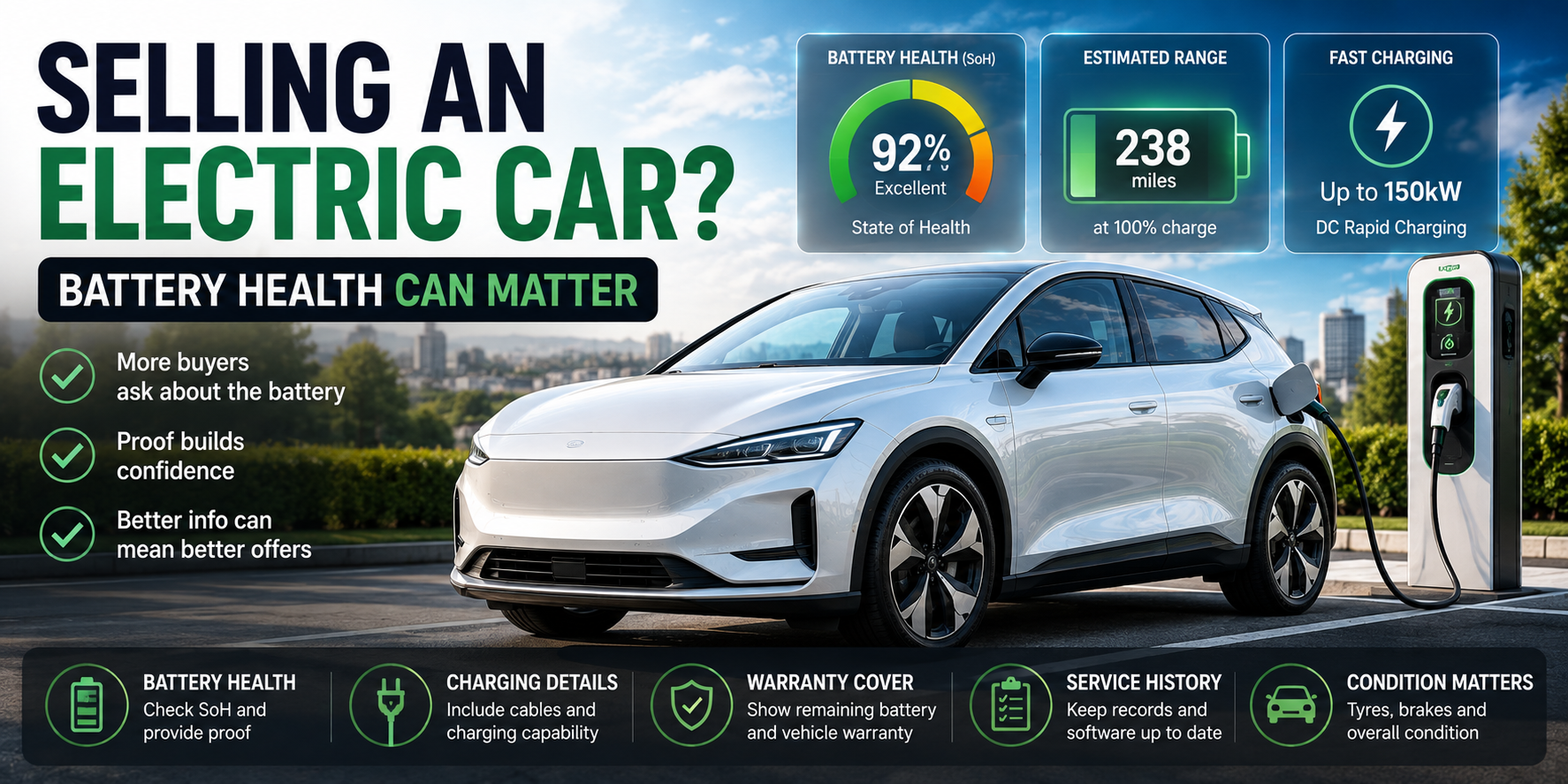
Selling an Electric Car in the UK: Battery Health, Range & Value Guide 2026
Selling an electric car? Learn how battery health, real-world range, charging speed, warranty, service history and charging cables can affect buyer confidence and your EV's value.
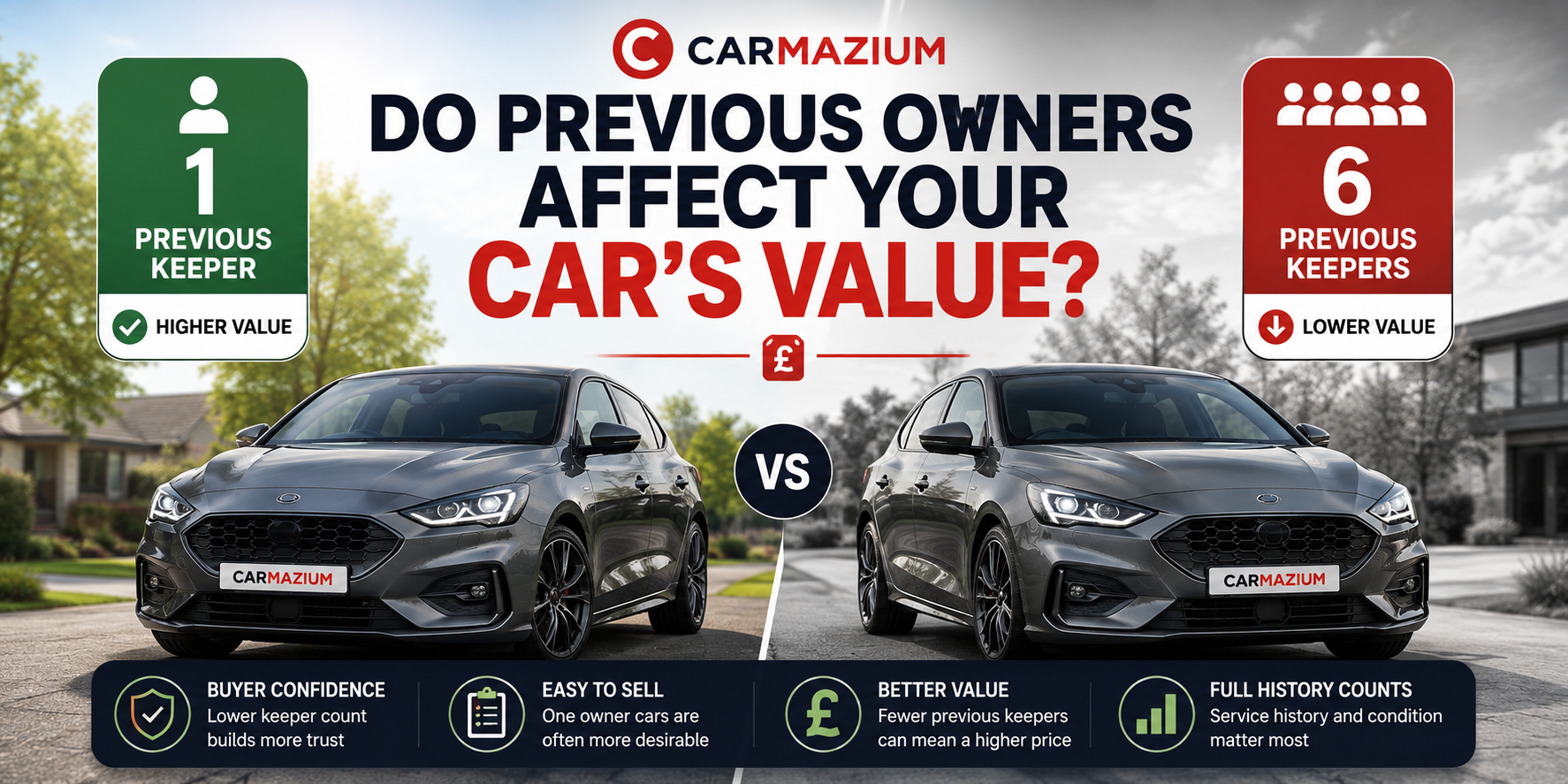
Do Previous Owners Affect a Car's Value? UK Guide 2026
Does a one-owner car really sell for more? Learn how previous keepers can affect used-car value, why ownership history matters and what sellers can do when a car has changed hands several times.
From the marketplace