
How to Sell a Left-Hand-Drive Car in the UK: Pricing, Paperwork & Buyer Guide 2026
Selling a left-hand-drive car in the UK? Check registration, MOT, mileage, lighting, insurance, paperwork and realistic pricing before advertising.
In this article
Understanding the left-hand-drive market
A left-hand-drive (LHD) vehicle has its steering wheel on the left, as is normal across much of continental Europe and North America. It can be legally driven and sold in Britain when it meets applicable registration, construction, lighting, insurance and roadworthiness requirements. However, the pool of UK buyers is narrower than for an equivalent right-hand-drive car. That makes evidence, pricing and presentation particularly important. Some buyers actively want an LHD vehicle for regular European travel, overseas relocation, collecting or specialist ownership. Others will be concerned about overtaking visibility, parking machines, toll booths, insurance and eventual resale. A credible listing should acknowledge both sides rather than promise that LHD makes no difference.
Check the vehicle's UK registration first
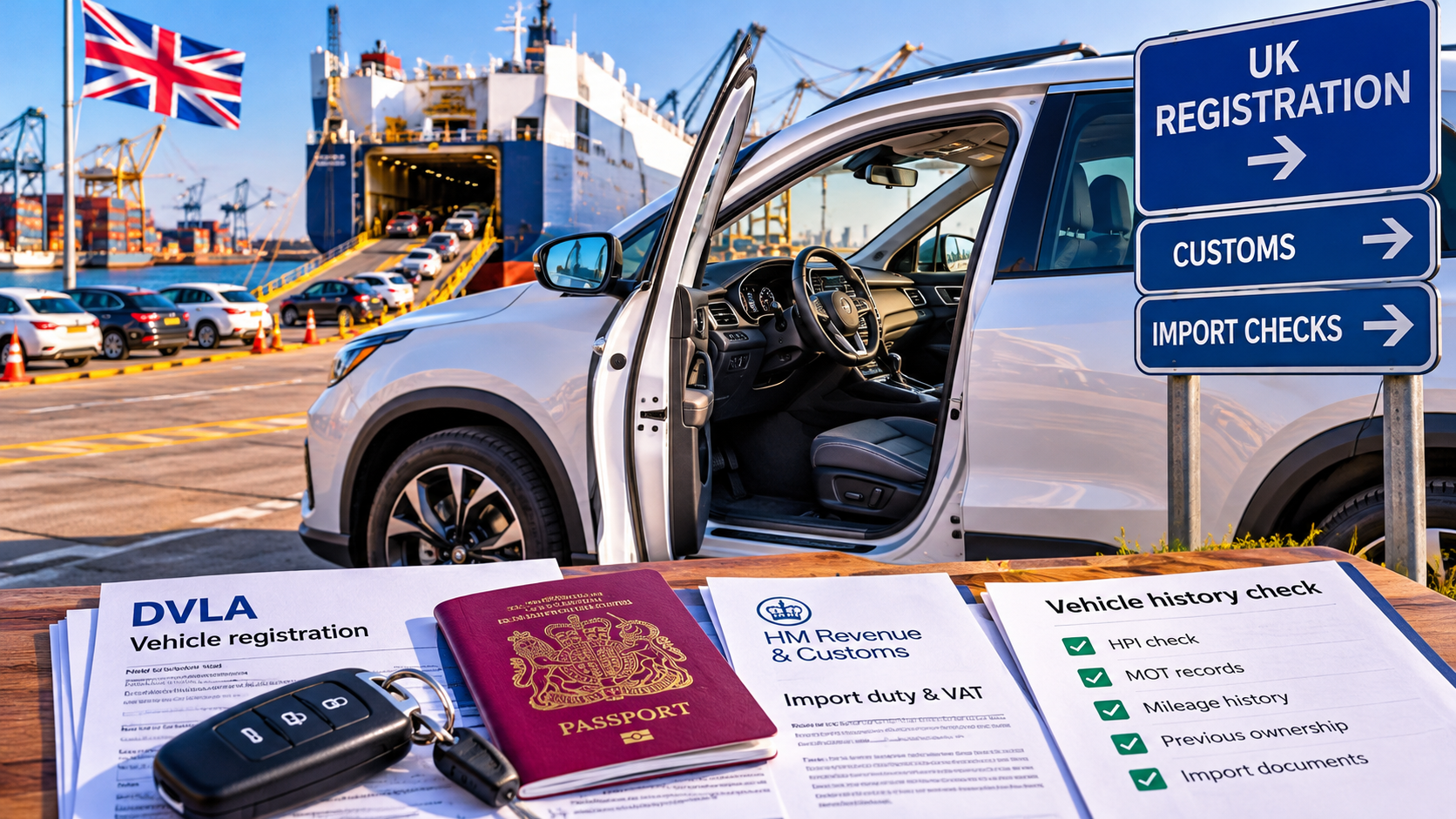
Before advertising, establish whether the car is already registered with DVLA and has a current UK registration mark and V5C log book. The V5C identifies the registered keeper; it is not proof of legal ownership. Check that the registration, VIN and vehicle description match the actual car. If the vehicle has only recently arrived from abroad and is not UK registered, you must resolve import and registration requirements before representing it as ready for ordinary UK road use. GOV.UK provides guidance on importing vehicles, notifying HMRC, obtaining vehicle approval where necessary and applying for registration. Requirements depend on age, origin and vehicle circumstances, so do not assume a document used for one import will suffice for another.
Imported vehicles and HMRC obligations
A vehicle brought permanently into the UK may require notification through the Notification of Vehicle Arrivals system (NOVA) or another applicable process, and import VAT or customs duty may arise. The exact position depends on where it came from, the owner's circumstances, available reliefs and its import history. Ask for evidence that import formalities were completed rather than relying on a verbal assurance. Keep invoices, shipping or transport documents, customs references, registration correspondence and any vehicle approval paperwork together. If you cannot substantiate an import claim, say so and resolve it before taking payment. A buyer may need this documentation later when insuring, registering or exporting the vehicle.
MOT, tax and roadworthiness
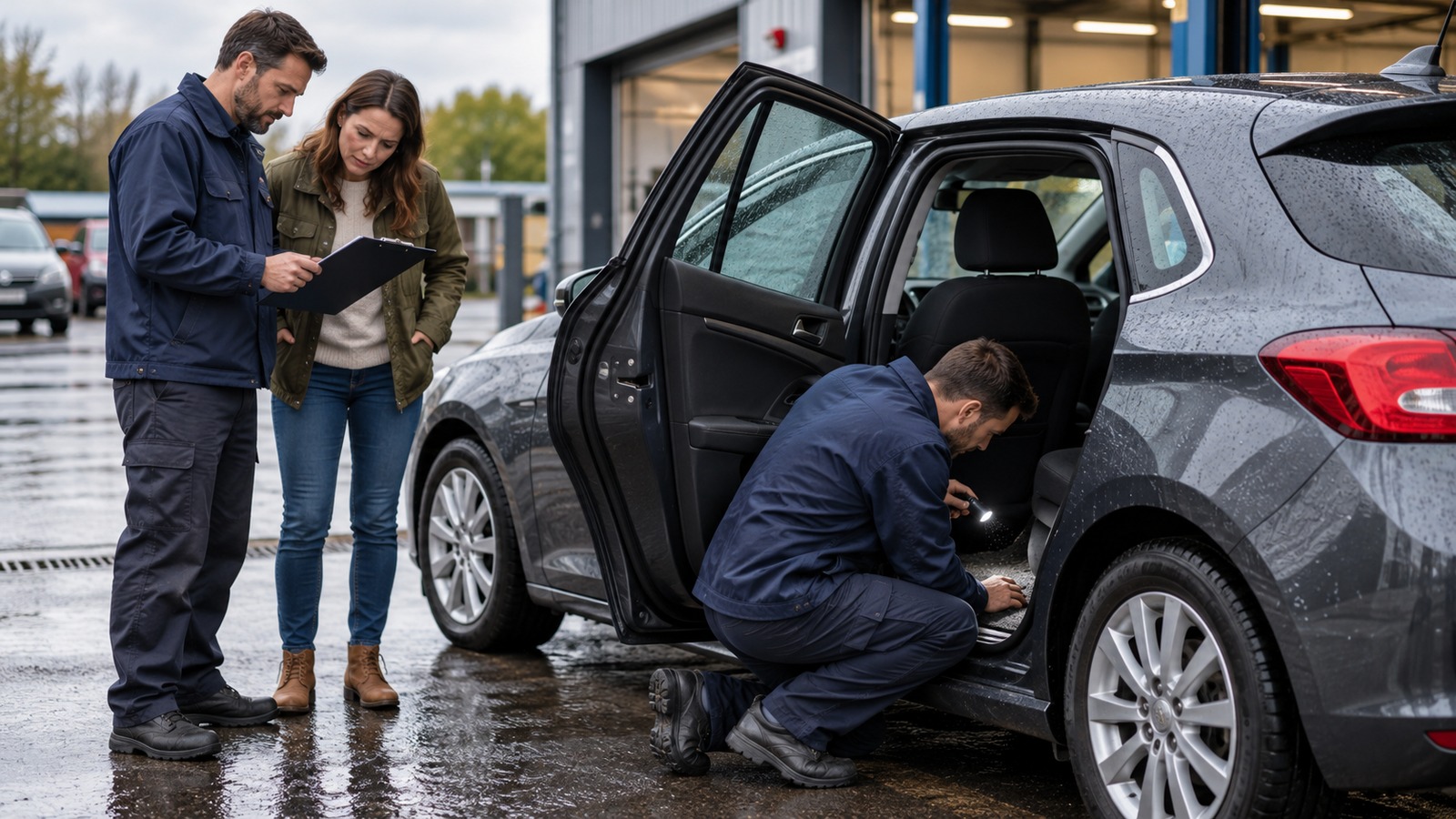
Check the car's MOT status and recorded history using the official GOV.UK service. An MOT is a test of specified minimum standards at the time of examination, not a warranty against future faults. A car may still need repairs or maintenance even with a recent pass. Verify tyre condition, brakes, suspension, warning lamps, windscreen and other safety-related items. Vehicle tax does not transfer with a change of keeper; the buyer must tax the vehicle before using it on public roads where required. If the vehicle is not road legal, do not suggest a buyer can simply drive it home. Arrange lawful collection or transport instead.
Headlamps and other LHD-specific compliance checks
Headlamp beams are a major practical issue. A vehicle configured for driving on the right may dazzle oncoming traffic when used on UK roads unless correctly adapted. Ask a qualified technician to confirm whether its lamps can be adjusted or require replacement, and retain evidence of the work. Check the speedometer's ability to show mph where applicable, rear fog-lamp arrangement, mirrors, lighting and any approval conditions relevant to the model. These points are not identical for every vehicle, particularly older classics and vehicles registered under different approval routes. Avoid advertising the car as 'fully UK compliant' without evidence.
Insurance and everyday usability
Get an accurate insurance quotation before assuming the car will be straightforward for the next owner to cover. Some insurers treat imported or LHD vehicles differently, and premiums, excesses or availability can vary. Describe the car accurately: steering position, country of original registration, modifications, engine specification, declared import status and any non-standard equipment. Explain everyday compromises fairly. Drivers may find overtaking slower traffic more difficult because of sightlines; drive-throughs and car parks may be less convenient for a solo driver. Conversely, LHD can suit regular continental journeys and particular enthusiast vehicles.
Gather a complete document pack
Prepare the V5C where applicable, service records, invoices, MOT history, keys, handbook, original purchase or import evidence, and receipts for lighting or compliance changes. Where the vehicle has a replacement speedometer or an odometer that reads kilometres, clearly explain the units and any known change. Do not convert kilometres to miles in a way that obscures the actual recorded odometer reading. A buyer should be able to understand the vehicle's history without piecing together conflicting statements. Photograph the VIN plate and keep personal details out of public listing images. Share sensitive documents through appropriate secure channels during the sale.
Price a left-hand-drive car realistically
Start with genuinely comparable vehicles, not simply the advertised price of a right-hand-drive example. Compare make, model, engine, trim, year, condition, mileage, service history, UK registration, original market, specification and modifications. Look at UK LHD specialist listings, enthusiast marketplaces and comparable completed sales where available. Rare European or American models may command interest among specialists; an ordinary mass-market LHD family car can face a discount because many UK buyers prefer right-hand drive. An asking price is not proof of the price achieved. Leave room for negotiation without inventing a market valuation or promising a specific sale amount.
What affects buyer confidence and value
The strongest factors are documentary provenance, a consistent mileage record, mechanical condition, rust and accident history, originality, parts availability, insurance practicality and whether the car is already registered for UK roads. Modifications can be valuable to an enthusiast but unattractive to another buyer. For an older imported classic, evidence of restoration and corrosion protection may matter more than a recent cosmetic valet. For a newer imported vehicle, buyers may ask about infotainment language, radio frequencies, navigation, software updates, manufacturer warranty coverage and parts compatibility. State what you know and distinguish it from what you have not checked.
Prepare the vehicle before photography
Clean the vehicle thoroughly, remove personal belongings, correct inexpensive faults where worthwhile and make sure the dashboard is free of avoidable warning lights. Photograph the exterior from all four corners, both sides, wheels, tyres, engine bay, boot, seats, dashboard and steering wheel. Include a clear interior photograph showing the left-hand driving position: hiding it creates mistrust. Take photographs in daylight against an uncluttered background and avoid filters that disguise damage. Include close-ups of known defects. A transparent advert may attract fewer casual enquiries but more suitable buyers.
Write an honest, searchable listing
Put 'left-hand drive' in the title and first paragraph. State UK registration status, make, model, year, engine, transmission, mileage with units, MOT expiry if applicable, service history, number of keys and location. Describe import provenance and relevant compliance work accurately. Mention known defects, warning lights, accident or insurance category information where relevant, and whether finance is outstanding. Never claim 'vehicle history report clear' without a valid report covering the relevant checks. If an imported car's overseas history cannot be independently verified, disclose that limitation. Keep the tone factual; exaggerated claims can undermine trust and create disputes.
Choose the right route to market
A private sale may suit a specialist car when you can answer detailed buyer questions and accommodate viewings. A specialist dealer may understand the market better but will usually need a commercial margin. An auction can test trade demand, though bidding appetite depends on the vehicle and audience. CarMazium offers free auction listings for sellers and a separate retail listing option priced at £1. The auction buyer fee is £125 for the winning eligible trader; retail buyers do not pay a CarMazium buyer fee. The £100 seller incentive applies only to qualifying completed auction sales after the required handover approval, not to retail listings. Check the live platform terms before relying on any offer.
Selling through CarMazium
Start at Sell your car on CarMazium and choose the route that suits your car. Provide the correct registration and vehicle details, then disclose that it is left-hand drive and supply its history and condition accurately. Use photographs that show the steering layout and any import-related modifications. If using an auction, set a reserve with realistic trade-market expectations; a retail listing may give you more time to reach an enthusiast. On CarMazium, the buyer pays the vehicle seller directly, not through CarMazium. Do not confuse the platform's own fees with payment for the vehicle itself. Follow the relevant verification, inspection, payment-confirmation and handover process.
Viewing, test drives and payment safety
Arrange viewings in a safe, suitable place and check that anyone test-driving the car is legally licensed and appropriately insured. Do not rely solely on a buyer saying their policy covers them. Keep the keys and paperwork secure, and accompany a test drive where appropriate. Agree the price and what is included in writing. For a bank transfer, confirm cleared funds in your own banking app or directly with your bank before handing over keys or documents. Screenshots and emailed 'payment confirmations' can be fabricated. Never release the vehicle merely because a buyer says a transfer is pending.
Complete the sale and notify DVLA
Provide a dated receipt recording the vehicle registration, VIN, agreed price, buyer and seller details, known material disclosures and the time of handover. Complete the registered-keeper notification to DVLA using the appropriate online or paper process and give the buyer the relevant V5C section when applicable. Keep a copy of your sale record. Remove the vehicle from your insurance after handover in line with your insurer's requirements. Do not hand over a vehicle while there is unresolved finance or another ownership restriction. Where the buyer intends to export the car, check the separate permanent-export notification requirements.
Common mistakes to avoid
The biggest errors are hiding the steering position, copying right-hand-drive prices without adjustment, advertising a car as UK registered when it is not, failing to verify import formalities, and presenting a kilometre odometer as miles. Other common problems include unclear headlamp compliance, overclaiming overseas history, withholding defects, accepting a screenshot instead of cleared payment, and neglecting the DVLA keeper update. Fixing these issues before advertising is usually easier than trying to resolve them after a buyer has travelled to inspect the vehicle.
Frequently asked questions
Is it legal to sell a left-hand-drive car in the UK?
Yes. Left-hand steering is not itself a ban on selling a vehicle. Its registration, import, roadworthiness and other applicable requirements still matter.
Does a left-hand-drive car sell for less?
Often a conventional model has a smaller UK buyer pool, but there is no universal discount. Rare or specialist models may attract strong interest. Compare similar completed sales and vehicle condition.
Do I need to change the headlights?
You need lighting suitable for legal UK use. Depending on the vehicle, adjustment or replacement may be necessary. Have a competent professional assess the actual setup.
Can I sell an LHD car without a UK V5C?
Potentially, but the vehicle's status must be disclosed accurately. An unregistered import is not equivalent to a UK-registered car ready for road use. Obtain advice on the correct import and registration process.
Can I sell it through CarMazium?
You can explore the auction and retail options at Sell your car on CarMazium, subject to platform eligibility and listing rules. Disclose the left-hand-drive configuration clearly.
Is an MOT enough to prove the car is sound?
No. An MOT is not a comprehensive mechanical inspection or a guarantee of future reliability. Buyers may reasonably request an independent inspection.
Final seller checklist
Before publishing your advert, verify registration and VIN details; check MOT and vehicle tax requirements; collect import, servicing and compliance evidence; check lighting and insurance questions; photograph the steering position and defects; research genuinely comparable LHD prices; and describe the mileage units correctly. At sale, verify cleared funds, issue a receipt, and notify DVLA. For current government rules consult https://www.gov.uk/importing-vehicles-into-the-uk, https://www.gov.uk/check-mot-history and https://www.gov.uk/sold-bought-vehicle. For selling options, visit Sell your car on CarMazium. This guide is general information, not individual legal, tax or mechanical advice.
Relevant CarMazium guides and next steps
Continue with the guides and tools most relevant to this article.
Sell your car your way
Ready to turn your research into a real sale?
List in the CarMazium dealer auction for £0, or advertise retail from £1. Qualifying successful auction sales can receive a £100 seller incentive.
Keep reading
Related automotive guides
How to Sell a Flood-Damaged Car in the UK: Safety, Disclosure & Value (2026)
Flood or water damage can hide electrical, mechanical and safety risks. Learn how UK sellers can assess, document, price and disclose a flood-damaged car responsibly.
Should You Service a Car Before Selling It? UK Guide 2026
Should you service your car before selling? Learn when a fresh service can support buyer confidence and value, when it may not pay, and what evidence UK buyers want.
Does Timing-Belt or Timing-Chain History Affect Car Value? UK Guide 2026
Timing-belt and timing-chain history can influence buyer confidence and offers. Learn what proof matters, when to repair and how to sell accurately in the UK.
From the marketplace