
Can You Sell a Car With Outstanding Finance? UK Guide 2026
Want to sell a financed car? Learn how PCP and HP settlement works, what happens with negative equity and the steps to take before selling your vehicle.
sell car with outstanding finance
can I sell a car on finance
sell financed car UK
sell car on PCP
sell car on HP finance
car finance settlement figure
outstanding car finance
negative equity car finance
positive equity car
PCP settlement
how to settle car finance early Can You Sell a Car With Outstanding Finance? UK Guide 2026
Millions of cars on Britain's roads have been purchased using finance.
So what happens when you decide to sell your car before you've finished making the payments?
Perhaps you want something newer.
Perhaps your circumstances have changed.
Or perhaps you've discovered that your car is worth more than you expected and you're considering selling it.
The important thing to understand is this:
Having outstanding finance doesn't necessarily prevent you from changing your car — but you normally can't simply sell a PCP or HP financed vehicle as though you own it outright.
There is a process to follow.
Let's explain it properly.
First: Find Out What Type of Finance You Have
Not every form of vehicle finance works in the same way.
The most common arrangements include:
- Personal Contract Purchase (PCP)
- Hire Purchase (HP)
- Personal loans
- Personal Contract Hire (PCH)
- Conditional sale
Knowing which agreement you have is essential because it determines who owns the vehicle and what you can do with it.
Can You Sell a Car on PCP Finance?
Not while the lender still owns it.
With a Personal Contract Purchase agreement, you generally don't become the owner simply because you're making the monthly payments.
MoneyHelper explains that ownership comes at the end of a PCP agreement if you choose to make the final balloon payment.
If you want to sell before then, one option is to obtain an early settlement figure from the finance provider and settle the agreement.
Once the required settlement has been completed and ownership issues resolved, the vehicle can then be sold.
The key point is:
Don't advertise or transfer a financed vehicle as though you have unrestricted ownership without dealing with the lender first.
Can You Sell a Car on Hire Purchase?
Hire Purchase follows a similar principle.
Under HP, the lender owns the vehicle until the agreement has been paid off and the ownership conditions have been satisfied.
Citizens Advice specifically warns that while payments are still being made under an HP agreement, the customer isn't allowed to sell or dispose of the goods without the lender's permission.
So again, the finance position needs to be resolved before an ordinary sale can be completed.
What Is a Settlement Figure?
This is one of the most important numbers when selling a financed vehicle.
A settlement figure tells you how much the finance provider requires to settle your agreement early.
Don't simply calculate:
«monthly payment × number of payments remaining»
That may not equal the settlement figure.
Instead, contact your finance provider and request an official settlement quotation.
MoneyHelper recommends this as the first step when someone wants to pay off a PCP agreement early.
Once you know that figure, you can compare it with the current value of your car.
And that's when things become interesting.
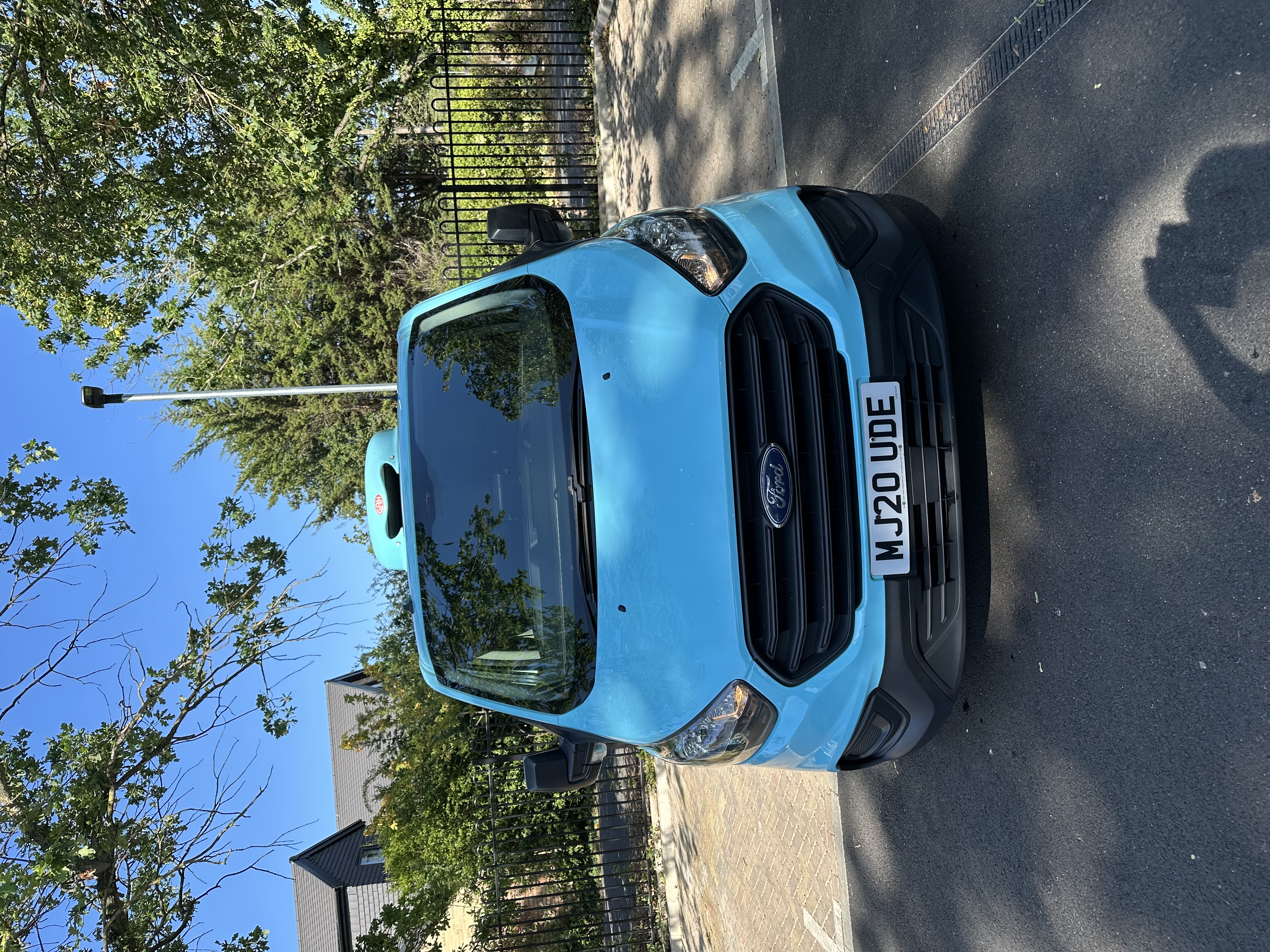
Example 1: Your Car Is Worth More Than the Finance
Imagine:
Current car value: £15,000
Finance settlement: £11,500
The difference is:
£3,500
This is commonly described as positive equity.
In simple terms, the vehicle's value exceeds the amount required to settle the finance.
After settlement, that remaining value can potentially be yours.
This is why obtaining both an accurate settlement figure and a realistic market valuation is important.
Without both numbers, you don't actually know your financial position.
Example 2: Your Car Is Worth Less Than the Finance
Now imagine:
Current car value: £12,000
Finance settlement: £15,000
You have a:
£3,000 shortfall
This situation is commonly called negative equity.
Selling the vehicle for £12,000 doesn't magically make the remaining £3,000 disappear.
The finance company still needs its agreement settled according to its terms.
You would therefore need to understand how that shortfall will be covered before completing the transaction.
What Causes Negative Equity?
Cars depreciate at different speeds.
Negative equity can arise when the amount required to settle finance is greater than the vehicle's current market value.
Several things can contribute:
Rapid depreciation
Some models lose value more quickly than expected.
Small initial deposit
A smaller deposit can mean more money remains financed.
Changing market prices
Used-car values fluctuate.
High mileage
Heavy mileage can reduce the market value of a vehicle relative to otherwise similar examples.
Vehicle condition
Accident damage, mechanical problems or poor cosmetic condition can affect what buyers are prepared to pay.
Long finance terms
Depending on the structure of the agreement, the outstanding balance may reduce differently from the vehicle's depreciation.
This is another reason why checking your position rather than guessing is important.
How Do You Know Whether You Have Positive or Negative Equity?
The basic calculation is straightforward:
Estimated vehicle value − finance settlement figure = approximate equity
For example:
£18,000 vehicle value − £14,000 settlement = £4,000 positive equity
Alternatively:
£14,000 vehicle value − £17,000 settlement = £3,000 negative equity
But remember that an online valuation is still an estimate.
Your actual selling price may differ.
Mileage, history, specification, mechanical condition and buyer demand all influence what someone is genuinely prepared to pay.
Don't Confuse Settlement With Voluntary Termination
These are different things.
This is an area where consumers can easily become confused.
Settlement
You pay the amount required to settle the finance agreement early.
Voluntary termination
Under qualifying regulated HP and PCP agreements, the Consumer Credit Act can give consumers the right to terminate the agreement and return the vehicle.
MoneyHelper explains that if you've paid at least half of the relevant total amount — or make up the difference to that point — voluntary termination may be available.
If you've already paid more than the halfway amount, you don't normally receive the excess back.
There can also be issues relating to the vehicle's condition and the terms of the agreement.
Voluntary termination is therefore not simply another name for selling your car.
If you're considering it, read your finance agreement carefully and speak directly to your lender.
What About Personal Contract Hire?
Personal Contract Hire is different again.
PCH is fundamentally a lease.
You don't purchase the vehicle at the end in the same way as PCP.
MoneyHelper describes PCH as an arrangement where you don't own the vehicle.
If you want to end the lease early, you need to check the contract and speak to the leasing company about its early-termination conditions and charges.
You shouldn't treat a leased vehicle as a car you own and can sell.
What If You Used a Personal Loan to Buy the Car?
This can be very different.
With an ordinary unsecured personal loan, you generally purchase the car yourself using the borrowed money.
The loan and vehicle aren't structured in the same way as HP or PCP.
You may therefore own the vehicle while separately owing money under the personal loan.
That means selling the car doesn't necessarily settle the loan automatically.
You would still remain responsible for whatever debt exists under your loan agreement.
Check your specific contract if you're unsure.
Why Buyers Check for Outstanding Finance
Outstanding finance isn't just important to sellers.
It matters enormously to buyers too.
Professional dealers routinely carry out vehicle-history checks before purchasing stock.
One of the things they may investigate is whether finance is recorded against the vehicle.
Why?
Because nobody wants to pay thousands of pounds for a car only to discover that another company has a financial interest in it.
This is why transparency matters.
If your vehicle has finance outstanding, disclose it and follow the proper settlement process.
Step-by-Step: What to Do Before Selling a Financed Car
Step 1 — Identify your finance agreement
Check whether you have PCP, HP, PCH, conditional sale or another type of credit.
Step 2 — Contact the finance provider
Ask for a current settlement figure.
Don't rely on an old quotation because settlement figures can change.
Step 3 — Find your car's current market value
Get an up-to-date valuation based on:
- registration
- mileage
- condition
- specification
- service history
- current demand
Step 4 — Compare the two figures
Work out whether you appear to have positive or negative equity.
Step 5 — Tell prospective buyers about the finance
Don't hide it.
A transparent transaction is easier for everyone.
Step 6 — Agree how settlement will be handled
The finance needs to be dealt with in accordance with your lender's requirements.
Step 7 — Confirm settlement
Make sure the agreement has genuinely been settled and obtain confirmation where appropriate.
Step 8 — Complete the vehicle sale correctly
Only proceed with ownership/keeper documentation and handover when the financial position has been properly resolved.
Should You Settle the Finance Before Getting a Car Valuation?
Not necessarily.
It can make sense to find out the car's approximate market value before committing your own money to settlement.
Imagine paying £15,000 to settle an agreement and then discovering the vehicle is only worth £11,000.
Knowing both numbers first gives you a much clearer picture.
A sensible order is therefore:
Get settlement figure → establish market value → calculate equity → decide what to do.
What If Your Car Is Worth More Than You Expected?
This is where exposing a vehicle to actual buyer demand can become useful.
Suppose an initial valuation suggests:
£12,500
but several motor traders are interested.
Competition may reveal stronger demand for that particular model, specification or condition than a generic valuation predicted.
If the eventual buying price is higher, your equity position may improve.
This is particularly relevant when the difference between the vehicle's value and finance settlement is relatively small.
What If You're in Negative Equity?
Don't panic and don't hide it.
First establish the exact numbers.
A £500 shortfall and a £7,000 shortfall are very different situations.
Then speak with the lender and understand your available options.
Depending on your circumstances, you might:
- cover the shortfall yourself
- keep the vehicle longer
- continue making payments
- explore early settlement
- investigate voluntary termination if applicable
- consider another option permitted by your agreement
Be particularly cautious about simply moving negative equity into another finance agreement without understanding the total amount you'll eventually repay.
A Finance Claim Doesn't Mean You Should Stop Paying
Motor-finance commission issues have received enormous attention in the UK.
But if you believe you may be entitled to compensation relating to an older finance agreement, don't assume that means you can simply stop making payments on an active agreement.
Current consumer guidance warns that customers who are still paying their car finance should continue making payments, because stopping could damage their credit record and potentially put the vehicle at risk.
Treat a potential compensation claim and your contractual payment obligations as separate issues unless your lender or appropriate adviser tells you otherwise.
How CarMazium Fits Into the Process
CarMazium can help sellers understand the market side of the equation.
If you have outstanding finance, one of the key things you need to know is what genuine motor traders are prepared to pay for your vehicle.
Rather than looking only at an estimated valuation, exposing the vehicle to competing buyers can provide real market feedback.
You can then compare the strongest offer with your finance settlement figure.
For example:
Best dealer offer: £16,200
Finance settlement: £13,700
Approximate difference:
£2,500
That gives you much more useful information when deciding your next step.
Remember, however, that outstanding finance must still be dealt with properly with the finance provider before ownership can be transferred.
Frequently Asked Questions
Can I sell a PCP car before the agreement ends?
Potentially, but you normally need to settle the finance first because you don't yet own the vehicle outright. Ask your lender for an early settlement figure and follow its settlement procedure.
Can I privately sell a car with outstanding HP finance?
You shouldn't simply sell an HP-financed car as if you own it outright. The finance provider generally owns the vehicle until the agreement has been settled. Speak with the lender before attempting a sale.
How do I find my car-finance settlement figure?
Contact your finance provider and request an official early settlement quotation.
What happens if my car is worth more than the settlement?
The difference represents positive equity in simple terms. For example, a £15,000 vehicle against a £12,000 settlement leaves approximately £3,000 before any other relevant costs.
What happens if my car is worth less than the finance?
That's negative equity. The shortfall still needs to be dealt with according to the finance agreement and lender's requirements.
Does outstanding finance appear on a vehicle-history check?
Finance interests can be recorded on vehicle-history databases, which is one reason dealers and consumers commonly perform history checks before buying used cars.
Can I stop paying finance while trying to sell my car?
No. Continue meeting your contractual payments unless your lender has agreed otherwise. Missing payments can have serious consequences.
Final Thoughts
Selling a financed vehicle isn't necessarily complicated once you understand the numbers.
The three figures that matter most are:
-
Your current settlement figure
-
Your vehicle's genuine market value
-
The difference between them
That difference tells you whether you're starting from a position of positive or negative equity.
From there, speak with your lender, understand your agreement and make an informed decision.
Most importantly:
Don't hide outstanding finance, don't guess what you owe and don't assume an online valuation is the same as a genuine buying offer.
Get the facts first.
Then decide whether now is the right time to sell.
Sell your car your way
Ready to turn your research into a real sale?
List in the CarMazium dealer auction for £0, or advertise retail from £1. Qualifying successful auction sales can receive a £100 seller incentive.
Keep reading
Related automotive guides

WeBuyAnyCar Alternatives UK 2026: Compare Better Ways to Sell Your Car
Looking for an alternative to WeBuyAnyCar? Compare CarMazium, Carwow, Auto Trader, dealer auctions and private selling to find the right way to sell your car.
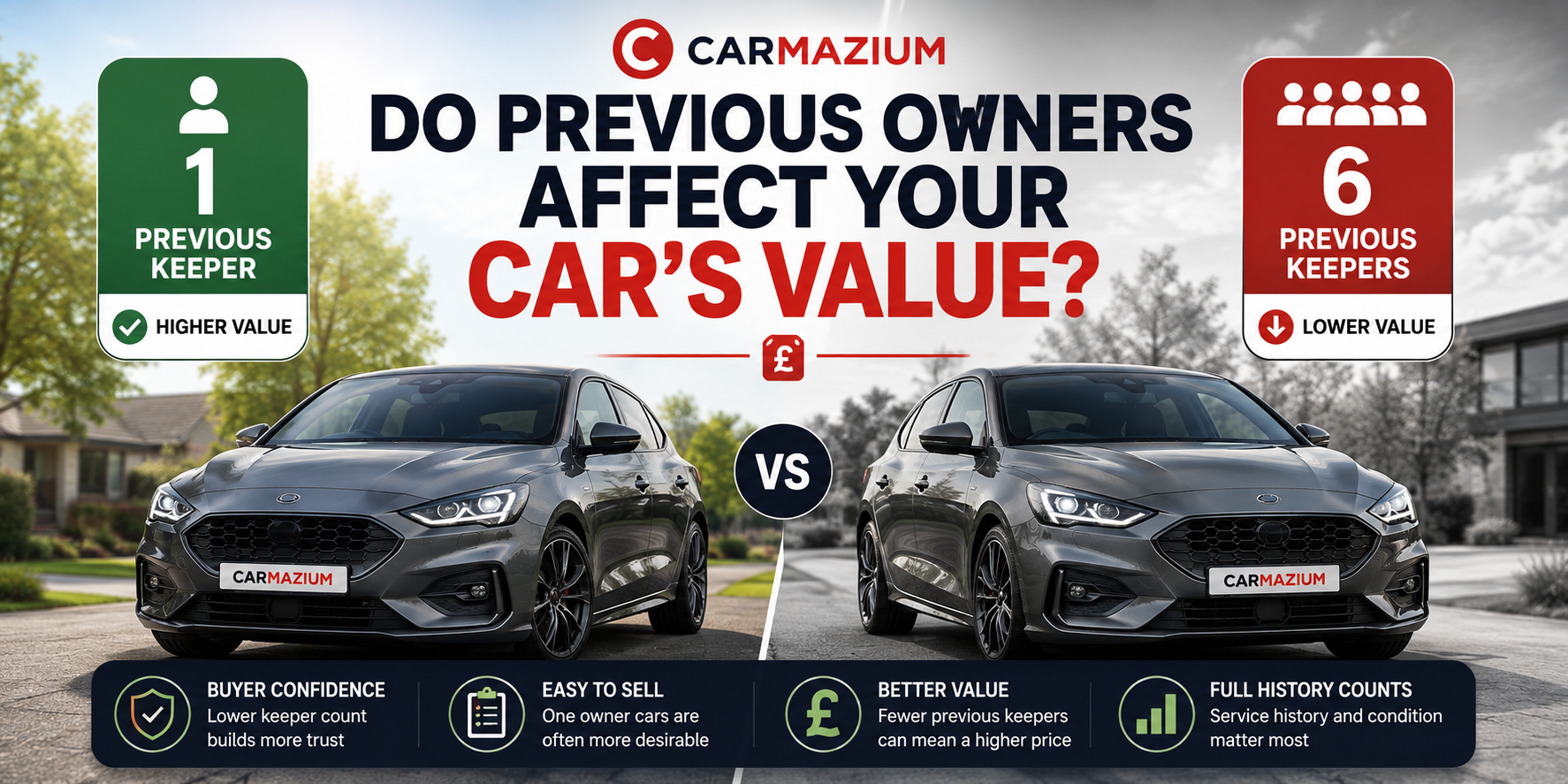
Do Previous Owners Affect a Car's Value? UK Guide 2026
Does a one-owner car really sell for more? Learn how previous keepers can affect used-car value, why ownership history matters and what sellers can do when a car has changed hands several times.

Do Optional Extras Increase Your Car's Value? UK Guide 2026
Panoramic roofs, heated seats, upgraded wheels and technology packs can make a used car more desirable. Find out which optional extras can add value and which may add very little when you sell.
From the marketplace